
 English
 Español
 Français
 Italiano
 Deutsch
 Русский
 Português
 Polski
 Română
 Svenska
 Norsk bokmål
 Suomi
 Türkçe
 العربية
 简体中文
 한국어
 हिन्दी
 Ελληνικά
LIVING AND DOCUMENTED CULTURE · 02
Makishi: masks that teach and negotiate change
Makishi masks and community teaching
Mask performances culminate the mukanda, an initiation process that includes teaching and community participation.
Museum documentation · free public access, no account required.
Reconstruction · Declared visual hypothesis
Sachihongo mbunda mask · ETHAF 018740. Documented specimen from the 20th century used to approach a living tradition, without representing a ceremony or reducing it to a remote past. Interpretive material reconstruction from the photograph of Rama / MEG — Musée d’ethnographie de Genève. It is not an archaeological photograph nor a certified restitution. Microdetails, finish and colour are interpretive approximations.
Tracekeepers / OpenAI ImageGen; source photograph: Rama / MEG — Musée d’ethnographie de Genève · Musée d’ethnographie de Genève (MEG) · Inventory: ETHAF 018740 · CC BY-SA 3.0 FR
History and context
The masquerade marks the culmination of the mukanda and articulates teaching, ancestral representation, gender, humour and community. The UNESCO inscription describes differentiated characters and community safeguarding measures.
Museographic proposal: Do not isolate a mask in a vacuum: show sequence, music, space and voices of authorised bearers; conceal restricted knowledge.
Evidence and interpretation
Documented fact: The UNESCO inscription describes differentiated characters and community safeguarding measures. Caution: Do not reveal initiatory content, do not confuse communities and do not recreate a sacred ceremony for spectacle.
Catalogue facts
- Place and period
- North-west and west of Zambia; living tradition among Luvale, Chokwe, Luchazi and Mbunda communities
- Approach
- The masquerade marks the culmination of the mukanda and articulates teaching, ancestral representation, gender, humour and community.
- Caution
- Do not reveal initiatory content, do not confuse communities and do not recreate a sacred ceremony for spectacle.
A closer look
About 1 min to read · 1 section. Further reading and sources · free access. Editorial review recorded: .
The school calendar changes the timing of the masquerade
UNESCO documents that the duration of the mukanda has often been reduced to one month to accommodate the school calendar. It also records a demand for makishi dancers for social gatherings and political acts. Both facts situate the practice in current negotiations over time, education and interpretive labour. The reintegration ceremony calls the community together, but a performance contracted outside that framework does not necessarily reproduce its full function. This difference allows speaking of change without declaring that every adaptation entails total loss or that any spectacle equals initiation.
- Heritage · UNESCO · Makishi masquerade, file 00140Access recorded: .
Reference images and provenance
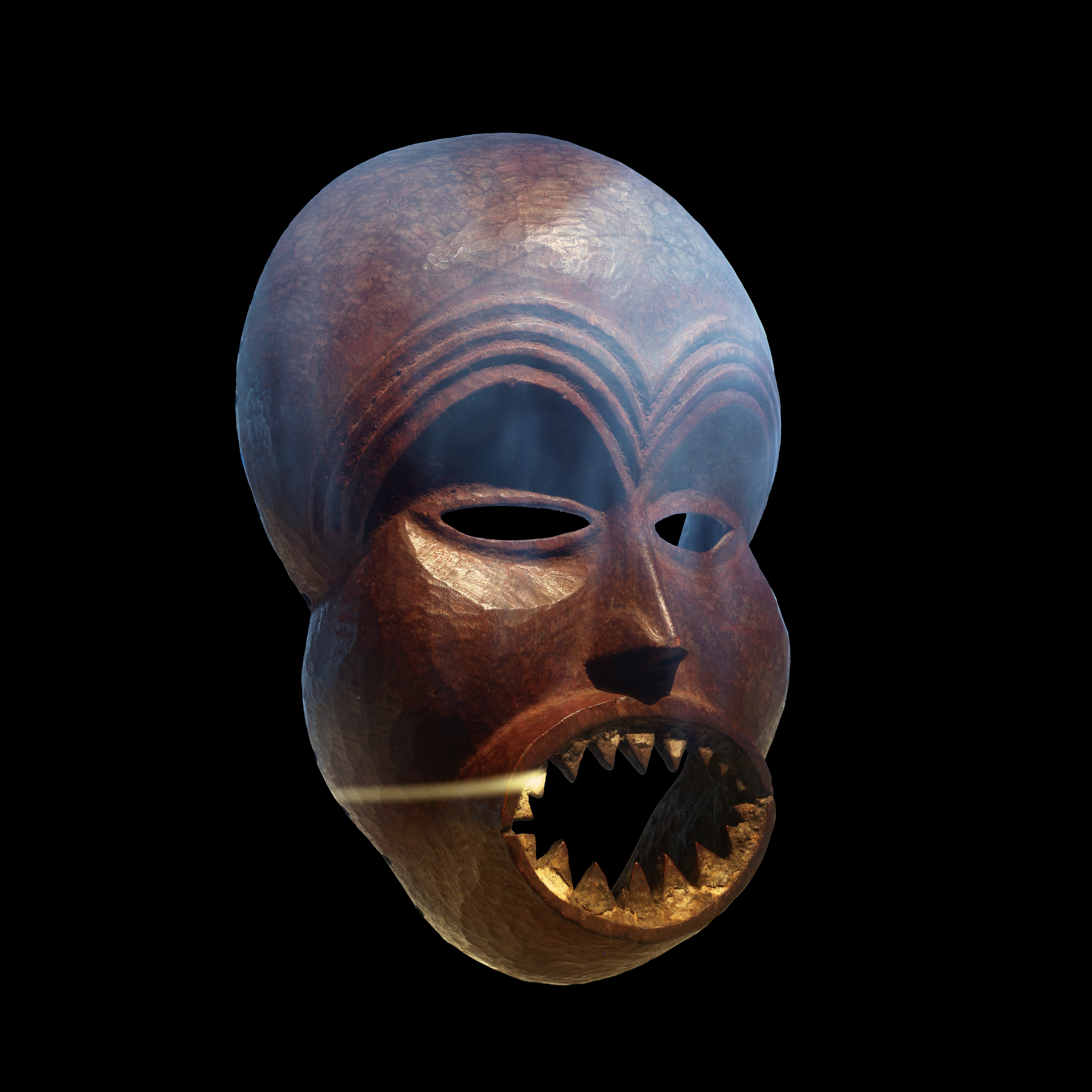 View full-size photograph ⛶
Original photograph of specimen ETHAF 018740; material example to contextualise a wider living practice. It does not represent a complete ceremony.
Documentary original · Contextual correspondence
Rama / MEG — Musée d’ethnographie de Genève · Musée d’ethnographie de Genève (MEG) · Inventory: ETHAF 018740

Location and territory
REGIONAL AREA
North-west and west of Zambia; living tradition among Luvale, Chokwe, Luchazi and Mbunda communitiesCurrent maximum linguistic envelope and historical corridors; it was not a single political territory nor was it occupied simultaneously. The footprint indicates the indicative centre of the sphere, not a border or an exact point.Sources and references
Did you enjoy this exhibit?
Your opinion helps us improve the museum. You can change it whenever you like.
Loading your rating…