
 English
 Español
 Français
 Italiano
 Deutsch
 Русский
 Português
 Polski
 Română
 Svenska
 Norsk bokmål
 Suomi
 Türkçe
 العربية
 简体中文
 한국어
 हिन्दी
 Ελληνικά
DOOR 01 · AFRICA · CONTACT
San
Savannah, livestock and shared words
Continue in the San museum
Museum documentation · free public access, no account required.
Generated reconstruction · Declared visual hypothesis
NEITHER SIDE DISAPPEARS FROM THE LANDSCAPE
Why this doorway leads to another museum
Bantu-speaking farmers and herders came into contact with San communities in southern Africa; linguistics, genetics, archaeology and oral history record exchange, kinship, conflict and displacement.
Why this gateway calls for caution: Linguistic categories are neither races nor uniform armies, and trajectories differ between regions and centuries.
Period of the connection: 1st millennium CE–present
BEFORE YOU ENTER
An introduction to San
Find your place in time, explore the changes and choose where to go next.
- When
- Historical documentation: 19th century–present · landscapes of long duration · AFRICA
- Where
- Kalahari and regions of southern Africa, from Namibia and Botswana to South Africa; it was never a single state territory.
- What this collection brings together
- Constellation of peoples, languages and living traditions
San is an umbrella term for distinct peoples of southern Africa. The museum links archaeology, rock art, languages, ecological knowledge and colonial history without presenting living communities as fossils of Prehistory.
Painted and carved testimonies, oral memory and historical ethnography allow us to read landscapes of relationship with animals, rain, healing and community, but no modern source automatically translates an ancient image.
PLACE MATTERS
Territory and connections
Kalahari and regions of southern Africa, from Namibia and Botswana to South Africa; it was never a single state territory. Mobile historical networks and cultural landscapes of regional scale; colonisation, fencing and displacements reduced and fragmented many territories.
A HISTORY OF CHANGE
The main periods
Dates are approximate. Periods help us navigate the past, but their boundaries were not always the same in every region.
Late Pleistocene–Holocene
Archaeological depth without automatic attribution
Southern Africa preserves occupations and art of great antiquity, but these cannot be collectively attributed to present-day San identities.
Late Holocene
Regional hunter-gatherer landscapes
Distinct communities sustain technologies and landscape knowledge; continuity with historical names must be demonstrated region by region.
1st–2nd millennia CE
Contacts with pastoralists and farmers
Exchange, mobility, intermarriage and conflict reorganise communities; there was no simple replacement nor a single San reaction.
17th–19th centuries
Colonial frontiers and dispossession
Frontier violence, forced labour and colonial expansion reduce and fragment numerous mobility landscapes.
Continue the story: 2 more periods
20th century
State frontiers and displacements
Enclosures, reserves and international borders separate communities and routes; modern states do not delineate San identities.
Present
Living communities and territorial claims
San organisations sustain languages, heritage and claims; any contemporary geometry requires consent and community sources.
BEYOND THE DATES
How people lived and saw the world
How they were organised
The ǂKhomani landscape relates memory, access to resources and territorial claims to present-day communities. Cultural authority is not an ancient office that a museum can adjudicate.
Colonial archives and heritage declarations have specific producing institutions. Giving credit and recognising consent are part of the documentation, not a contemporary appendix.
What daily life was like
Carried water, constructed shade, narrative, song and teaching rarely leave the monumentality that dominates many museums.
Historical objects and recordings return concrete actions if date, community and authorship are maintained; without them they become stereotype.
What they knew how to do
Perforated shells, fibres, branches, pigments and phonetic systems respond to very different technical problems.
A support being light or perishable does not make it simple. Conservation and digitisation add another technology whose mediation must be declared.
What they believed
Game Pass and healing dances allow discussion of transformation, eland and collective experience through explicit analogies.
Comparison gains value by maintaining distance: a 20th-century record does not translate every painting, and no practice constitutes a pan-San pantheon.
Who they interacted with
Portable materials, narratives and sound repertoires circulated between people and places, but each movement had its own historical conditions.
The digital museum also circulates facsimiles and audio. Access does not eliminate rights, credit or the need to maintain metadata.
Art, music and storytelling
Apollo 11, Tsodilo and Game Pass show that southern African art spans tens of millennia and multiple communities.
Musical recordings add dated sound, not the soundtrack to those images. Support, interpreter and rights accompany the aesthetic experience.
PEOPLE AND TESTIMONIES
Meet the people
The records distinguish historical figures, representations and reconstructions. They explain their context, the available sources and their connections with other people.
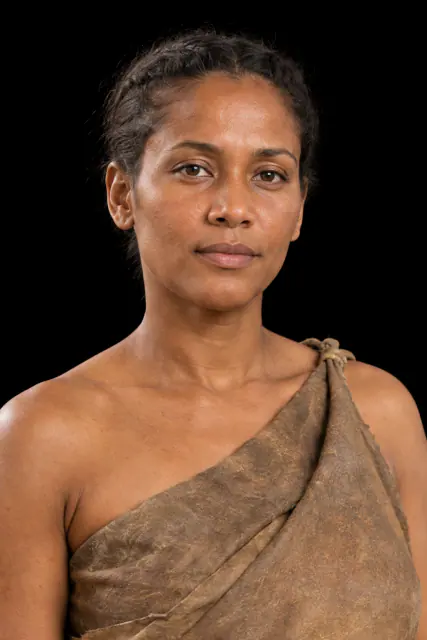
Oakhurst · Tomb VIa
An individual documented through their burial; an interpretive appearance.
Read the record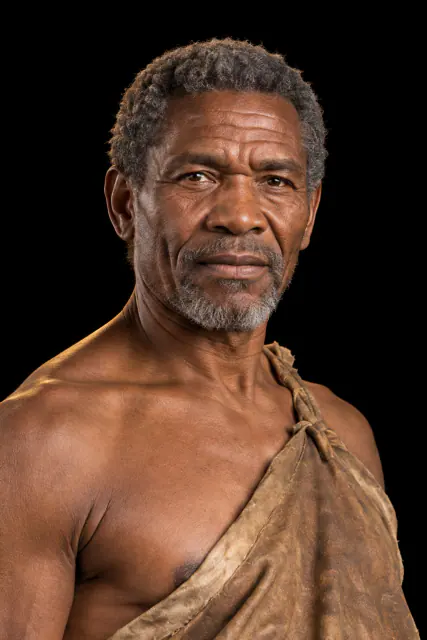
LOOK CLOSER
Objects and places to start with
A selection from the destination museum. Open each record to explore its documentation and images.
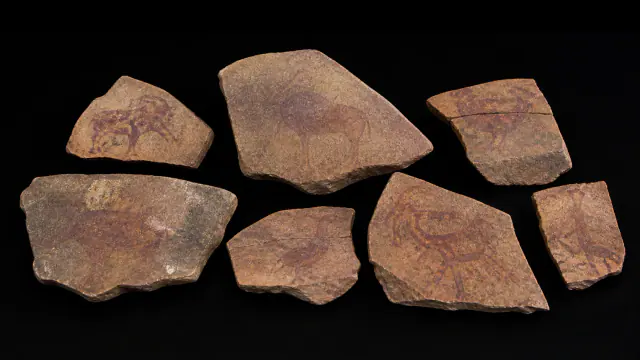
Before the name San
These stones preserve figures painted by people whose collective identity we do not know.
Read the record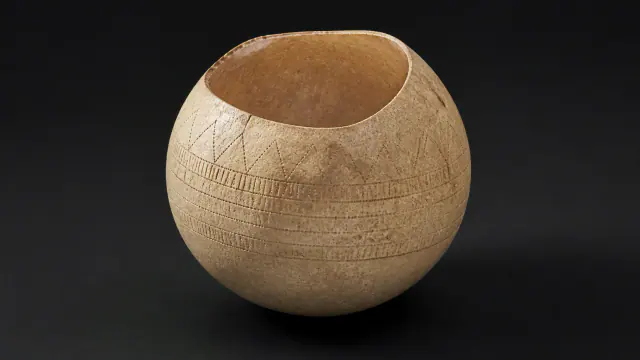
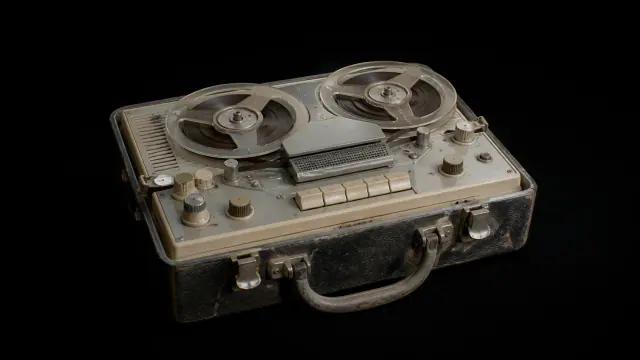
Healing dance
The !Kung/Ju recordings document songs, clapping and movements of specific Kalahari communities.
Read the record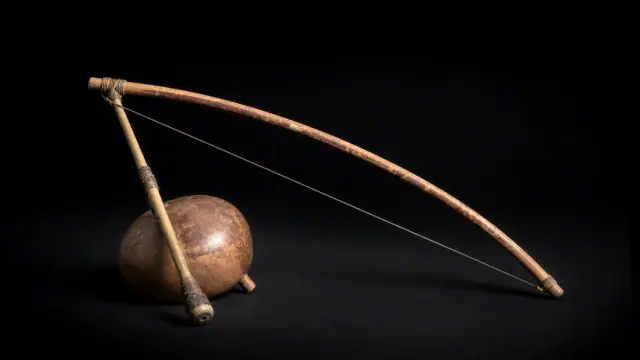
Musical bows
Records from Botswana and Namibia allow us to know instruments and ways of playing them, with identified performers and locations.
Read the recordWHAT REMAINS
Its legacy and ongoing research
San communities are contemporary and diverse. Their languages, territorial rights, oral archives and decisions about heritage must occupy the present of the museum, not be confined to a remote past.
CHOOSE YOUR NEXT STOP
Inside this museum
Sources for this introduction
Each theme links to its documentation. The full bibliography also brings together sources for the chronology, the people and the connection between the museums.
View all sources and references →Evidence and interpretation
Level of evidence of connection: high. The door describes contact; it does not convert two different cultures into one nor does it presuppose automatic ethnic continuity.
Catalogue facts
- Contact period
- 1st millennium CE–present
- Destination museum
- San peoples of southern Africa
- Link Type
- contact
- Level of evidence
- high
- Destination region
- Africa
A closer look
About 1 min to read · 1 section. Further reading and sources · free access. Editorial review recorded: .
Few words with clicks do not mean little contact
The 2017 comparison notes that manyo, kwangali, mbukushu and fwe have click inventories much smaller than Xhosa or Yeyi. However, genetic data from fwe and mbukushu indicate important contacts through maternal lines. The authors further discuss the extension of clicks to words of Bantu origin, not only their conservation in loans. The discrepancy between sound count and kinship signals obliges a richer connection: some communities could transform sounds in different ways while maintaining intense relations with neighbours of other languages.
Location and territory
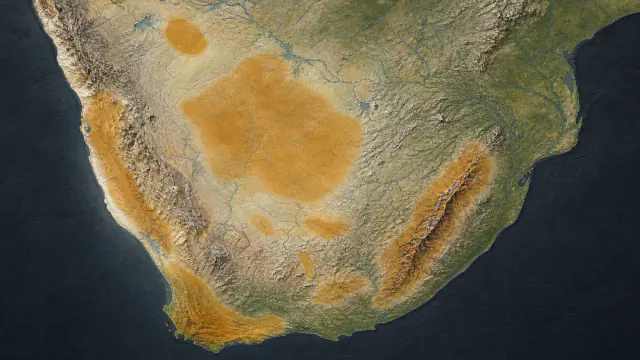
REGIONAL AREA
Orientative scope of San communities and landscapes in southern Africa; not an ethnic or state boundaryOrientative scope of San communities and landscapes in southern Africa; not an ethnic or state boundary. The footprint marks the orientative centre of the scope, not a boundary nor an exact point.Cultural connections
Sources and references
- Language Dynamics and Change · Bantu-Khoisan contact
- PLOS ONE · southern African organic containers database
- South African History Online · Defining Bantu
- Pakendorf, Gunnink, Sands and Bostoen · Prehistoric Bantu-Khoisan language contact: A cross-disciplinary approach, 2017
- UNESCO · ǂKhomani Cultural Landscape
- UCT · Digital Bleek and Lloyd
- UNESCO · ǂKhomani language and connection to land
- British Museum · ostrich eggshell vessel
- Smithsonian Folkways · Healing Dance Music
- University of the Witwatersrand · Game Pass rock art site
- SAHRA · Game Pass Shelter
- Smithsonian Folkways · Instrumental Music of the Kalahari San
- The Met · Apollo 11 Cave Stones
- UNESCO · Tsodilo
- Lombard 2026 · University of Johannesburg · Tomb VIa, Table 2 and grave goods record
- Lombard 2026 · publication record and DOI
- Morris et al. 2014 · Genome Biology and Evolution · UCT 606, dating and osteology
YOUR NEXT VISIT
Explore San
The same collection, two ways to explore. Choose the experience that suits you.
Did you enjoy this exhibit?
Your opinion helps us improve the museum. You can change it whenever you like.
Loading your rating…