
 English
 Español
 Français
 Italiano
 Deutsch
 Русский
 Português
 Polski
 Română
 Svenska
 Norsk bokmål
 Suomi
 Türkçe
 العربية
 简体中文
 한국어
 हिन्दी
 Ελληνικά
FICTIONAL CHARACTER · SARIMĞARA
Luma
Luma is seven years old and wants to choose one of the beads for her necklace.
Museum documentation · free public access, no account required.
Generated reconstruction · Declared visual hypothesis
Fictional character. Her appearance is an artistic interpretation, not the portrait of a historical person.
Explore in 3D
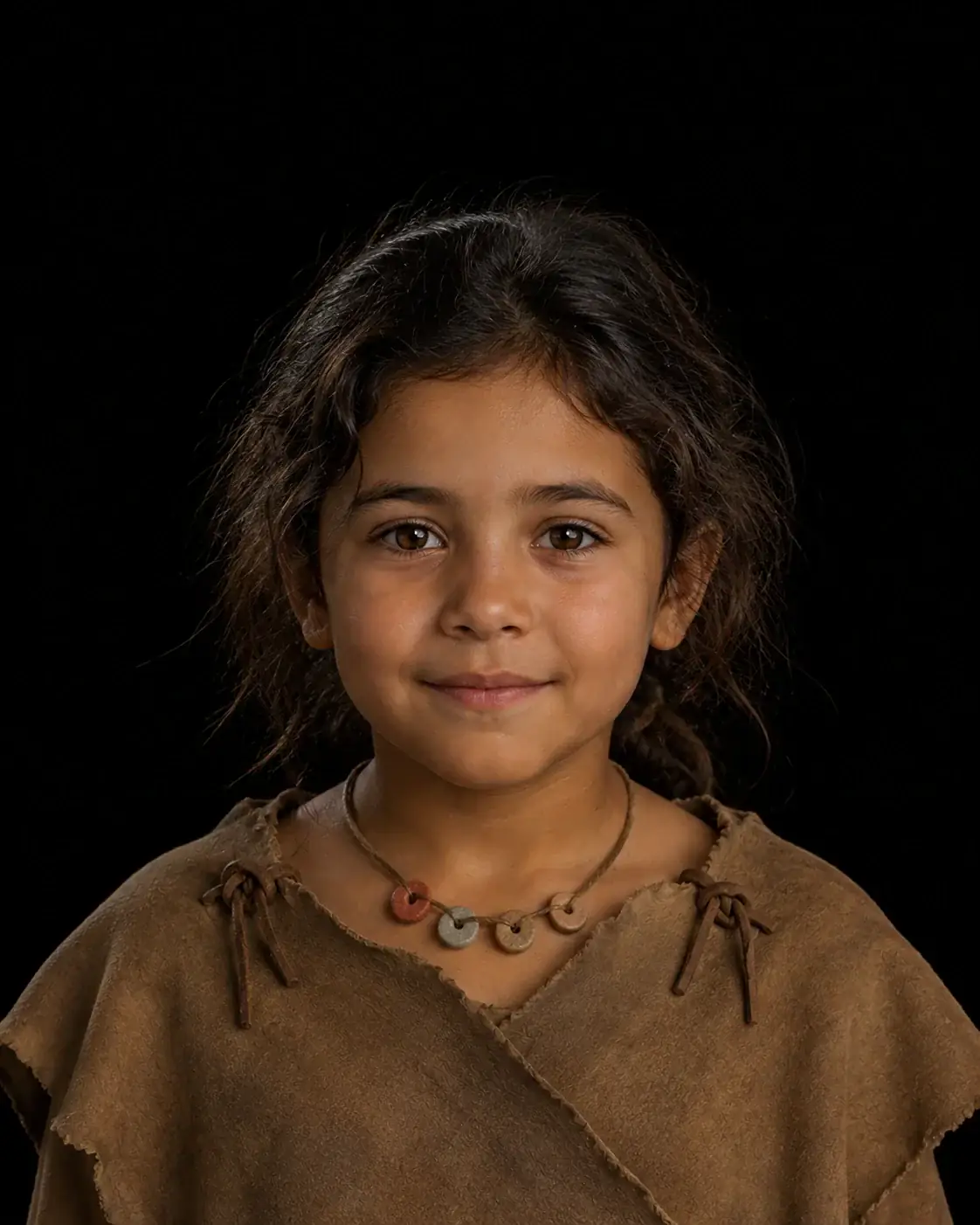
Load the model only when you want to explore it. Drag or use the arrow keys to turn it; + and − zoom. Closing it releases its memory.
Digital reconstruction supplied by the project and generated with Tripo. It is not an archaeological scan or a metric replica. The model is displayed at approximately life size: 1.20 m tall, the same height as in the Sarımğara game; this is a design decision for a fictional character, not an archaeological measurement. Luma is a fictional character from Sarımğara, a setting inspired by Çakmaktepe around 9600 BCE. She is seven years old and her height matches that age. The figure is shown in the technical T-pose in which the model was delivered, without a skeleton or animation; face, clothing and accessories are an interpretation, not an archaeological portrait.
History and context
She plays with other children from the camp, interrupts Oru's stories and asks about the stones her father has brought. She likes one precisely because it is different. She does not need to give it a solemn meaning: she likes its shape and wants to put it next to another.
She is the daughter of Ena and Daro, granddaughter of Tala and niece of Kael. In an episode of the book she falls ill and then gradually returns to her games. Luma is not the person buried in Ba'ja: her name, family and life belong to the fiction of TRACEKEEPERS.
Evidence and interpretation
This character, her name and her relationships are fiction. The setting is inspired by Çakmaktepe c. 9600 BCE; her scenes are not biographies recovered by archaeology.
Skin and leather clothing and documented regional setting; face, identity and kinship fictional.
Catalogue facts
- Narrative date
- c. 9600 BCE
- Narrative setting
- Sarımğara · Çakmaktepe environs, Anatolia
- Age
- 7 years old
- Activity
- Play, curiosity and everyday learning
- Family
- Daughter of Ena and Daro · granddaughter of Tala · niece of Kael
- Story object
- A bead she chooses herself
- Identity
- Fictional name and biography
A closer look
About 1 min to read · 2 sections. Further reading and sources · free access. Editorial review recorded: .
The rules seen from play
In the novel, Luma does not always judge games the same way: she wants to move a stone when she cannot reach it, even if her companions do not think it fair. She looks at the other children's response, not only the adults'. That invented disagreement lets us glimpse a small shared life, with preferences and rules that are discussed, without turning Luma into the group's wise spokesperson.
Curiosity without knowing everything
Her curiosity does not oblige her to know more than the others. Recognising a bead or remembering a fall in the story are small learnings; not knowing where the stone comes from remains possible. She can also tire of listening and ask for silence. The card invites attending to those responses without using them to reconstruct the life of a girl known from an archaeological find: Luma, her friendships and her scenes are fiction.
- Ancient text · TRACEKEEPERS · Before the Cities, V6, chapters 6, 7, 8 and 16 · fictionAccess recorded: .
- Ancient text · TRACEKEEPERS · Luma · fiction canonAccess recorded: .
One history, two perspectives
What connects Luma with other people, and how the view changes from the other side. These interpretations are based on sources; they are not quotations or reconstructions of private thoughts.
FAMILY · FICTITIOUS NARRATIVE CANON
Luma ↔ Daro
Daro, her father
Luma waits for the stories Daro brings and asks him about the people who appear in them. She also wants him to stay and listen to her when she is the one who has something to tell.
From Luma’s perspective
Luma waits for the stories Daro brings and asks him about the people who appear in them. She also wants him to stay and listen to her when she is the one who has something to tell.
Read Daro’s perspective on Luma →FAMILY · FICTITIOUS NARRATIVE CANON
Luma ↔ Ena
Ena, her mother
Luma wants to sit with Ena and choose a bead. Her mother knows how to make things she still cannot, but that does not stop the girl saying what she likes and asking to move a piece.
From Luma’s perspective
Luma wants to sit with Ena and choose a bead. Her mother knows how to make things she still cannot, but that does not stop the girl saying what she likes and asking to move a piece.
Read Ena’s perspective on Luma →FAMILY · FICTITIOUS NARRATIVE CANON
Luma ↔ Kael
Kael, her uncle
For Luma, Kael is her father's brother and a person she can approach when he returns from hunting. She asks him about what he has seen and can interrupt him as she would any other known adult.
From Luma’s perspective
For Luma, Kael is her father's brother and a person she can approach when he returns from hunting. She asks him about what he has seen and can interrupt him as she would any other known adult.
Read Kael’s perspective on Luma →SAME COMMUNITY · FICTITIOUS NARRATIVE CANON
Luma ↔ Oru
Oru, whom she listens to by the fire
Luma wants to know what happened in Oru's story and asks for details the adults take for granted. She listens alongside other children and adults; she can get bored, laugh or ask him to tell a part again.
From Luma’s perspective
Luma wants to know what happened in Oru's story and asks for details the adults take for granted. She listens alongside other children and adults; she can get bored, laugh or ask him to tell a part again.
Read Oru’s perspective on Luma →FAMILY · FICTITIOUS NARRATIVE CANON
Luma ↔ Tala
Tala, her grandmother
Luma looks for Tala when she wants her to help with something small. Her grandmother also asks her for patience and reminds her there are other people waiting; not all their encounters revolve around the illness.
From Luma’s perspective
Luma looks for Tala when she wants her to help with something small. Her grandmother also asks her for patience and reminds her there are other people waiting; not all their encounters revolve around the illness.
Read Tala’s perspective on Luma →Reference images and provenance
These are the created images preserved in the project. Their captions distinguish fictional designs from archaeological testimonies; they do not allow a face to be recovered with certainty.
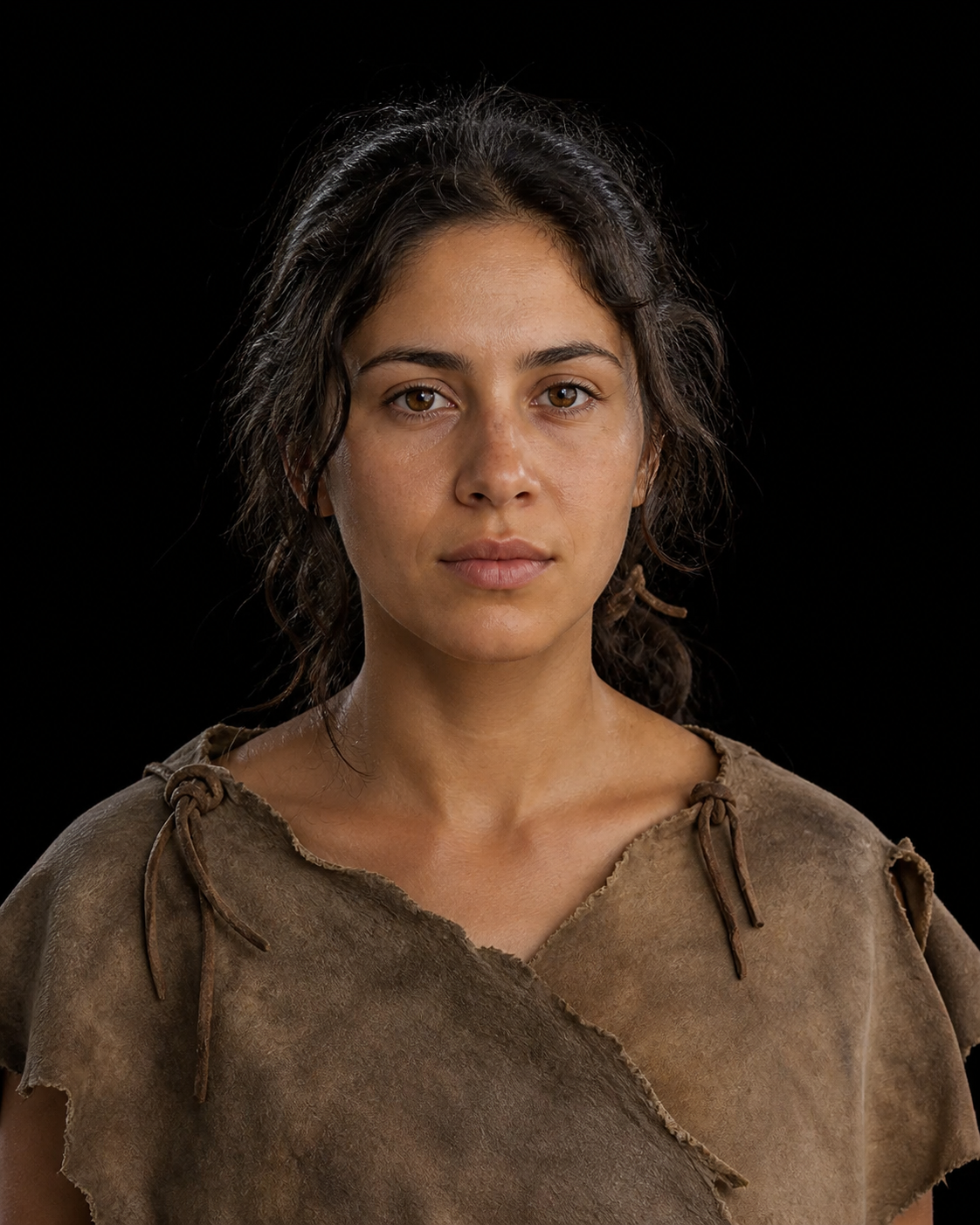 View full-size reference ⛶
Recorded creation reference
Attached image for family resemblance, recorded during this task. Not an archaeological source nor the photograph of a historical person.
Attached image for family resemblance, recorded during this task. Not an archaeological source nor the photograph of a historical person.
Generated reconstruction · Declared visual hypothesis
Tracekeepers / OpenAI ImageGen
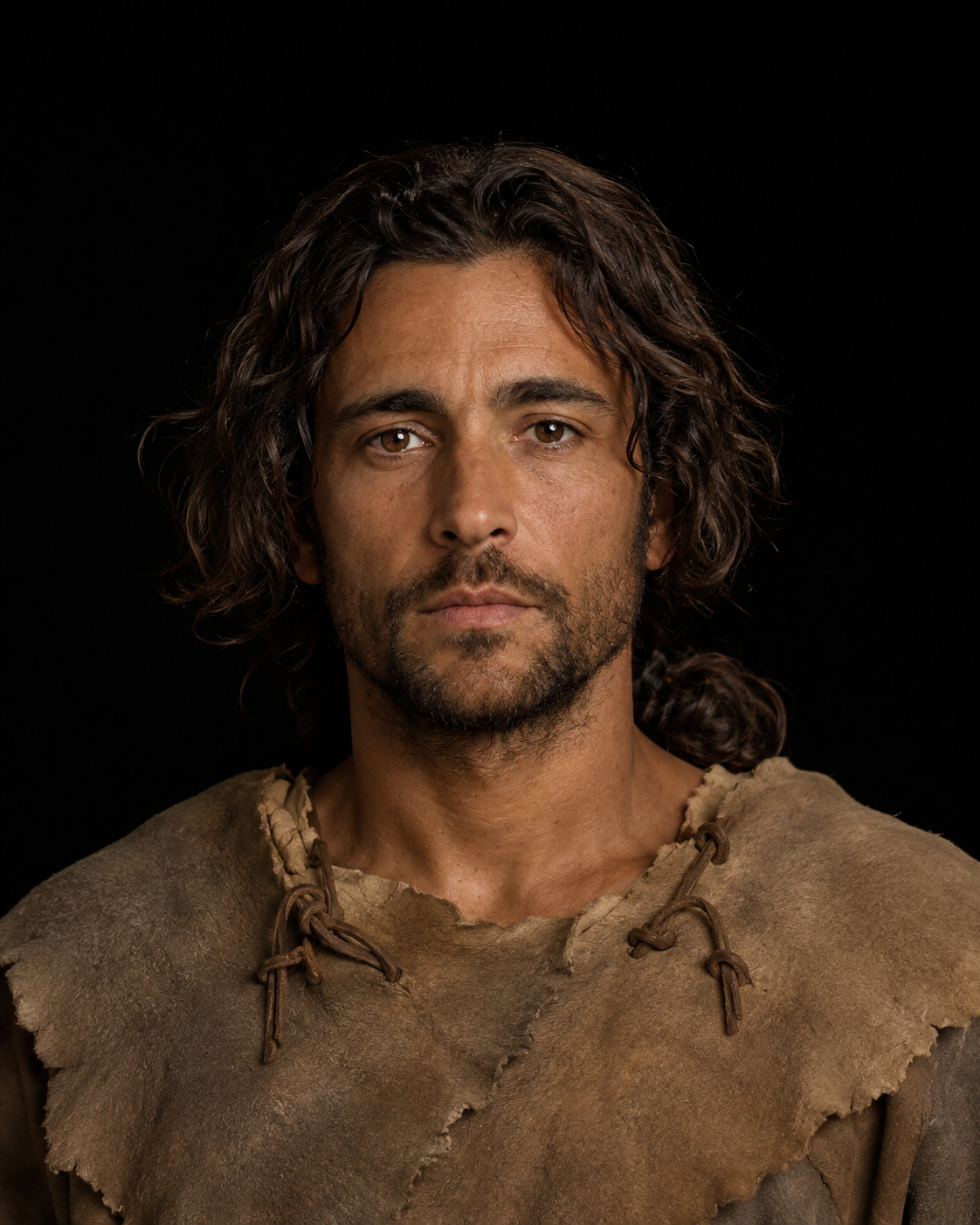 View full-size reference ⛶
Recorded creation reference
Attached image for family resemblance, recorded during this task. Not an archaeological source nor the photograph of a historical person.
Attached image for family resemblance, recorded during this task. Not an archaeological source nor the photograph of a historical person.
Generated reconstruction · Declared visual hypothesis
Tracekeepers / OpenAI ImageGen
Additional visual documentation
A cited publication does not establish which image was used to create the character.
Sources and references
Did you enjoy this exhibit?
Your opinion helps us improve the museum. You can change it whenever you like.
Loading your rating…