
 English
 Español
 Français
 Italiano
 Deutsch
 Русский
 Português
 Polski
 Română
 Svenska
 Norsk bokmål
 Suomi
 Türkçe
 العربية
 简体中文
 한국어
 हिन्दी
 Ελληνικά
FICTIONAL CHARACTER · SARIMĞARA
Daro
Daro returns from his journeys with news, some stones and a promise he has not yet told at home.
Museum documentation · free public access, no account required.
Generated reconstruction · Declared visual hypothesis
Fictional character. Her appearance is an artistic interpretation, not the portrait of a historical person.
Explore in 3D
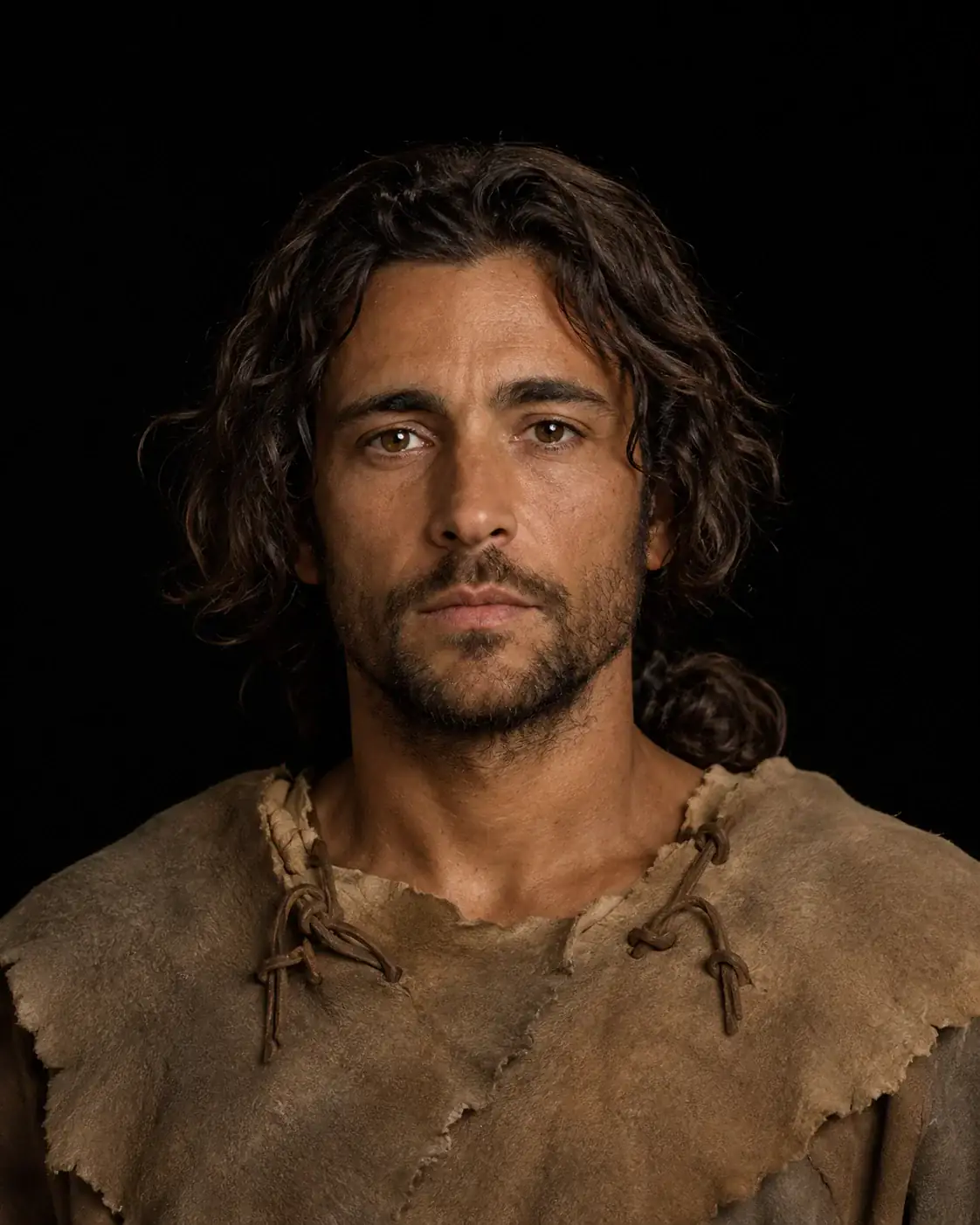
Load the model only when you want to explore it. Drag or use the arrow keys to turn it; + and − zoom. Closing it releases its memory.
Digital reconstruction supplied by the project and generated with Tripo. It is not an archaeological scan or a metric replica. The model is displayed at approximately life size: 1.72 m tall, the same height as in the Sarımğara game; this is a design decision for a fictional character, not an archaeological measurement. Daro is a fictional character from Sarımğara, a setting inspired by Çakmaktepe around 9600 BCE. The figure is shown in the technical T-pose in which the model was delivered, without a skeleton or animation; face, clothing and accessories are an interpretation, not an archaeological portrait.
History and context
On one outing he helps others with a load. A woman gives him some stones and then asks if they will collaborate again. Daro says yes before speaking with those who would have to accompany him. On his return he needs to clarify it with his brother Kael and the rest of the group.
Daro is Ena's partner and Luma's father. He likes exploring, but also learns to organise his commitments when he has to stay. He knows who gave him the stones; he cannot guarantee where they were collected nor through how many hands they passed. His story does not represent the birth of trade.
Evidence and interpretation
This character, her name and her relationships are fiction. The setting is inspired by Çakmaktepe c. 9600 BCE; her scenes are not biographies recovered by archaeology.
Skin and leather clothing and documented regional setting; face, identity and kinship fictional.
Catalogue facts
- Narrative date
- c. 9600 BCE
- Narrative setting
- Sarımğara · Çakmaktepe environs, Anatolia
- Age
- 32 years old
- Activity
- Exploration and occasional contacts
- Family
- Kael's younger brother · partner of Ena · father of Luma
- Story object
- Stones received during an encounter
- Identity
- Fictional name and biography
A closer look
About 1 min to read · 2 sections. Further reading and sources · free access. Editorial review recorded: .
How far what he knows reaches
In the fiction, Daro can reconstruct a conversation and the stretch he walked. About the stones' previous journey questions remain: where they appeared, who prepared them, and whether they changed hands. Keep those data separate when you observe an adornment. The person who delivers it, who makes it, and the place of the raw material may be different; this episode does not allow the gaps to be filled.
- Ancient text · TRACEKEEPERS · Before the Cities, V6, chapters 6, 7 and 16 · fictionAccess recorded: .
- Ancient text · TRACEKEEPERS · Daro · fiction canonAccess recorded: .
Listen to those who will do the work
Kael being his older brother does not substitute the answer of those who would do the work. Listen also to those who would have to accompany Daro or cover his absence: the agreement depends on their answers. When someone says they cannot go out, explain what work they have pending. The scene allows attending to that reason before judging it and does not demonstrate that this decision-making system existed in Prehistory.
One history, two perspectives
What connects Daro with other people, and how the view changes from the other side. These interpretations are based on sources; they are not quotations or reconstructions of private thoughts.
FAMILY · FICTITIOUS NARRATIVE CANON
Daro ↔ Ena
Ena, his partner
Daro shares the care of Luma with Ena. Bringing her stones for a necklace is a gift; being present when the girl needs company is a responsibility that cannot be resolved with another journey.
From Daro’s perspective
Daro shares the care of Luma with Ena. Bringing her stones for a necklace is a gift; being present when the girl needs company is a responsibility that cannot be resolved with another journey.
Read Ena’s perspective on Daro →FAMILY · FICTITIOUS NARRATIVE CANON
Daro ↔ Kael
Kael, his older brother
Daro wants Kael to stop treating him like the little brother. When he admits what he promised, he has to hear his objections and also speak with the people whose work he had taken for granted.
From Daro’s perspective
Daro wants Kael to stop treating him like the little brother. When he admits what he promised, he has to hear his objections and also speak with the people whose work he had taken for granted.
Read Kael’s perspective on Daro →FAMILY · FICTITIOUS NARRATIVE CANON
Daro ↔ Luma
Luma, her daughter
Daro enjoys telling Luma about whom he met during his journeys. His daughter's questions make him specify what he knows: he can name who gave him a stone, but does not always know where it came from.
From Daro’s perspective
Daro enjoys telling Luma about whom he met during his journeys. His daughter's questions make him specify what he knows: he can name who gave him a stone, but does not always know where it came from.
Read Luma’s perspective on Daro →Reference images and provenance
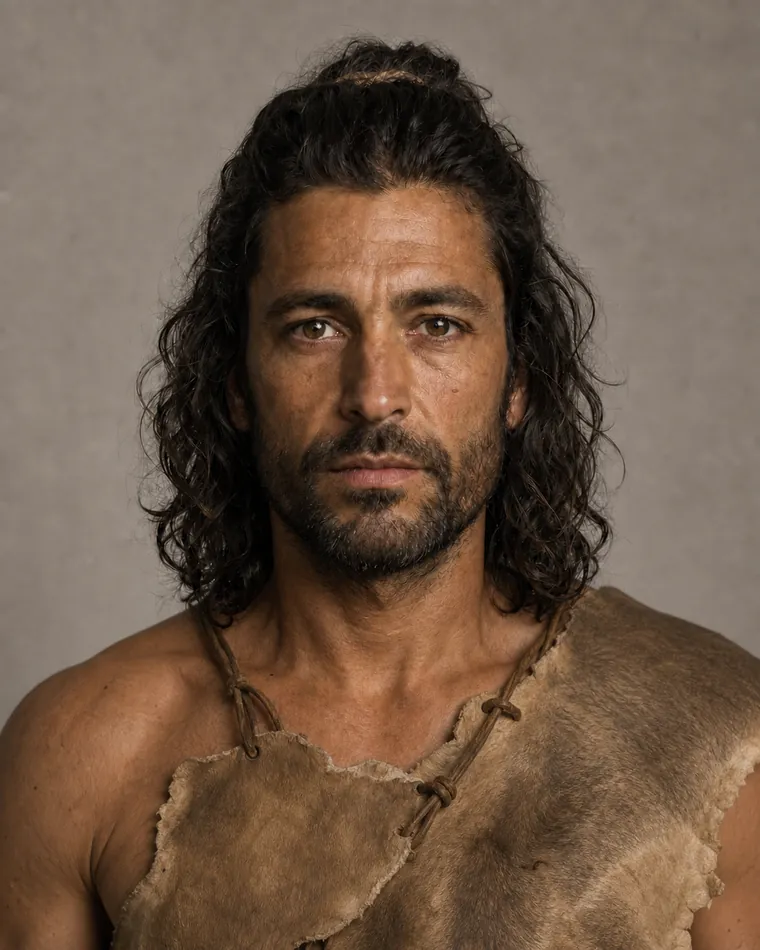
These are the created images preserved in the project. Their captions distinguish fictional designs from archaeological testimonies; they do not allow a face to be recovered with certainty.
 View full-size reference ⛶
Recorded creation reference
Attached image for family resemblance, recorded during this task. Not an archaeological source nor the photograph of a historical person.
Attached image for family resemblance, recorded during this task. Not an archaeological source nor the photograph of a historical person.
Generated reconstruction · Declared visual hypothesis
Tracekeepers / OpenAI ImageGen
Additional visual documentation
A cited publication does not establish which image was used to create the character.
Sources and references
Did you enjoy this exhibit?
Your opinion helps us improve the museum. You can change it whenever you like.
Loading your rating…