
 English
 Español
 Français
 Italiano
 Deutsch
 Русский
 Português
 Polski
 Română
 Svenska
 Norsk bokmål
 Suomi
 Türkçe
 العربية
 简体中文
 한국어
 हिन्दी
 Ελληνικά
CHINA · LONGSHAN
Ancient China
Longshan black pottery
A vessel so fine it looks like metal.
Museum documentation · free public access, no account required.
Generated reconstruction · Declared visual hypothesis
Declared visual reconstruction, created for museographic contextualisation; not a photograph of the original nor does it constitute documentary evidence.
Why this doorway leads to another museum
Around 2500 BCE, Longshan communities produced black vessels with extraordinarily thin walls. The polished surface caught the light and turned the clay into a precise, fragile object visually close to metal.
Here the wheel is the potter’s fast wheel, not automatic proof of carts. The achievement lies in the control of form and firing. The great Chinese bronze traditions belong mostly to later periods: Longshan was a constellation of regional cultures, not a dynasty or a unified state.
Period covered by the destination museum: ≈1900–1600 BCE
BEFORE YOU ENTER
An introduction to Ancient China
Find your place in time, explore the changes and choose where to go next.
- When
- ≈1900–1600 BCE · EASTERN ASIA
- Where
- The Yellow River basin and the Central Plain, from Erlitou to the Shang centres.
- What this collection brings together
- Archaeological cultures · dynasties
Erlitou represents an early state complexity and Shang provides abundant written evidence. This trajectory should not be confused with Longshan nor project an immutable national China into the past.
The palatial concentration of Erlitou and large-scale bronze casting herald new forms of power; later, Shang oracle bones allow us to hear names and decisions.
PLACE MATTERS
Territory and connections
The Yellow River basin and the Central Plain, from Erlitou to the Shang centres. Shang and Zhou consolidated territorial networks that Qin and Han would greatly expand later.
A HISTORY OF CHANGE
The main periods
Dates are approximate. Periods help us navigate the past, but their boundaries were not always the same in every region.
c. 3000–1900 BCE
Longshan horizons
Multiple regional cultures develop walled centres; their distribution is not the border of a unified China.
c. 1900–1500 BCE
Erlitou
Erlitou concentrates palaces and workshops in Henan; identifying it directly with Xia remains debated.
c. 1600–1400 BCE
Erligang and Early Shang
Zhengzhou and associated centres extend ritual production and urban architecture; political intensity outside the core varies.
c. 1300–1046 BCE
Late Shang and Anyang
The court concentrates in Anyang within a network of allies, rivals and tributaries; it should not be drawn as uniform administration.
Continue the story: 4 more periods
c. 1046–771 BCE
Western Zhou
Zhou replaces the Shang house and delegates domains to lineages; direct control, alliance and kinship are not equivalent.
770–476 BCE
Spring and Autumn period
Dozens of states compete under reduced Zhou authority; the area gathers rival polities, not a national border.
475–221 BCE
Warring States period
Seven great kingdoms and other powers are conquered in succession; borders shift for decades.
221–206 BCE
Qin Unification
Qin conquers the rival kingdoms; this is a later epilogue to the museum’s Erlitou–Shang focus, not its inevitable conclusion.
BEYOND THE DATES
How people lived and saw the world
How they were organised
Erlitou displays courtyards, roads, and concentrated production, indicators of regional-scale power. Without contemporary legible writing, its ruler and political name remain unknown.
Yin Xu does connect palaces, tombs, and oracle bones with Shang kings. This difference allows a transition from an archaeological culture to a historically documented dynasty without erasing prior uncertainty.
What daily life was like
The thin-walled black Longshan cup represents elite production, while ordinary vessels, querns, and plant remains sustained daily life. The fast wheel did not make all pottery uniform.
In Shang cities, dwellings and workshops surrounded ritual complexes. Food offered to ancestors came from an economy of cultivation and herding that involved many invisible workers behind the bronzes.
What they knew how to do
Longshan potters controlled extremely thin walls; this mastery of clays and kilns formed part of the technical background for bronze casting. Metallurgy also incorporated broader knowledge and networks.
In piece-mold casting, they sectioned a clay mold around a model, added a core, and poured metal into the space. Decoration and form could be integrated before casting.
What they believed
Bronzes for food and drink structured banquets directed at ancestors. The ability to convene them also legitimized the royal house and ordered kinship ties.
Prepared tortoise shells and bones received heat to produce cracks; question, prognosis, and result could be inscribed. The ritual technique was repeatable and linked to specialists.
Who they interacted with
Bronze depended on minerals not available in a single neighborhood; jade, turquoise, shell, and animals connected centers with distant regions. Objects reveal circulation and selection.
Contacts to the north and west appear in motifs, weapons, and jades, but each similarity admits exchange, mobility, or parallel innovation. “China” was not an isolated sphere nor a state already delimited.
Art, music and storytelling
Bronze vessels, jade, and ceramics combined technical skill and prestige. Their forms and motifs had concrete uses in elite banquets, offerings, and ceremonies.
Early bells and later sets allow the study of ceremonial sound. Knowing an instrument does not mean knowing all the melodies played on it.
PEOPLE AND TESTIMONIES
Meet the people
The records distinguish historical figures, representations and reconstructions. They explain their context, the available sources and their connections with other people.
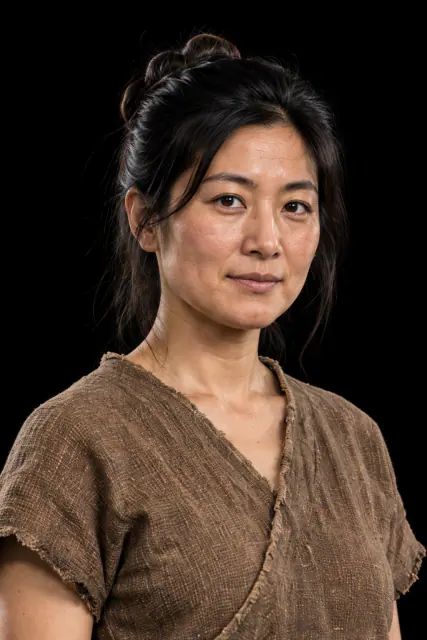
Hei · fictional name
Hei is a fictional potter who allows us to understand the difficulty of manufacturing very thin-walled ceramics.
Read the record
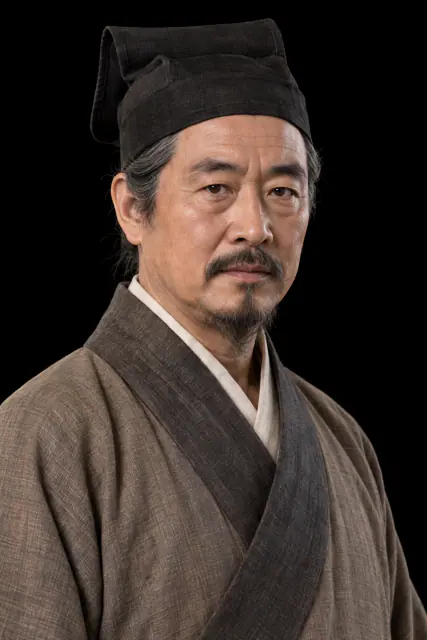
Sima Qian
Sima Qian continued his father’s work and compiled annals, biographies, and other writings in the Shiji.
Read the record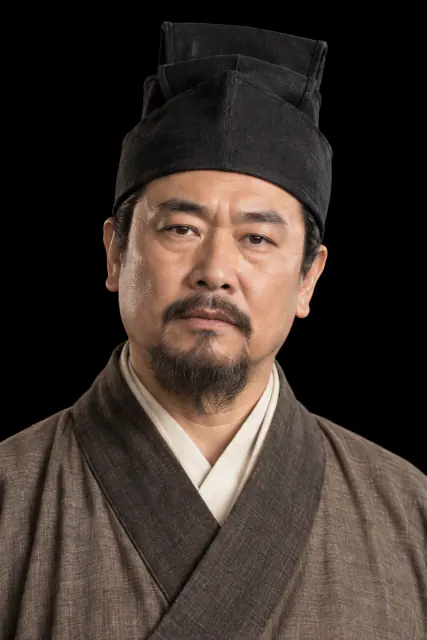
Chen Shou
Chen Shou wrote the histories of Wei, Shu, and Wu, distinct from the later novel about the Three Kingdoms.
Read the recordLOOK CLOSER
Objects and places to start with
A selection from the destination museum. Open each record to explore its documentation and images.
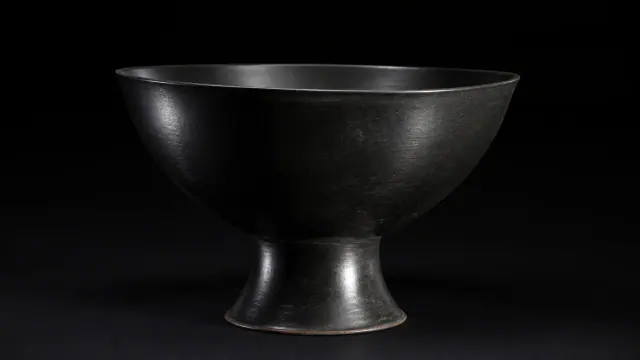
Longshan
Longshan potters used the fast wheel to create very thin-walled black pottery.
Read the record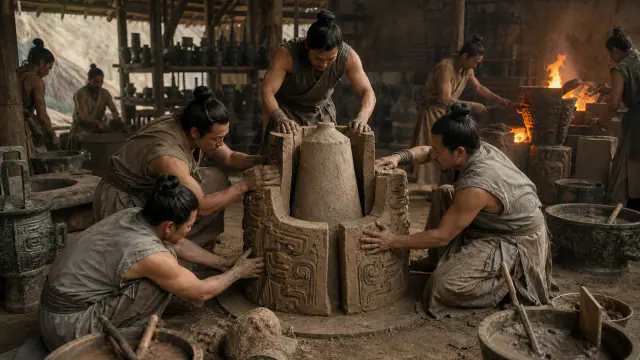
Piece-mold casting
The clay mold was divided into sections to obtain the shape and decoration of the bronze vessel.
Read the record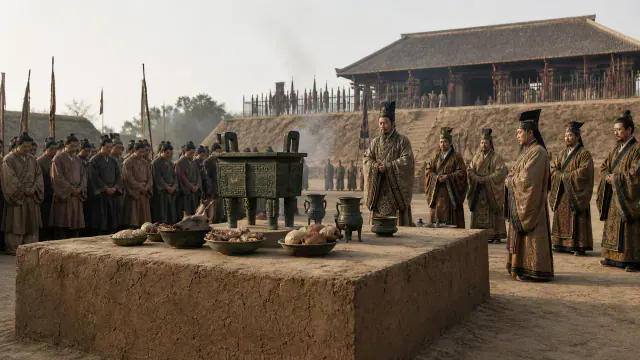
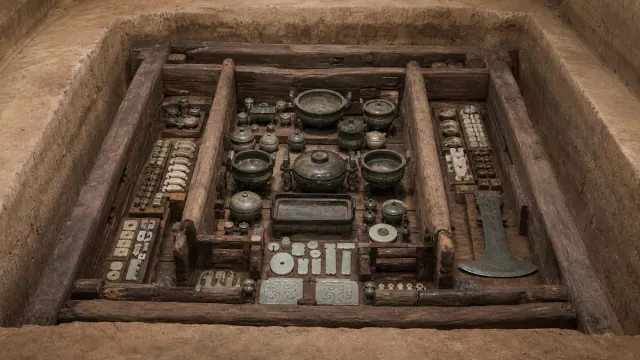
Fu Hao’s burial goods
Fu Hao’s tomb preserved hundreds of bronzes, jades, weapons, and ritual vessels.
Read the recordWHAT REMAINS
Its legacy and ongoing research
Writing and certain ritual frameworks had exceptional continuity, although each dynasty reordered territory, legitimacy and institutions.
CHOOSE YOUR NEXT STOP
Inside this museum
Sources for this introduction
Each theme links to its documentation. The full bibliography also brings together sources for the chronology, the people and the connection between the museums.
View all sources and references →Evidence and interpretation
Polished black pottery and the use of the fast wheel are documented. The social function of each vessel and the political organisation cannot be deduced solely from their finish.
Catalogue facts
- Date
- ≈2500–2000 BCE · this line stops at 2500
- Location
- Shandong and neighbouring regions
- Material
- Black polished pottery
- Technique
- Fast wheel and very thin walls
- Bronze
- The major ritual bronze traditions are mostly later
- Caution
- Archaeological culture · not a unified dynasty
A closer look
About 1 min to read · 1 section. Further reading and sources · free access. Editorial review recorded: .
The wheel left traces beneath the shine
A Longshan cup from Shandong, catalogued by the National Heritage Board of Singapore, preserves traces of wheel-throwing alongside its extremely thin walls. The surface allows one to observe a process, not just admire a colour. The catalogue associates the specimen with black pottery found in tombs and proposes a ritual use, without turning it into a certainty. Looking at manufacturing marks and find context separately helps distinguish what the potter did from what those who later preserved, used or buried the cup may have done.
- Heritage · National Heritage Board, Singapore · Neolithic black stemcupAccess recorded: .
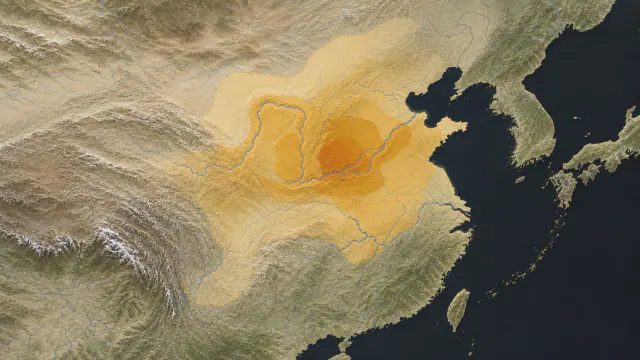
Location and territory
REGIONAL AREA
Shandong and neighbouring regionsCentral Plain and Yellow River basin, with fluctuating extents. The footprint indicates the indicative centre of the area, not a border or exact point.Cultural connections
Continue —without a simple genealogy— to Erlitou and Shang →
Sources and references
- National Museum of China — Longshan black pottery
- Metropolitan Museum · China 8000–2000 BCE
- National Heritage Board, Singapore · Neolithic black stemcup
- UNESCO · Yinxu
- Antiquity — Debate on Xia–Erlitou relations
- Cambridge University Press — Formation of early states: Erlitou and Erligang
- UNESCO — Yin Xu
- Metropolitan Museum — Lobed Tripod Cauldron (Liding)
- Metropolitan Museum — Shang and Zhou Dynasties
- Metropolitan Museum — The Arts of Ancient China
- Metropolitan Museum — Oracle bone
- Antiquity — The origins of metallurgy in China
- British Museum — Jade related to Fu Hao's tomb
- Metropolitan Museum — Wine Warmer (Jue)
- Antiquity — China's major Late Neolithic centres and the rise of Erlitou
- Smithsonian · Anyang
- UNESCO — Yin Xu nomination dossier
- Columbia · letter of Sima Qian to Ren An, Sources of Chinese Tradition
- Shiji 130 · autobiographical chapter, transmitted Chinese text
- National Palace Museum · 歷代聖賢半身像 冊 司馬遷
- Hunan Museum · Mawangdui
- Bibliothèque nationale de France · Sanguozhi, work record
- Jinshu 82 · biography of Chen Shou, compiled in the 7th century
- Provenance and image license
YOUR NEXT VISIT
Explore Ancient China
The same collection, two ways to explore. Choose the experience that suits you.
Did you enjoy this exhibit?
Your opinion helps us improve the museum. You can change it whenever you like.
Loading your rating…