
 English
 Español
 Français
 Italiano
 Deutsch
 Русский
 Português
 Polski
 Română
 Svenska
 Norsk bokmål
 Suomi
 Türkçe
 العربية
 简体中文
 한국어
 हिन्दी
 Ελληνικά
EUROPE · IBERIAN PEOPLES
Iberians
Many Iberias facing the Mediterranean
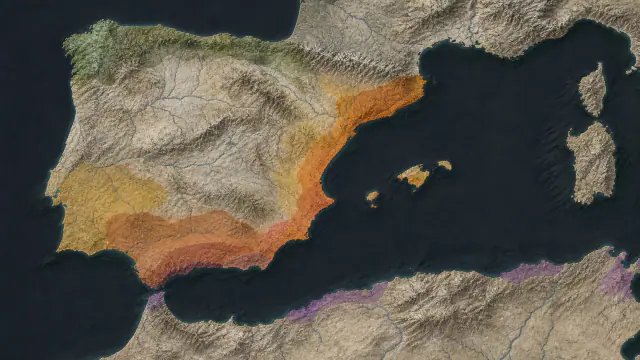
The Iberian peoples shared some cultural traits, but did not form a single kingdom.
Museum documentation · free public access, no account required.
Generated reconstruction · Declared visual hypothesis
Declared visual reconstruction, created for museographic contextualisation; not a photograph of the original nor does it constitute documentary evidence.
Why this doorway leads to another museum
Between the 6th and 1st centuries BCE, communities of the Mediterranean fringe and the southern peninsula developed cities, sanctuaries, aristocracies, writings and artistic forms of their own. ‘Iberian’ is a useful name for a plural reality: Contestani, Edetani, Ilergetes, Turdetani and other peoples did not obey a common authority.
Phoenicians, Greeks, Carthaginians, Celts and Romans crossed their networks. The museum follows these connections through concrete objects, dilemmas and forty-eight stops, without turning the whole peninsula into a single Iberian culture.
Period covered by the destination museum: ≈6th–1st centuries BCE
BEFORE YOU ENTER
An introduction to Iberians
Find your place in time, explore the changes and choose where to go next.
- When
- 6TH–1ST CENTURIES BCE · PREVIOUS CONNECTIONS AND ROMAN EPILOGUE
- Where
- Mediterranean fringe and southern Iberian Peninsula
- What this collection brings together
- Diverse peoples and communities, without a unique Iberian state
The Iberians were different peoples of the east and south of the Iberian Peninsula. They shared traits such as certain writings, ways of making pottery and manners of representing their elites, but did not belong to a single kingdom. Their settlements, sanctuaries and necropolises allow knowledge of societies with differences in wealth, specialised occupations and relations with the Mediterranean.
The museum brings together objects to follow these stories closely: a loom weight speaks of domestic work; a sculpture, of prestige and memory; an imported vessel, of a journey and a new use. Contacts with Phoenicians, Greeks, Carthaginians and Romans changed communities in different ways. It is advisable always to distinguish the Iberian peoples from the Celtiberians and from other peninsular societies.
PLACE MATTERS
Territory and connections
The tour focuses on the Iberian territories and includes comparisons with other peninsular areas. Sharing the peninsula does not make all its ancient inhabitants Iberians.
A HISTORY OF CHANGE
The main periods
Dates are approximate. Periods help us navigate the past, but their boundaries were not always the same in every region.
ca. 1200–600 BCE
Final Bronze and Orientalising Horizon
Peninsular communities interacted with Phoenicians and Greeks before the consolidation of Iberian societies; Tartessos and colonies are not 'early Iberians'.
ca. 600–500 BCE
Formation of Iberian Societies
Oppida, necropolises and writings developed unevenly along the Mediterranean façade and the south; no common nation emerged.
ca. 500–400 BCE
Regional Consolidation
Peoples such as the Indiketes, Edetani, Contestani, Bastetani and Oretani articulated their own territories; labels and boundaries are approximate.
ca. 400–237 BCE
Urban Expansion and Networks
Cities, coinage, writing and workshops connected fields and ports; sharing repertoires did not erase linguistic and political differences.
Continue the story: 3 more periods
237–206 BCE
Carthaginian Presence and the Second Punic War
Carthaginian and Roman armies and alliances altered the south and east; not every Iberian community came under the same control nor adopted the same side.
206–133 BCE
Uneven Roman Conquest
Rome incorporated territories through war, treaties and taxation; chronologies differ between coast, interior and south.
2nd–1st centuries BCE
Provincial Integration
Cities, workshops, languages and cults changed within Hispania; 'Romanisation' does not describe a sudden disappearance of inhabitants or trades.
BEYOND THE DATES
How people lived and saw the world
Many Communities, Different Powers
Settlements and their territories did not depend on a common capital. Walls, sculptures and differences in grave goods show the importance of local elites. Examining several sites allows comparison of how they were organised and what resources they controlled, without taking an exceptional tomb as a portrait of all families.
The house was also a place of work
In a dwelling, food was prepared and craft work could be carried out. A loom weight preserved in the Iberian Museum comes from a space where cereals were also processed. These finds allow us to imagine specific tasks — grinding, cooking or weaving — and understand that the life of a settlement was not limited to its warriors and rulers.
Potters, Blacksmiths and New Ways of Recording
Iron working, wheel-made pottery and goldsmithing formed part of a world of workshops and apprenticeships. Writing and coinage added ways of identifying, recording and paying. They did not reach all regions at once nor immediately replace earlier techniques: each community incorporated changes at its own pace.
Offerings to Ask and Thank
Ex-votos deposited in sanctuaries show people, clothing and gestures of devotion. Cemeteries offer another perspective: the vessels, weapons and ornaments selected for a grave speak of rites and social position. These choices varied; we do not know of a single sacred book that explains the beliefs of all Iberians.
Objects That Came from Afar
Contacts with Phoenicians and Greeks introduced products and techniques that were combined with local traditions. A vessel made elsewhere could acquire a new use upon arriving in an Iberian community. The patera of Perotito, for example, allows us to study how certain Greek-origin motifs were integrated into local images and beliefs.
Sculptures, Ceremonies and Music
Stone figures, vase paintings and small bronzes communicated prestige, devotion or memory. The relief of the auletris of Osuna preserves the image of a double-aulos player. It is a way of approaching music through the instrument and the posture of the player, although their repertoire has not reached us.
PEOPLE AND TESTIMONIES
Meet the people
The records distinguish historical figures, representations and reconstructions. They explain their context, the available sources and their connections with other people.
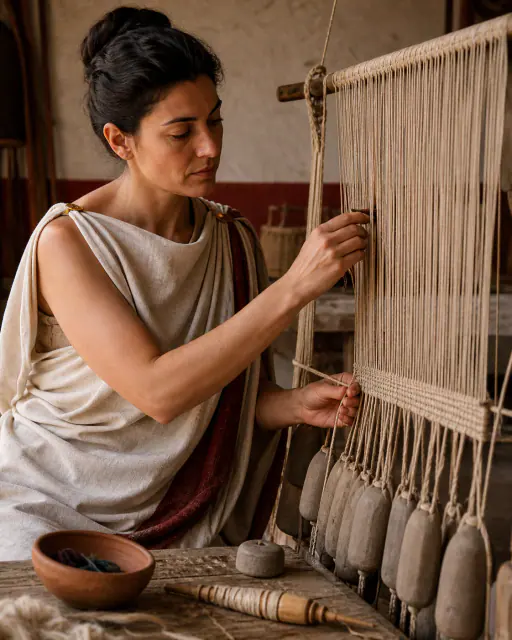
Weaving Prestige
Preparing fibres, spinning, weaving and dyeing required many hours of specialised work.
Read the record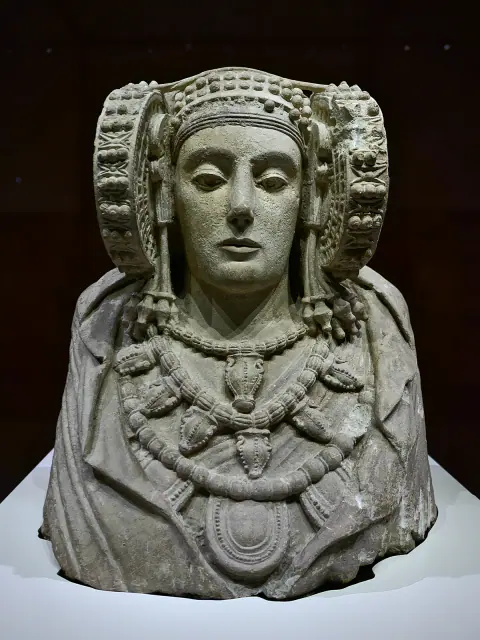
Lady of Elche
Her headdress, her jewellery and the hollow at the back help investigate why this sculpture was made.
Read the record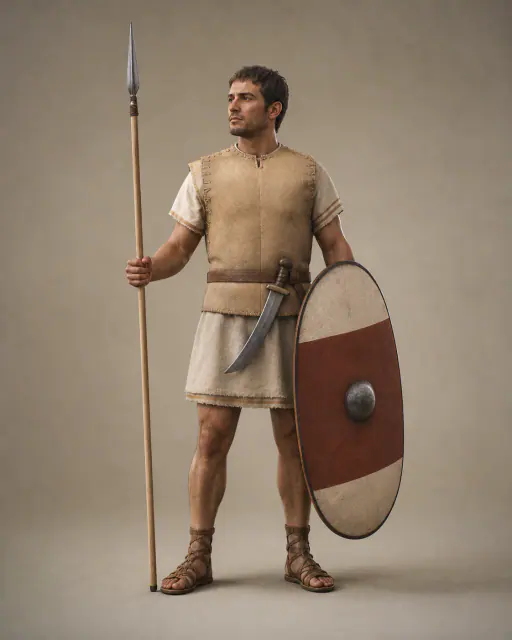
Warrior of Edeta
This reconstruction brings together the arms and protections that appear on the Warriors' Vase.
Read the record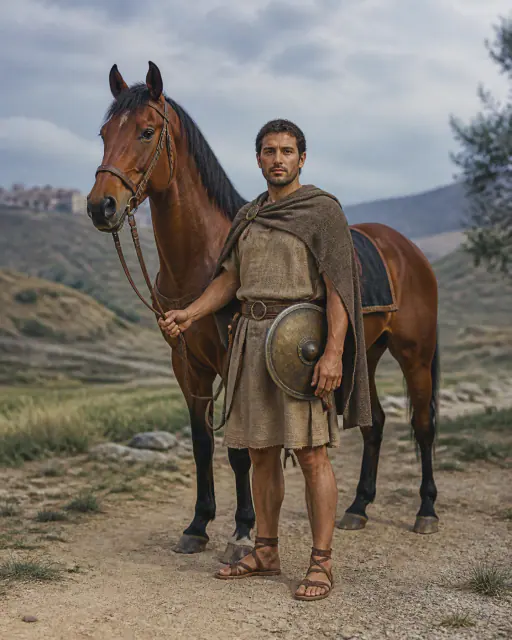
Turma Salluitana
An inscription identifies the horsemen from Hispania who received Roman citizenship for their military service.
Read the recordLOOK CLOSER
Objects and places to start with
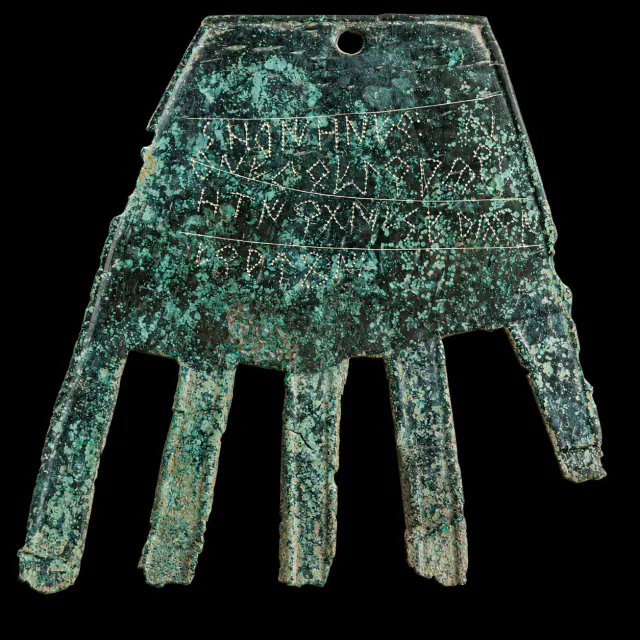
A selection from the destination museum. Open each record to explore its documentation and images.
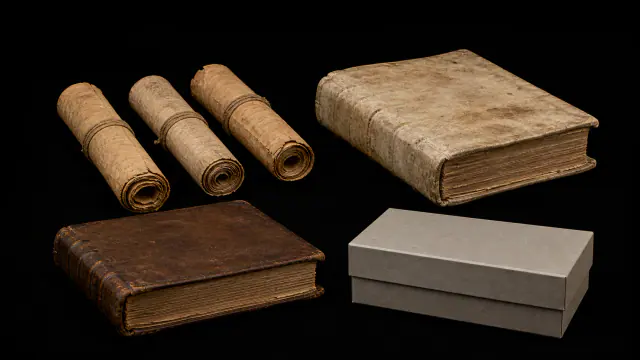
49 Classical Voices
Much of what was written about Iberia originated outside Iberia and long after the events.
Read the record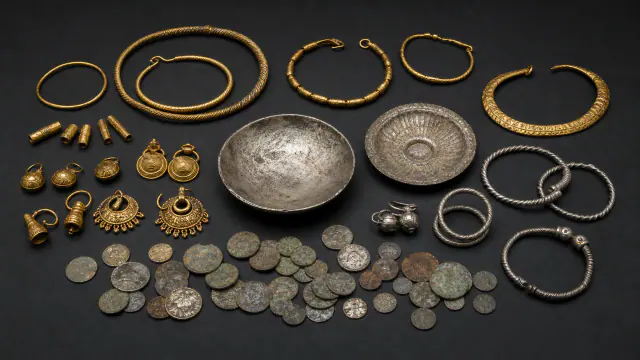
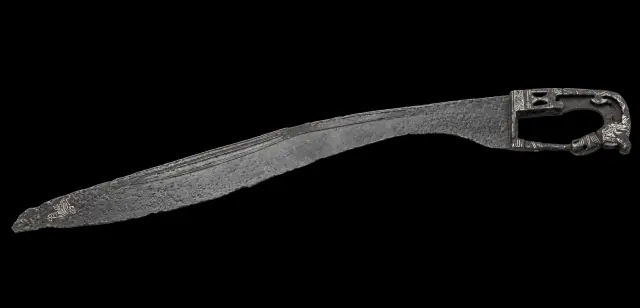
Falcata from Almedinilla
This sword combines several iron sheets, silver decoration and a hilt with a horse's head.
Read the recordWHAT REMAINS
Its legacy and ongoing research
Sculptures, inscriptions, coins and everyday objects preserve local histories that conquest narratives alone do not tell. Integration into Rome was uneven and transformed earlier practices; there was no single day when all communities abandoned their culture.
CHOOSE YOUR NEXT STOP
Inside this museum
Sources for this introduction
Each theme links to its documentation. The full bibliography also brings together sources for the chronology, the people and the connection between the museums.
View all sources and references →Evidence and interpretation
Archaeology, epigraphy and classical sources allow the reconstruction of territories and contacts, but the Iberian language is still not fully understood and frontiers changed over time.
Catalogue facts
- Narrative date
- ≈6th–1st centuries BCE
- Location
- Mediterranean fringe and southern Iberian Peninsula
- Type of entity
- Peoples, cities and diverse territories
- Writings
- Paleohispanic systems; partial reading, language not fully deciphered
- Own museum
- 48 documented stops and four contact doors
- Caution
- Geographical Iberia is not equivalent to Iberian culture
A closer look
About 1 min to read · 1 section. Further reading and sources · free access. Editorial review recorded: .
A city is also recognised by how it protects water
At Ullastret three rock-cut cisterns have been identified. The MAC’s description explains walls lined with sandstone and waterproofing with mortar incorporating crushed pottery. Large slabs protected the water from impurities and light, and an opening allowed extraction. The museum compares these solutions with those of Castell de Palamós and Empúries. Thus a Mediterranean connection is made concrete: not only did jewellery or prestigious images circulate, but also ways of solving urban needs. The technical similarity invites the study of exchanges, without automatically attributing the whole construction to foreign visitors.
- Museum · Museum of Archaeology of Catalonia · Ullastret, the cisternAccess recorded: .
Location and territory
REGIONAL AREA
Mediterranean fringe and southern Iberian PeninsulaMediterranean fringe and southern peninsula; not all Iberia was Iberian. The footprint indicates the orientative centre of the area, not a boundary nor an exact point.Cultural connections
Sources and references
- National Archaeological Museum · Protohistory
- Complete Museum of the Iberians
- Museum of Archaeology of Catalonia · Ullastret, the cistern
- Museum of Prehistory of Valencia · Iberian Culture
- National Archaeological Museum · Protohistory Guide
- Iberian Museum · Loom Weight and Domestic Context
- National Archaeological Museum · Protohistory and Colonisations
- National Archaeological Museum · Ex-votos and Iberian Women
- National Archaeological Museum · Patera of Perotito
- National Archaeological Museum · Auletris of Osuna
- Museum of Prehistory of Valencia · Collection Guide
- National Archaeological Museum · Lady of Elche
- Museum of Prehistory of Valencia · The Enigma of the Vase, Iconographic Analysis
- Museum of Prehistory of Valencia · Edeta and Its Territory
- Hispania Antiqua 45 · Turma Salluitana
YOUR NEXT VISIT
Explore Iberians
The same collection, two ways to explore. Choose the experience that suits you.
Did you enjoy this exhibit?
Your opinion helps us improve the museum. You can change it whenever you like.
Loading your rating…