
 English
 Español
 Français
 Italiano
 Deutsch
 Русский
 Português
 Polski
 Română
 Svenska
 Norsk bokmål
 Suomi
 Türkçe
 العربية
 简体中文
 한국어
 हिन्दी
 Ελληνικά
AFRICA · CONSTELLATION OF COMMUNITIES · LIVING HISTORIES
Batwa / Twa
Batwa and Twa peoples of Central and East Africa
Forests have been essential to the lives of many Batwa and Twa communities, with different histories and traditions.
Museum documentation · free public access, no account required.
Generated reconstruction · Declared visual hypothesis
INTERPRETIVE RECREATION GENERATED BY AI · fictitious museographic architecture; regional objects without Batwa ethnic attribution
Why this doorway leads to another museum
Batwa and Twa are names applied to different communities of Central and East Africa. The museum brings together archaeology, oral history, pottery, music, forest knowledge and contemporary struggles without turning living peoples into static survivals of Prehistory.
Relations of exchange and specialisation with neighbouring societies gave way, in many places, to imposed hierarchies, territorial loss and expulsions linked both to colonial states and conservation parks. Batwa/Twa communities maintained diverse relationships with Bantu-speaking farmers and herders, Great Lakes kingdoms, colonial administrations, missions, markets and conservation bodies. No single formula — isolation, dependence or assimilation — explains all those contacts.
Period covered by the destination museum: Long-duration trajectories · historical documentation and living communities
BEFORE YOU ENTER
An introduction to Batwa / Twa
Find your place in time, explore the changes and choose where to go next.
- When
- Long-duration trajectories · historical documentation and living communities · AFRICA
- Where
- Forests and lake mosaics of the Congo Basin and the Great Lakes region; there was no single Batwa territory nor a common political identity.
- What this collection brings together
- Constellation of communities · living histories
Batwa and Twa are names applied to different communities of Central and East Africa. The museum brings together archaeology, oral history, pottery, music, forest knowledge and contemporary struggles without turning living peoples into static survivals of Prehistory.
Relations of exchange and specialisation with neighbouring societies gave way, in many places, to imposed hierarchies, territorial loss and expulsions linked both to colonial states and conservation parks.
PLACE MATTERS
Territory and connections
Forests and lake mosaics of the Congo Basin and the Great Lakes region; there was no single Batwa territory nor a common political identity. Regional communities connected with forests, lakes, farmers and neighbouring courts; colonisation, exclusionary conservation and displacement reduced many living spaces.
A HISTORY OF CHANGE
The main periods
Dates are approximate. Periods help us navigate the past, but their boundaries were not always the same in every region.
Holocene–1st millennium CE
Landscapes before the preserved names
Archaeology documents occupations, fishing, hunting, gathering and pottery in Central and East Africa, but cannot automatically assign them to current Batwa identities.
1st millennium–c. 1500 CE
Forest, lake, village and exchange
Forest and lake communities participate in food, pottery, iron, knowledge and kinship chains with farmers and herders; each relationship requires a local history.
c. 1500–1880 CE
Communities and courts of the Great Lakes
Oral traditions and historical sources reveal functions in hunting, pottery, music, ritual and court service, without justifying a universal or immutable subordinate status.
c. 1880–1960
Colonial administration and loss of access
Borders, concessions, missions, taxes and coercive labour transformed territories and social relations. The impact was not identical in Congo, Rwanda, Burundi and Uganda.
Continue the story: 2 more periods
20th century
Parks without inhabitants
Protected areas such as Bwindi and Kahuzi-Biega exclude communities from spaces of historical use. Dates, compensation and possibilities of return vary by park.
Present
Living communities and territorial rights
Batwa organisations claim land, consent, services, representation and participation in conservation. The map shows documented cases, not a single authority.
BEYOND THE DATES
How people lived and saw the world
How they were organised
Batwa/Twa communities have not always been outside politics: oral histories recall archers, alliances and Semasaka as a powerful figure; today, organisations and representatives contest national and international policies.
UNIPROBA, Burundese parliamentary quotas, the roles of Vital Bambanze and Imelde Sabushimike, and litigation demonstrate living participation. Formal representation does not equate to land, resources or unanimity.
What daily life was like
A gourd for oil or fat, the gathering of food and firewood, and teaching around the fire bring closer routines that grand narratives often omit.
These details belong to specific people and dates; they do not allow for the reconstruction of a typical day for all Batwa.
What they knew how to do
Pottery, bows, arrows, spears, bags, dog collars and musical instruments condense material decisions and learning.
The unfinished piece from Idjwi and the sequences from southern Rwandan potters allow for the display of variation, error, finishing and innovation.
What they believed
Accounts from five settlements associate certain trees, caves, waters, honey, beer, animals and volcanoes with cult, sign or well-being.
Versions differ. The exhibition does not turn a handful of testimonies into a unified Batwa religion nor reconstruct ceremonies.
Who they interacted with
Forest products, labour, pottery and performances circulated among communities, kingdoms, buyers, missionaries and collectors.
Circulation can be chosen exchange, creative adaptation or unequal extraction. A museum label rarely suffices to distinguish them.
Art, music and storytelling
Recordings from 1952 and 1954, memories of dance and lobelia flutes, and changing ceramics document creation in specific places and circumstances.
A broad category such as polyphony or Batwa art does not replace repertoire, interpreter, date, payment, licence and context.
PEOPLE AND TESTIMONIES
Meet the people
The records distinguish historical figures, representations and reconstructions. They explain their context, the available sources and their connections with other people.
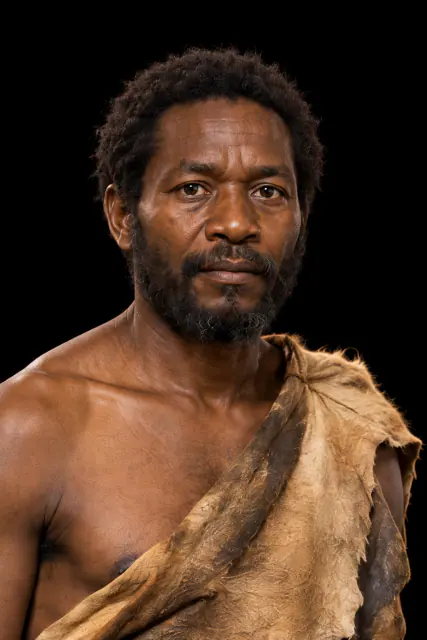
Ishango · ancient context
A contextual figure from Lake Edward, with no name or ancient ethnicity attributed.
Read the record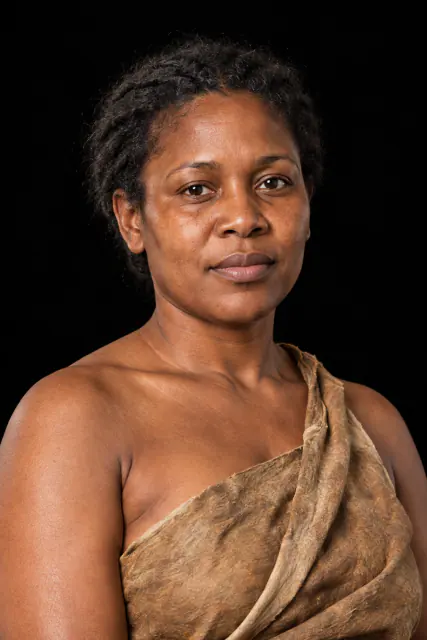
Namaboni B · funerary context
A figure to explain a dated context, without inventing the occupant of a burial.
Read the recordLOOK CLOSER
Objects and places to start with
A selection from the destination museum. Open each record to explore its documentation and images.
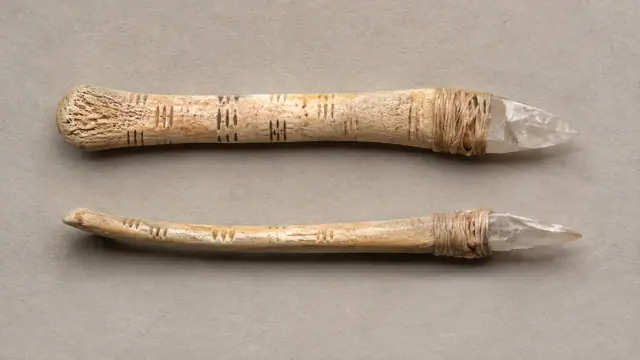
Ishango, without genealogical shortcut
This tool combines bone, a quartz point and incisions whose function remains under discussion.
Read the record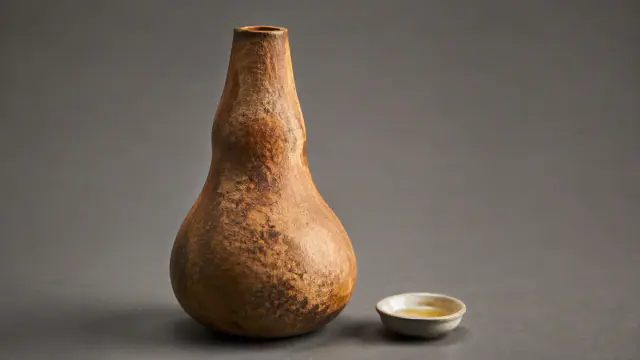
Oil in a calabash
According to the museum catalogue, this gourd was used to store oil or fat for use on the body.
Read the record
Two songs, missing names
The archive preserved voices and claps, but not the names of those who sang.
Read the record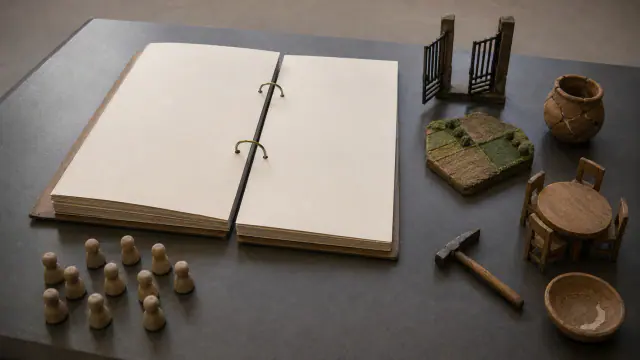
Eleven articles
The African Commission ordered redress for violations of Batwa communities' rights; verifying compliance is a separate task.
Read the recordWHAT REMAINS
Its legacy and ongoing research
Batwa and Twa communities are contemporary. Their authorities, organisations, languages and claims must be part of the narrative and of decisions on images, objects, human remains and heritage.
CHOOSE YOUR NEXT STOP
Inside this museum
Sources for this introduction
Each theme links to its documentation. The full bibliography also brings together sources for the chronology, the people and the connection between the museums.
View all sources and references →Evidence and interpretation
This window distinguishes the documented core from its historical reach: Forests and lake mosaics of the Congo Basin and the Great Lakes region; there was no single Batwa territory nor a common political identity. The label 'Batwa / Twa' summarises a changing trajectory, not an immobile population nor a universal stage of progress.
Catalogue facts
- Narrative date
- Long-duration trajectories · historical documentation and living communities
- Location
- Forests and lake mosaics of the Congo Basin and the Great Lakes region; there was no single Batwa territory nor a common political identity.
- Type of entity
- Constellation of communities · living histories
- Scope
- Regional communities connected with forests, lakes, farmers and neighbouring courts; colonisation, exclusionary conservation and displacement reduced many living spaces.
- Key innovation
- Ecological knowledge of forests and wetlands
- Legacy
- Batwa and Twa communities are contemporary. Their authorities, organisations, languages and claims must be part of the narrative and of decisions on images, objects, human remains and heritage.
A closer look
About 1 min to read · 1 section. Further reading and sources · free access. Editorial review recorded: .
Learning from specific potters, not from a label
Marjaana Kohtamaki's 2007 study observed the ceramic production of four Twa communities in southern Rwanda and individually interviewed eighteen potters. That scale of work allows archaeological preconceptions to be confronted with manufacturing sequences and explanations from those who practised the craft. It does not turn their work into an intact window onto the remote past. It offers a more useful lesson: comparisons must identify community, date and practice; a similarity between vessels does not prove that an ancient population and a living community are the same.
Location and territory
REGIONAL AREA
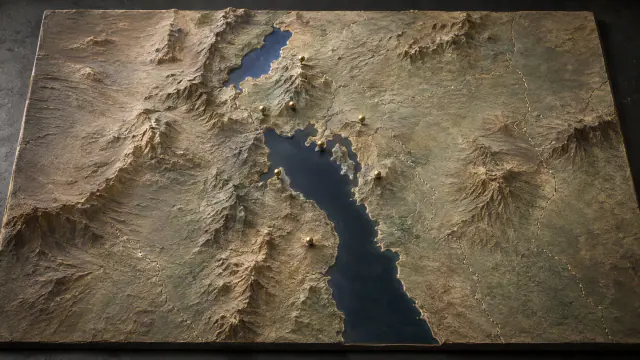
Forests and lake mosaics of the Congo Basin and the Great Lakes region; there was no single Batwa territory nor a common political identity.Discontinuous scopes of Central Africa and the Great Lakes; it is not an ethnic border nor the extent of a State. The marker indicates the orientative centre of the scope, not a border nor an exact point.Cultural connections
Sources and references
- FFI/UOBDU/UWA/ITFC — Batwa cultural values in Bwindi and Mgahinga
- Royal Belgian Institute of Natural Sciences · Ishango, objects and chronology
- Nature Human Behaviour · Cultural and linguistic evolution among Central African hunter-gatherers
- Marjaana Kohtamaki · Azania 45, An ethnoarchaeological study of Twa potters in southern Rwanda, 2010
- ACHPR — Communication 588/15, Kahuzi-Biega
- International Journal of Osteoarchaeology · Early Iron Age burial from Kabusanza
- PNAS · Central African hunter-gatherer interconnectivity
- Oxford Handbooks · Great Lakes region and early African states
- Azania — Twa potters in southern Rwanda
- ACHPR · Mission to Uganda
- Uganda Legal Information Institute · UOBDU v Attorney General
- FPP/UOBDU — The Batwa of South West Uganda
- UN ECOSOC — Biography of Vital Bambanze
- IWGIA — The Indigenous World 2022: Burundi
- British Museum — Gourd vessel Af1948,08.205
- British Museum — Partly made pot Af1948,08.245
- British Museum — Twa objects from Kaninya
- Smithsonian — Twa vase NMNH 14459166
- SAMAP/ILAM — Rwanda recordings attributed to Batwa women
- Smithsonian — Voice of the Congo sound recording
- Royal Belgian Institute of Natural Sciences · Ishango, human remains
- Royal Belgian Institute of Natural Sciences · Ishango, points and harpoons
- Tibesasa 2021 · University of Pretoria · pp. 95–98, 109, 196–199 and 213–219
YOUR NEXT VISIT
Explore Batwa / Twa
The same collection, two ways to explore. Choose the experience that suits you.
Did you enjoy this exhibit?
Your opinion helps us improve the museum. You can change it whenever you like.
Loading your rating…