 English
 Español
 Français
 Italiano
 Deutsch
 Русский
 Português
 Polski
 Română
 Svenska
 Norsk bokmål
 Suomi
 Türkçe
 العربية
 简体中文
 한국어
 हिन्दी
 Ελληνικά
01 · INITIAL ATLAS · DIVISIONS AND REGIONS
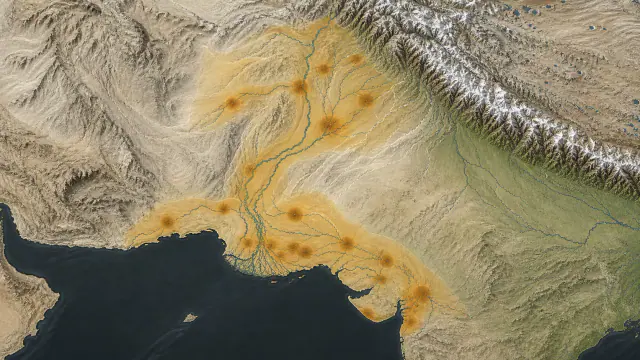
Map of the Indus civilisation
An urban network of enormous extent, without a known capital
Read the complete record → TRACEKEEPERS
HISTORY · OPEN COLLECTION
Long-lived villages, specialised crafts and planned settlements gradually became connected. These developments preceded the shared standards and urban networks of the Mature Harappan period.
30 complete records · free to read, no account needed
Read freely here. A free account saves your visits inside the museum.
Before you begin · Indus
The great Harappan cities arose from millennia of agriculture, craftsmanship and contacts between very different regions.
7th millennium BCE
Adobe, cereals and livestock document a long history of food production.
c. 3300–2600 BCE
Rehman Dheri and early Harappa show planning, crafts and contacts prior to urban integration.
c. 2600–1900 BCE
An extensive network connects large cities and rural communities with shared material practices.
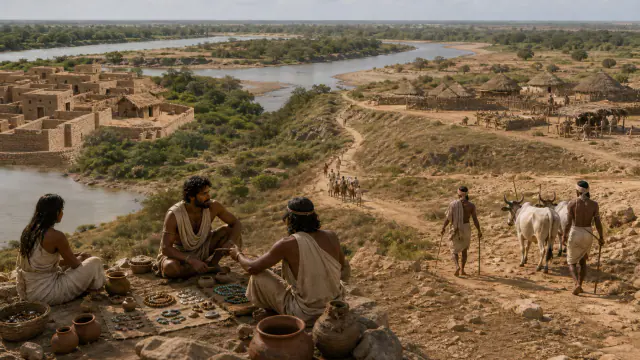
In Mehrgarh, near the Bolan Pass, archaeology documents from the 7th millennium BCE adobe buildings and an economy linked to cereals and livestock. The settlement shifted several times within its environment. Its successive occupations show that learning to produce food and transform materials was a long process, preceding the cities of the Indus Valley.
During the following millennia, regional traditions developed with their own workshops and networks. At Rehman Dheri, occupied from approximately 3300 BCE, an enclosure and organised streets reveal early planning. At Harappa, the Ravi and Kot Diji phases show changes in settlement size, object manufacture and the use of signs. These centres were not identical copies of a single capital.
Between approximately 2600 and 1900 BCE, cities, towns and villages participated in a much more integrated network. Seals, forms of measurement and shared craft techniques helped coordinate exchanges. Harappa and Mohenjo-daro belonged to that urban world, whose political organisation we still investigate. Their material similarity allows recognising relationships; it is not enough to reconstruct an empire or name its rulers.
The seals, vessels and everyday objects in the museum help recognise that coordination between distant places.
Interpreting these traces. Indus script remains without an accepted decipherment; we cannot securely attribute names or languages to its inhabitants.
c. 2600 BCE · antecedents from c. 3300 · SOUTH ASIA
Access to the museum brings together the atlas and the background of Indo. Then, seven areas organise the historical context, culture, architecture, figures and society, treasures and equipment, beliefs and curiosities, and three historical doors to other museums. Each file preserves narrative layers, cautions and differentiated sources.
The room combines a specific visual catalog with an audited thematic dossier. Separates facts, interpretations and cautions; the 3D volumes continue to be replaceable markers until models with provenance and license are incorporated.
Long-lasting villages, specialised crafts and planned settlements gradually connected to make possible the standardisation of the mature Harappan period.
Mehrgarh and Rehman Dheri were not mature Harappan cities nor links in a single chain; the process brought together several regional trajectories.
Read the background and its sources →EXPLORE THE COLLECTION
Follow the museum’s curated order or go straight to a section. Every record includes its full public documentation and sources.
01 · COLLECTION
Consult the maps and initial context sheets to situate this museum in time and territory; then choose the areas that interest you most.
01 · INITIAL ATLAS · DIVISIONS AND REGIONS
An urban network of enormous extent, without a known capital
Read the complete record →02 · BEFORE HARAPPA · 7th millennium–2600 BCE
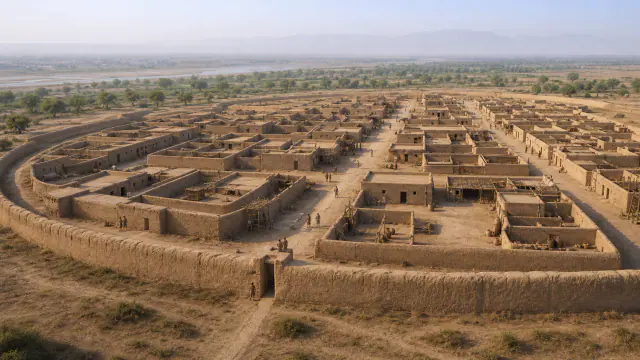
Before the great cities of the Indus, communities like Mehrgarh already built in adobe and worked the land.
Read the complete record →02 · COLLECTION
The first stop reconstructs the area before Indo; then, places and processes allow entering its history without reducing it to a start date or an inevitable destiny.
01 · 01 · SITE · EARLY HARAPPA
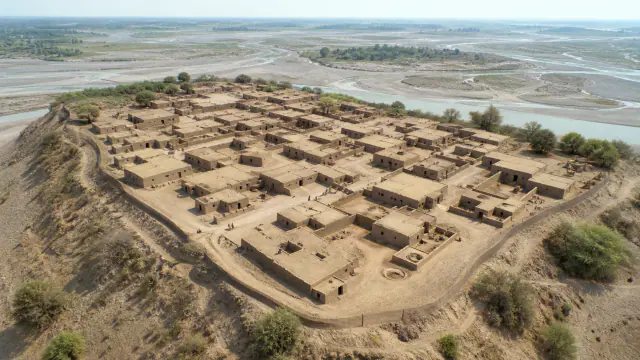
The planned streets of Rehman Dheri precede the great Harappan cities.
Read the complete record →02 · 02 · SITE · PUNJAB
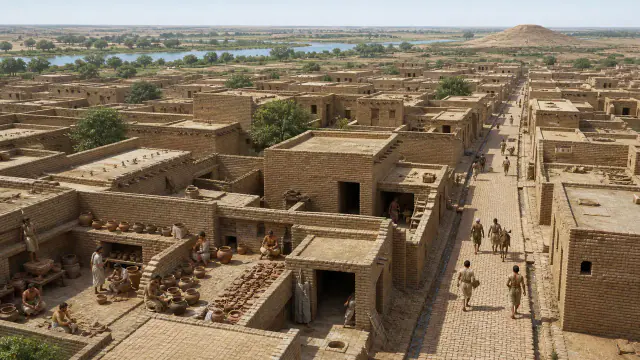
The different layers of Harappa show how its dwellings, workshops and cemeteries changed over centuries.
Read the complete record →03 · 03 · SITE · MATURE CITY
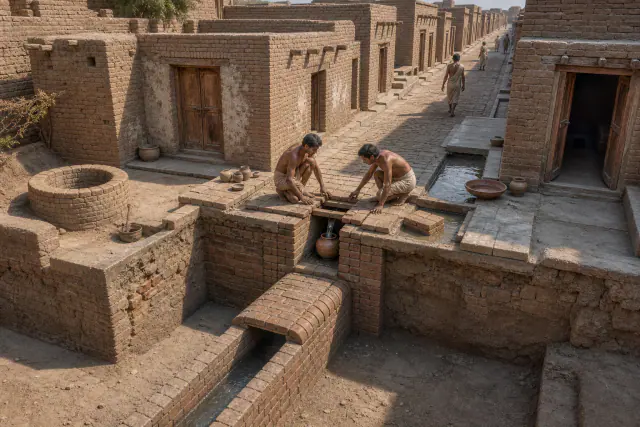
Wells and drains formed part of many houses and streets of Mohenjo-daro.
Read the complete record →04 · 04 · SITE · KHADIR BET
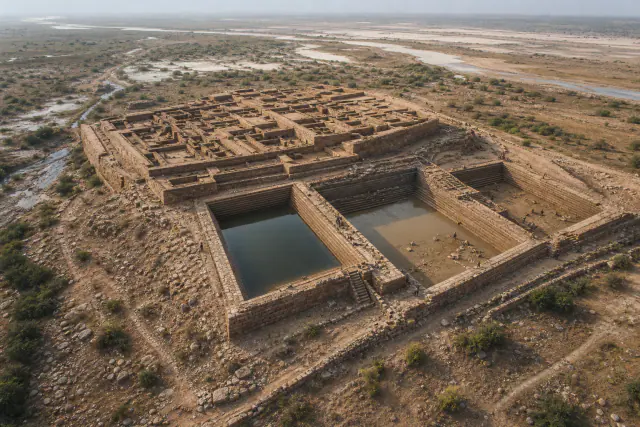
Dholavira built large reservoirs to collect and conserve rainwater.
Read the complete record →05 · 10 · SITE · HARAPPA
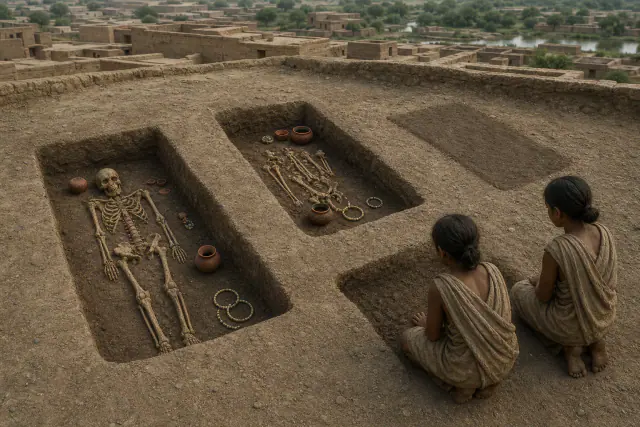
The burials of Harappa allow comparison of how different people were treated after death.
Read the complete record →06 · 12 · LEGACY · TRANSFORMATION
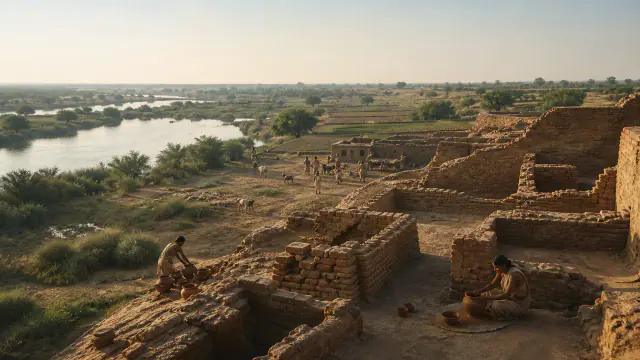
After the decline of the great cities, many communities and customs continued in other forms.
Read the complete record →03 · COLLECTION
These stops distinguish instruments, ritual actions, orality or writing and visual culture. Where there is no theatre, score or certain meaning, the museum preserves the limit.
01 · LIVING AND DOCUMENTED CULTURE · 01
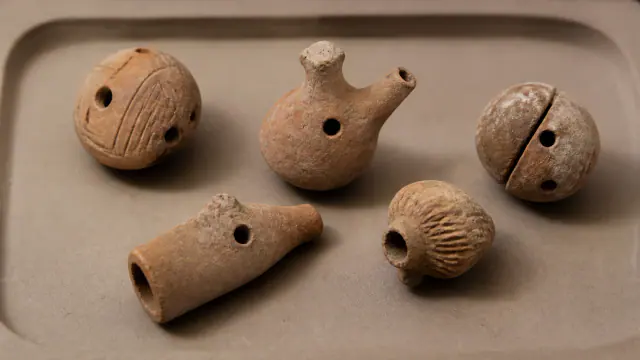
Small terracotta objects have been interpreted as whistles or rattles and some forms could produce percussion.
Read the complete record →02 · LIVING AND DOCUMENTED CULTURE · 02
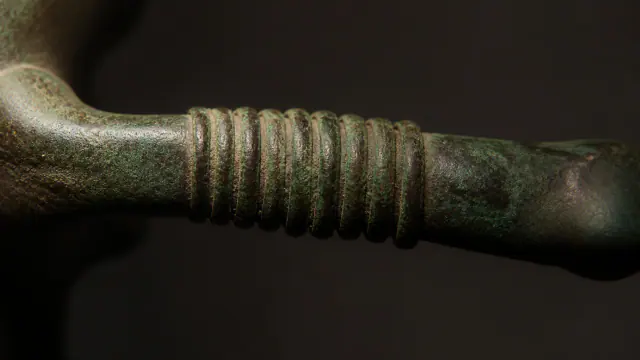
The celebrated figure from Mohenjo-daro received a modern nickname by its posture.
Read the complete record →03 · LIVING AND DOCUMENTED CULTURE · 03
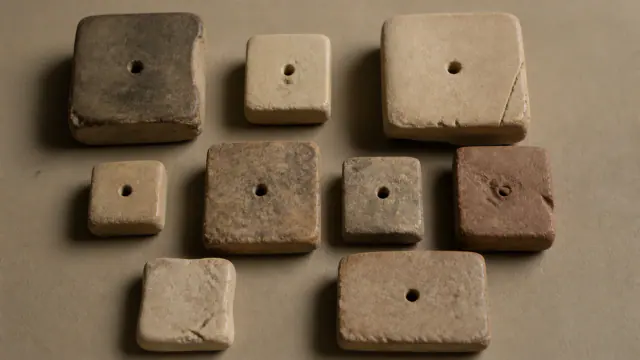
Thousands of brief inscriptions appear on seals and objects, but the Indus script is not deciphered.
Read the complete record →04 · LIVING AND DOCUMENTED CULTURE · 04
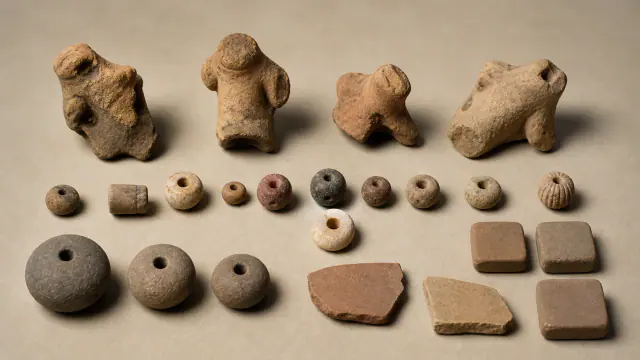
Seals, figurines, beads and pottery travelled between cities separated by hundreds of kilometres.
Read the complete record →04 · COLLECTION
These architectures explain how materials, water, work and memory organized the territory without converting an elevation reconstruction into certainty.
01 · ARCHITECTURE AND LANDSCAPE · 01
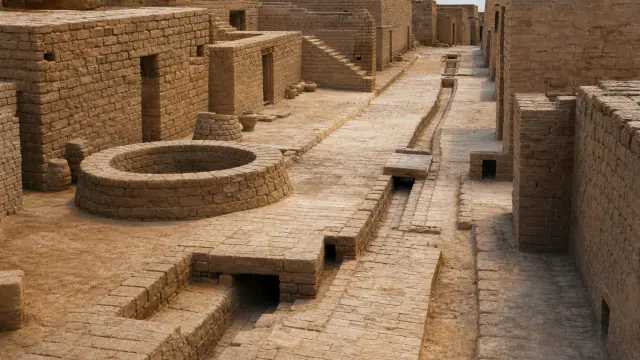
Mohenjo-daro combined streets, wells, baths and drains.
Read the complete record →02 · ARCHITECTURE AND LANDSCAPE · 02
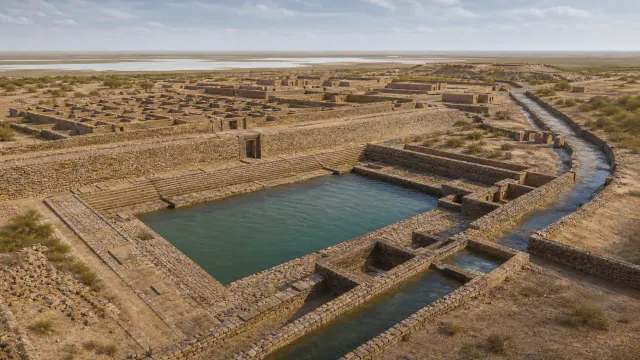
Reservoirs and channels made it possible to use the water available at different times of year.
Read the complete record →03 · ARCHITECTURE AND LANDSCAPE · 03
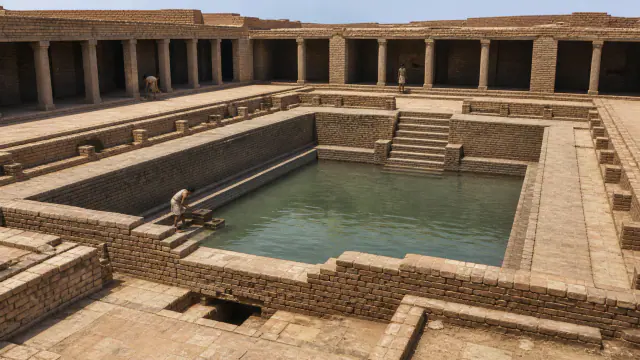
The Great Bath had a waterproofing system, but its exact use remains unknown.
Read the complete record →05 · COLLECTION
Known people, reconstructed voices and collective footprints. From oldest to most recent according to life, reign or scene. The periods may overlap; The voices without a determinable date close the journey.
01 · RECONSTRUCTED PERSON · DECLARED FICTITIOUS NAME
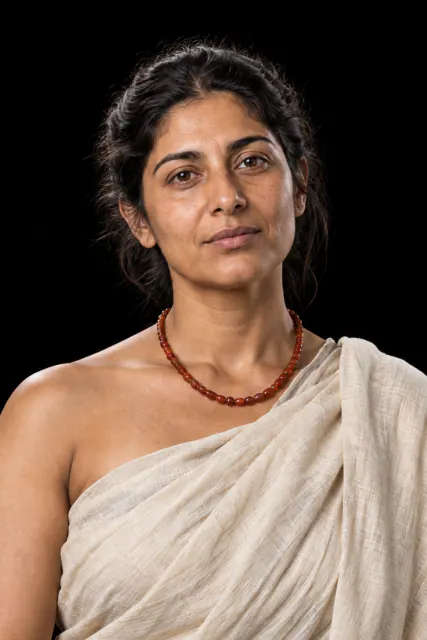
Nahara is a fictional character who raises the question of how to organise the distribution and care of water.
Read the complete record →02 · RECONSTRUCTED PERSON · DECLARED FICTITIOUS NAME
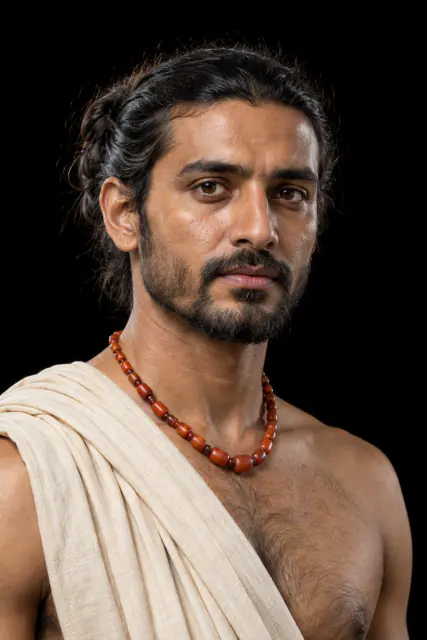
The fictional artisan Ravi helps to understand the work of manufacturing carnelian beads for exchange.
Read the complete record →06 · COLLECTION
Concrete pieces to understand materials, decisions and knowledge systems, with separate evidence and interpretation.
01 · 05 · PRACTICE · DHOLAVIRA
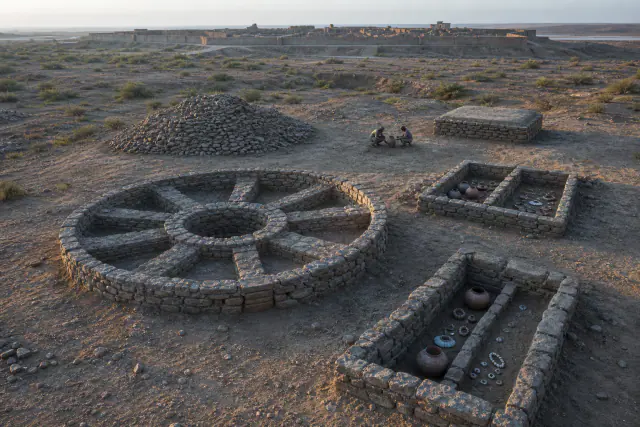
Many funerary structures at Dholavira do not preserve bodies and are interpreted as commemorative monuments.
Read the complete record →02 · 06 · OBJECT · WORKSHOP AND NETWORK
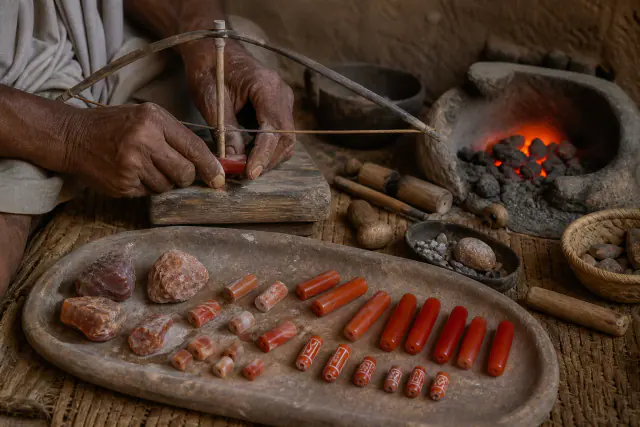
Cutting, polishing and drilling carnelian required specialised artisans; some beads travelled very far.
Read the complete record →03 · 07 · OBJECT · MEASUREMENT
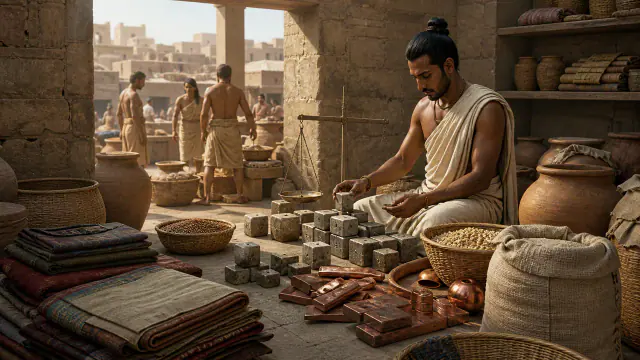
The weights followed repeated measures that allowed quantities to be compared in exchanges.
Read the complete record →04 · 08 · OBJECT · SEALS AND SIGNS
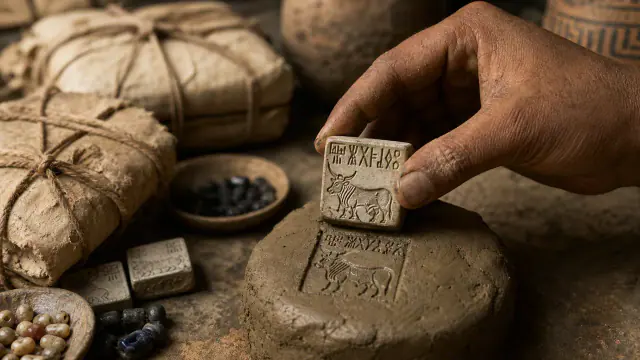
Thousands of brief inscriptions are visible; their language remains unable to be read with certainty.
Read the complete record →05 · 09 · SITE · MARITIME CONTACT
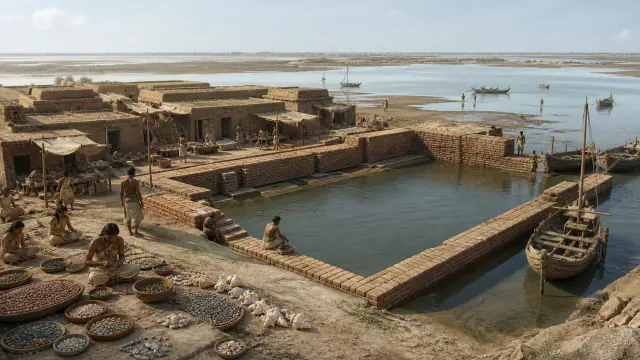
The large brick basin at Lothal has been interpreted as a dock, although its function is debated.
Read the complete record →06 · 11 · CONTACT · PERSIAN GULF
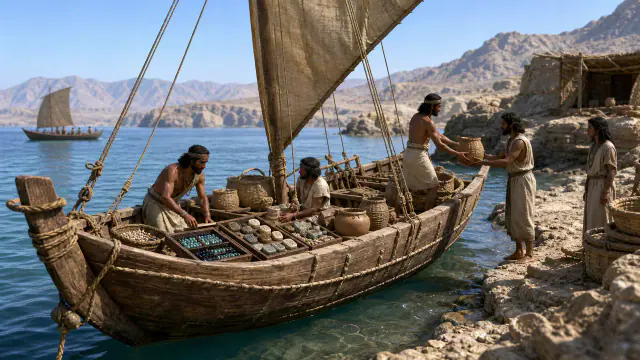
Seals, worked stones and texts document contacts between the Indus, Oman and Mesopotamia.
Read the complete record →07 · DOCUMENTED OUTFIT · CLOSED CONTEXT OR CONTROLLED COMPARISON
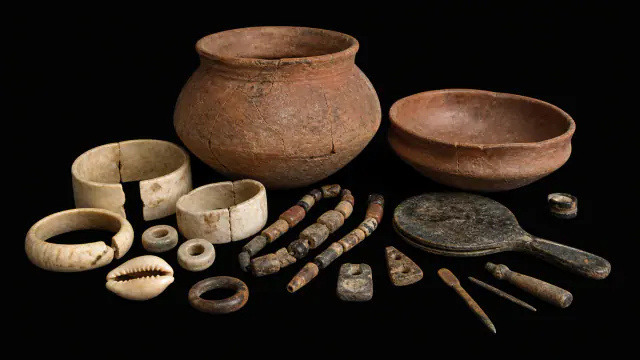
The graves of R-37 contained pottery, bangles and beads; some also included mirrors.
Read the complete record →07 · COLLECTION
These cards separate what is documented from what is interpreted and recover practices, questions and details capable of changing our image of this culture.
01 · BELIEFS AND CURIOSITIES · 01
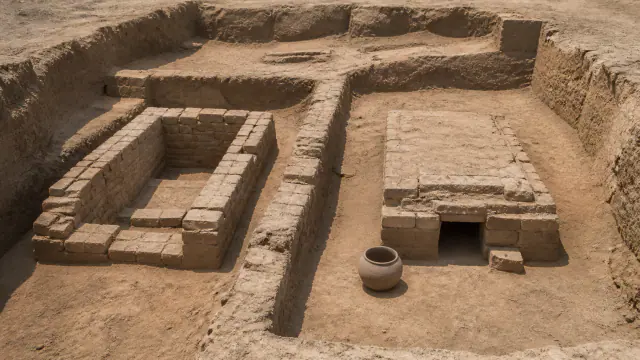
Without a deciphered script, we cannot securely name the gods or rituals of the Indus.
Read the complete record →02 · BELIEFS AND CURIOSITIES · 02
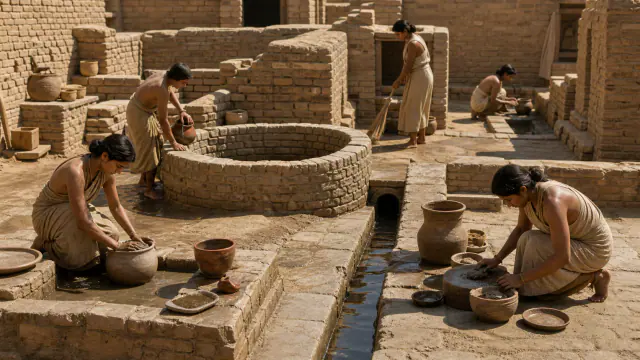
The wells, baths and drains of dwellings needed cleaning and repair to keep functioning.
Read the complete record →03 · BELIEFS AND CURIOSITIES · 03
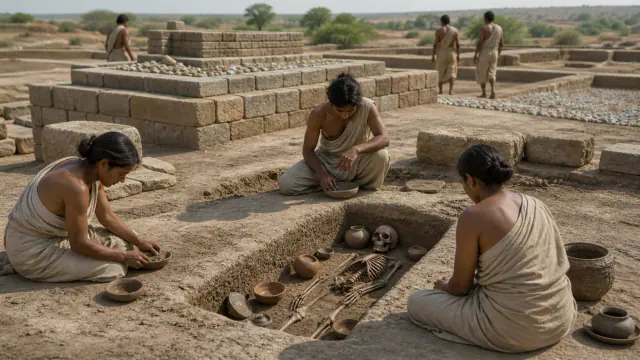
Harappa and Dholavira show that funerary practices varied between communities.
Read the complete record →08 · COLLECTION
Each door explains why the link exists, when it occurred, and what limits prevent contact from being converted into shared identity.
01 · DOOR 01 · ASIA · EXCHANGE
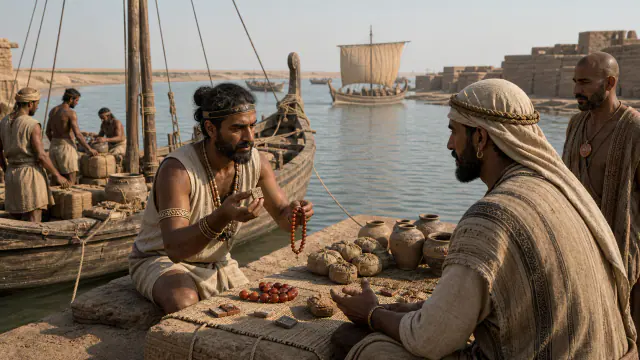
Continues in the Sumeria museum
Read the complete record →02 · DOOR 02 · ASIA · INFLUENCE
Continues in the Vedic India museum
Read the complete record →03 · DOOR 03 · ASIA · CONTACT
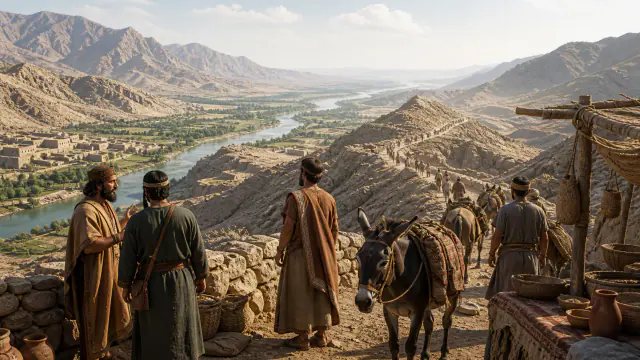
Continued at the Persia Museum
Read the complete record →La ciudad de los signos callados
Discover the connected fiction project. The available Prehistory reader is in Spanish; other volumes are not presented as finished products for sale.
Explore the books →Try the available Prehistory browser alpha. Campaigns for the other cultures are still in development.
Open the game (Spanish) →Use each record’s institution and heritage links to continue your research. Country-by-country historical travel guides are planned, not yet published.
Historical travel →Discover artistic designs inspired by the collections and check each product’s availability. Museum access remains free.
Explore the collection →