 English
 Español
 Français
 Italiano
 Deutsch
 Русский
 Português
 Polski
 Română
 Svenska
 Norsk bokmål
 Suomi
 Türkçe
 العربية
 简体中文
 한국어
 हिन्दी
 Ελληνικά
01 · INITIAL ATLAS · NODES AND ROUTES
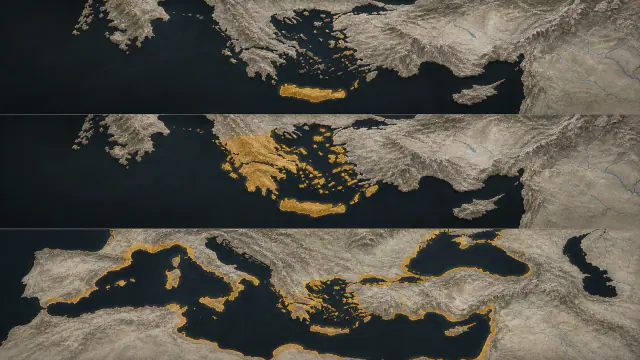
Map of the Greek worlds
Explore the stages from the palaces of Crete to the Greek cities.
Read the complete record → TRACEKEEPERS
HISTORY · OPEN COLLECTION
Permanent villages, seafaring, collective tombs, seals and specialised workshops preceded the first Cretan palaces. The museum begins with Minoan contexts and continues into Mycenaean and Greek histories without treating them as identical societies.
49 complete records · free to read, no account needed
Read freely here. A free account saves your visits inside the museum.
Before you begin · Greek worlds
The stories of Crete, the islands and mainland Greece intertwined through villages, workshops and sea voyages.
From the 7th millennium BCE
A long succession of settlements precedes the buildings that today we identify with the Minoan world.
From c. 1900 BCE
Storage, craft and ritual are concentrated in large complexes connected with the Mediterranean.
c. 1600–1100 BCE
The continental centres and their archives in Greek form a related but distinct trajectory.
Knossos has been inhabited since the Neolithic, thousands of years before its famous palace. Communities cultivated, raised animals and made objects to live and gather. The sea linked different territories: Crete formed part of an Aegean with its own insular and continental histories. The prolonged occupation of a place does not mean that its institutions or its inhabitants remained the same.
In the Early Bronze Age, Cretan workshops developed stone, metal, pottery and seal work. During the second millennium BCE, centres such as Knossos, Malia and Phaistos concentrated storage, administration and ceremonies in complexes we call palaces. The term 'Minoan' was created by modern archaeologists from the legendary Minos; we do not know a historical kingdom founded by that figure.
From around 1600 BCE, the Mycenaean centres of mainland Greece acquired great power and maintained close relations with Crete. Their scribes used Linear B to record an ancient form of Greek. The palatial crises at the end of the second millennium transformed these societies. Later Greek cities would recover and reinterpret that past, without continuing intact the palace system.
The route allows comparing objects, images and writings of these worlds without merging them into a single culture.
Interpreting these traces. Minoan, Mycenaean and Greek are not three successive names of the same State nor a continuous political genealogy.
From the Minoan phase ≈3100 BCE · EUROPE AND AEGEAN
Access to the museum brings together the atlas and the background of the Greeks. Afterwards, seven areas order the historical context, culture, architecture, characters and society, treasures and assemblages, beliefs and curiosities, and five historical doors towards other museums. Each card preserves narrative layers, cautions and differentiated sources.
The room combines a specific visual catalog with an audited thematic dossier. Separates facts, interpretations and cautions; the 3D volumes continue to be replaceable markers until models with provenance and license are incorporated.
Permanent villages, navigation, collective tombs, seals and specialised workshops preceded the concentration of resources and ceremonies in the first Cretan palaces.
'Minoan' is a modern label; prepalatial connections do not prove a unified kingdom nor the historical existence of King Minos.
Read the background and its sources →EXPLORE THE COLLECTION
Follow the museum’s curated order or go straight to a section. Every record includes its full public documentation and sources.
01 · COLLECTION
Consult the maps and initial context sheets to situate this museum in time and territory; then choose the areas that interest you most.
01 · INITIAL ATLAS · NODES AND ROUTES
Explore the stages from the palaces of Crete to the Greek cities.
Read the complete record →02 · BEFORE THE PALACES · c. 6000–1900 BCE
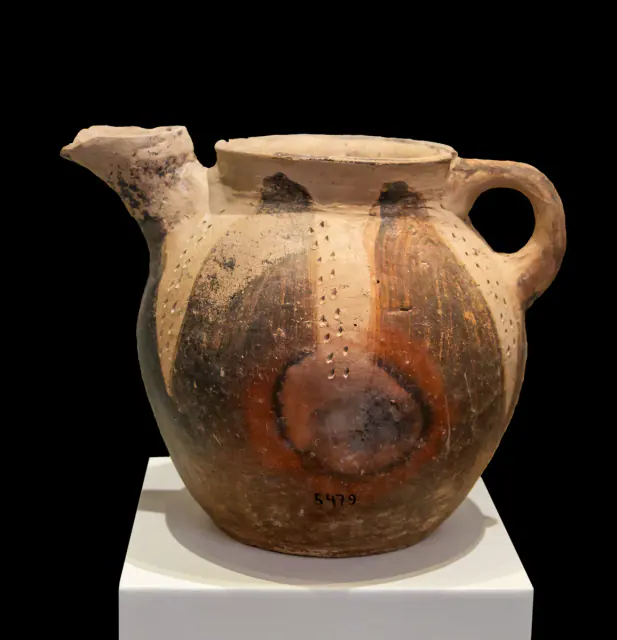
Before the palaces, the communities of Crete already lived in villages, cultivated and maintained contacts by sea.
Read the complete record →02 · COLLECTION
The first stop reconstructs the area before the Greeks; afterwards, places and processes allow entering its history without reducing it to a start date nor to an inevitable destiny.
01 · 02 · SITE · MIDDLE MINOAN
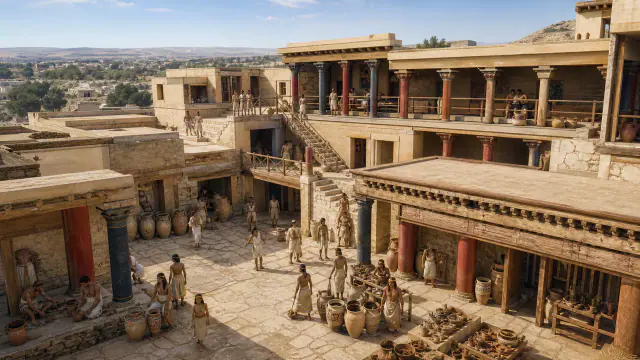
Knossos brought together courtyards, storerooms and spaces for many activities, not only a residence.
Read the complete record →02 · 03 · SITE · MIDDLE MINOAN
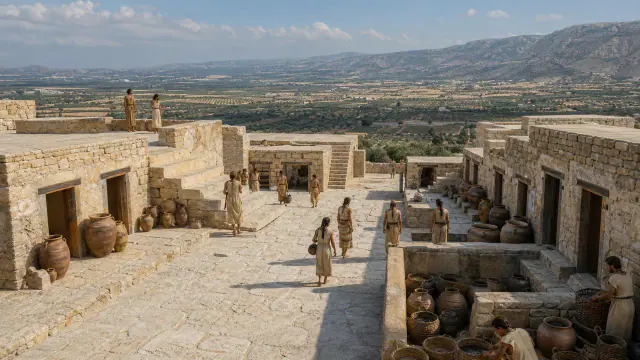
Phaistos was another major palatial centre of Crete, situated in the south of the island.
Read the complete record →03 · 08 · SITE · SHAFT GRAVES
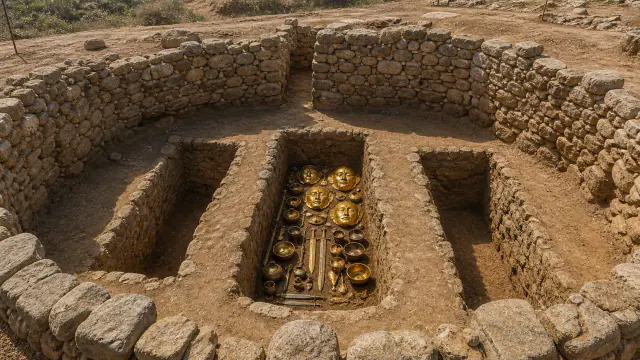
The earliest rich graves at Mycenae contained masks, cups and weapons, before its great palaces.
Read the complete record →04 · 09 · SITE · MYCENAE
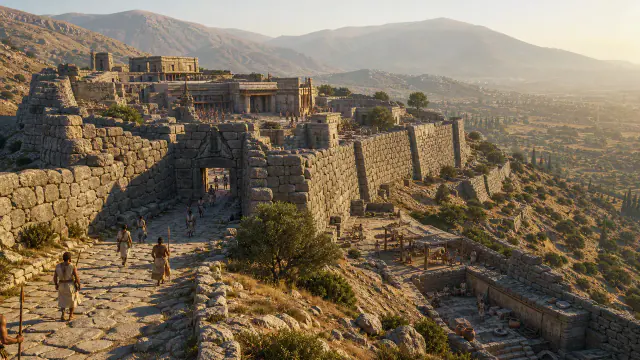
The enormous walls of Mycenae protected residences, storerooms and accesses to the citadel.
Read the complete record →05 · 11 · LEGACY · END OF THE BRONZE AGE
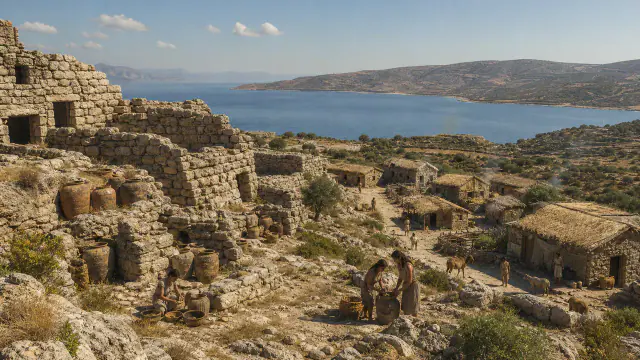
With the disappearance of the Mycenaean palaces, the use of Linear B script ceased to be documented.
Read the complete record →06 · 12 · THRESHOLD · METHOD
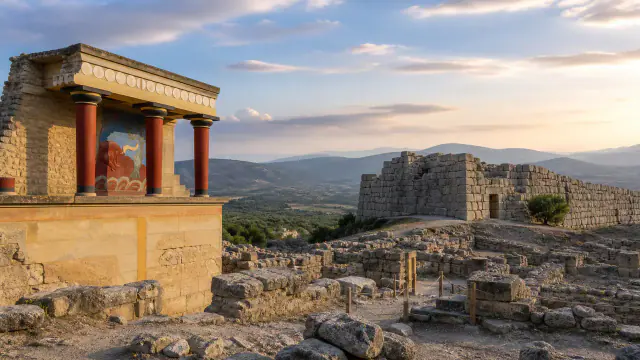
The names of Minos and Agamemnon come from later accounts and do not identify the owners of these pieces.
Read the complete record →03 · COLLECTION
These stops distinguish instruments, ritual actions, orality or writing and visual culture. Where there is no theatre, score or certain meaning, the museum preserves the limit.
01 · LIVING AND DOCUMENTED CULTURE · 01
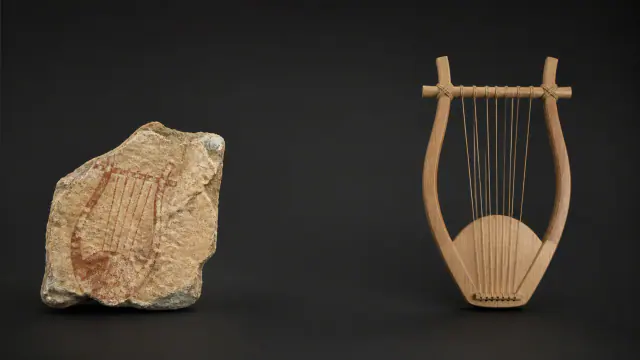
Images and objects allow knowledge of Aegean instruments, but not the assumption that music was always the same.
Read the complete record →02 · LIVING AND DOCUMENTED CULTURE · 02
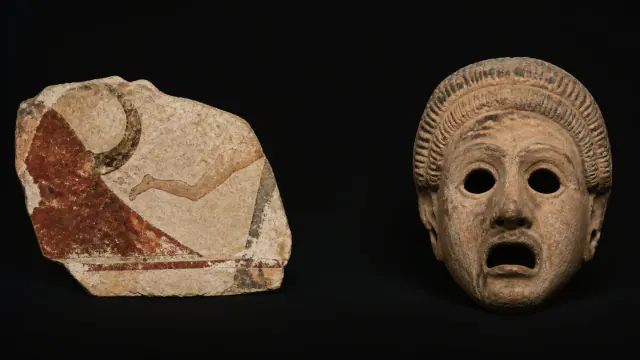
Bull-leaping appears in Minoan images; Greek theatre developed many centuries later.
Read the complete record →03 · LIVING AND DOCUMENTED CULTURE · 03
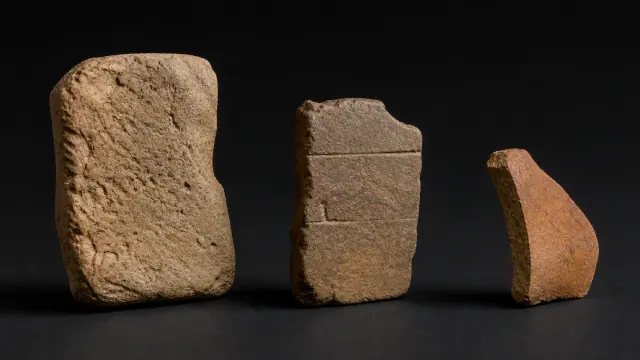
Linear B script records Mycenaean Greek; Linear A remains undeciphered.
Read the complete record →04 · LIVING AND DOCUMENTED CULTURE · 04
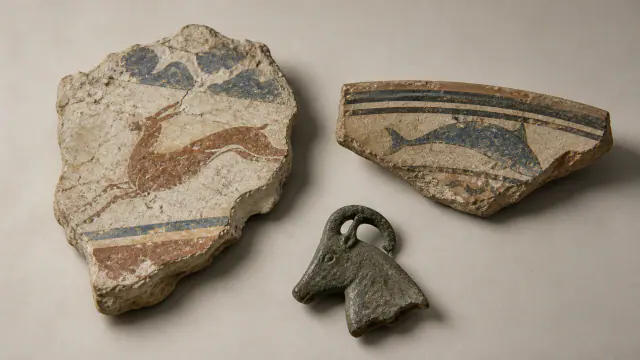
Frescoes, ceramics and metal objects show scenes of the sea, people and animals.
Read the complete record →05 · WRITING · PHAISTOS · ≈1700–1650 BCE
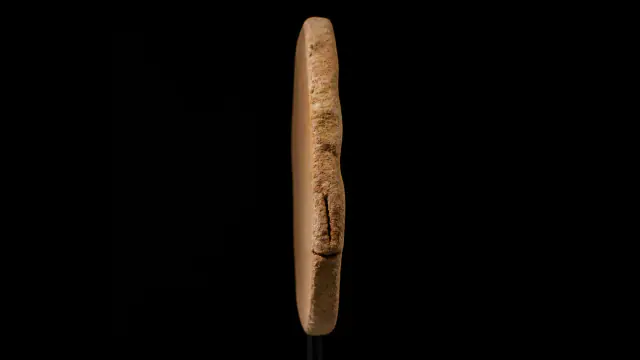
The disc bears 241 stamped signs, but we still do not know how to read its message.
Read the complete record →06 · GREEK TRADITION IN SOUTHERN ITALY · 4TH–3RD CENTURY BCE
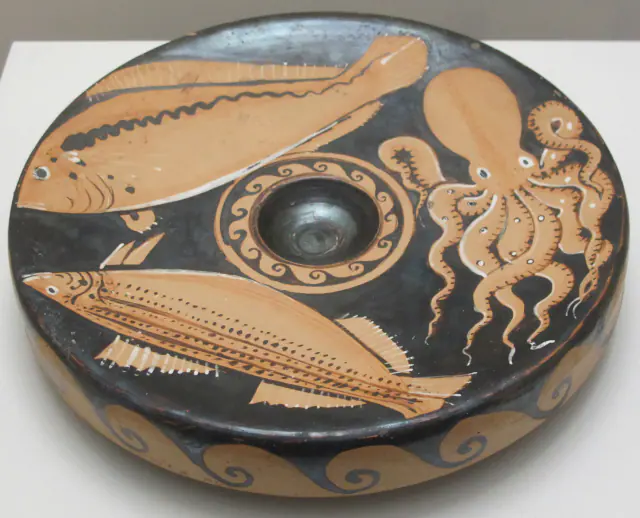
The plate was made in Campania, southern Italy, in a workshop of Greek tradition.
Read the complete record →04 · COLLECTION
These architectures explain how materials, water, work and memory organized the territory without converting an elevation reconstruction into certainty.
01 · ARCHITECTURE AND LANDSCAPE · 01
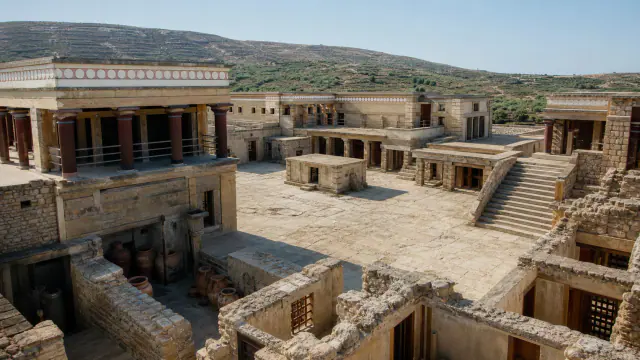
The palaces of Crete brought together courtyards, storerooms, workshops, sanctuaries and archives.
Read the complete record →02 · ARCHITECTURE AND LANDSCAPE · 02
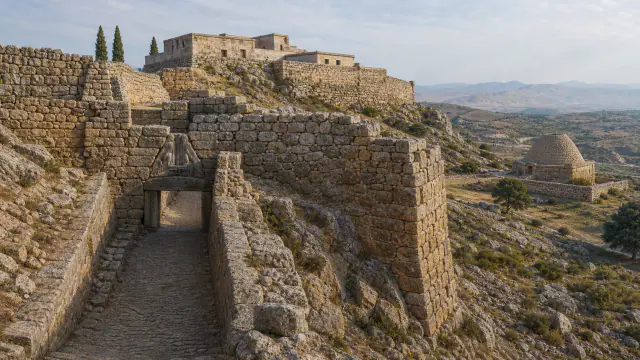
The citadel of Mycenae combines massive walls, palatial buildings and monumental tombs.
Read the complete record →03 · ARCHITECTURE AND LANDSCAPE · 03
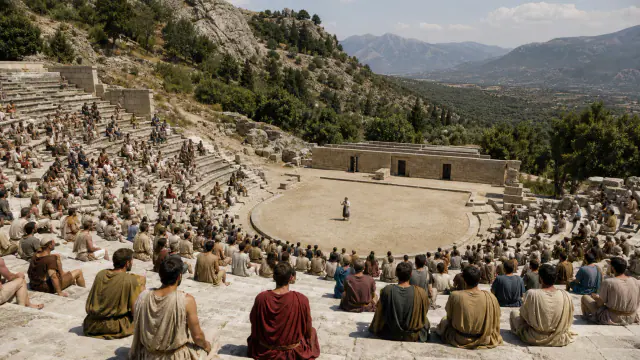
The Greek theatre distributed the spaces for the public and the performances, caring for sight and voice.
Read the complete record →05 · COLLECTION
Known people, reconstructed voices and collective footprints. From oldest to most recent according to life, reign or scene. The periods may overlap; The voices without a determinable date close the journey.
01 · CHRONOLOGICAL WING · SCULPTURE · HISTORICALLY ATTESTED FIGURE
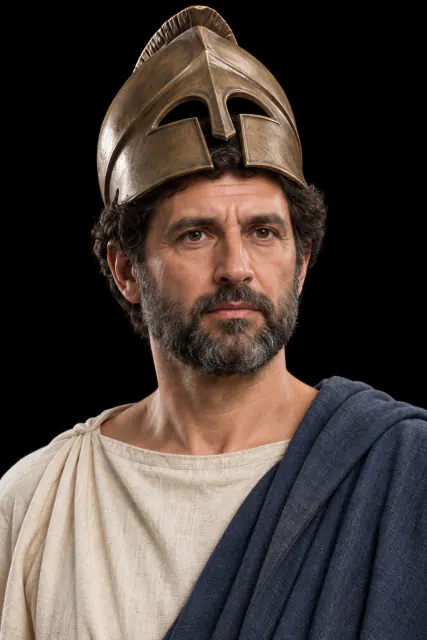
Pericles was a central figure in Athens during a period of major public works and conflicts.
Read the complete record →02 · HISTORICAL FIGURE · WHO WROTE THESE HISTORIES
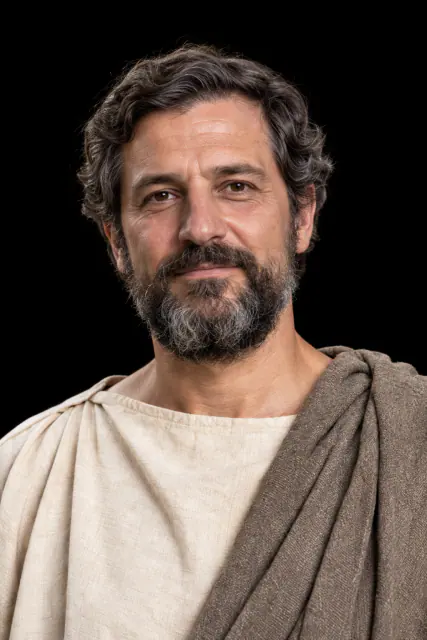
Herodotus gathered accounts about Greeks, Persians and other peoples to investigate their conflicts and customs.
Read the complete record →03 · CHRONOLOGICAL WING · SCULPTURE · HISTORICALLY ATTESTED FIGURE
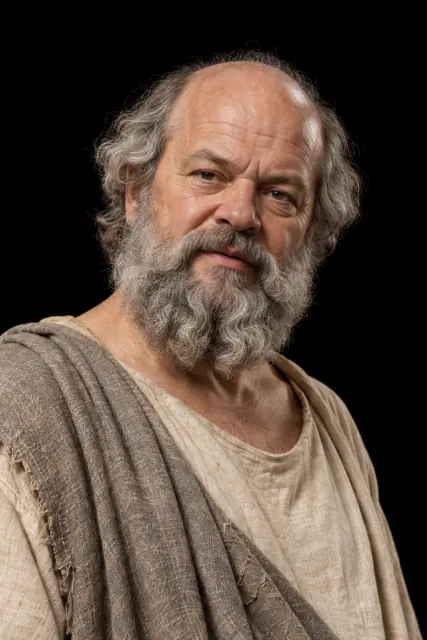
Socrates left no writings; we know his ideas through authors who portrayed him in different ways.
Read the complete record →04 · HISTORICAL FIGURE · WHO WROTE THESE HISTORIES
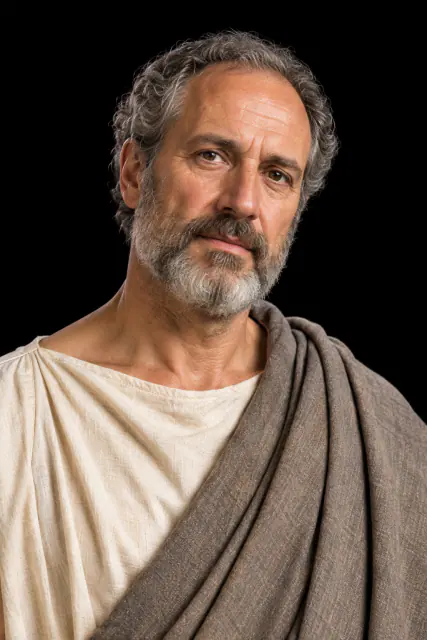
Thucydides wrote about the Peloponnesian War, in which he participated as an Athenian general.
Read the complete record →05 · CHRONOLOGICAL WING · SCULPTURE · HISTORICALLY ATTESTED FIGURE
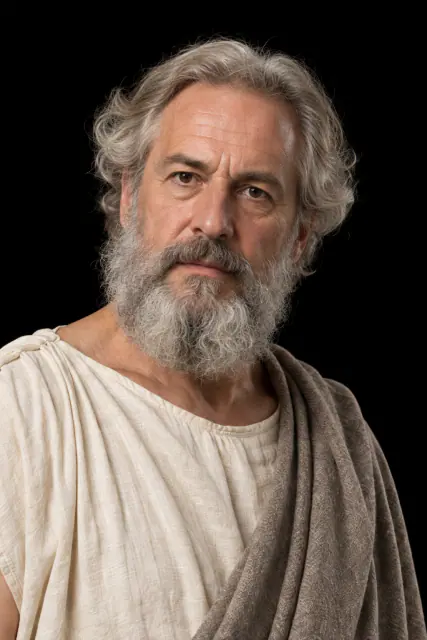
Plato expounded his philosophical questions and ideas through dialogues between characters.
Read the complete record →06 · CHRONOLOGICAL BAR · COIN · HISTORICALLY ATTESTED FIGURE
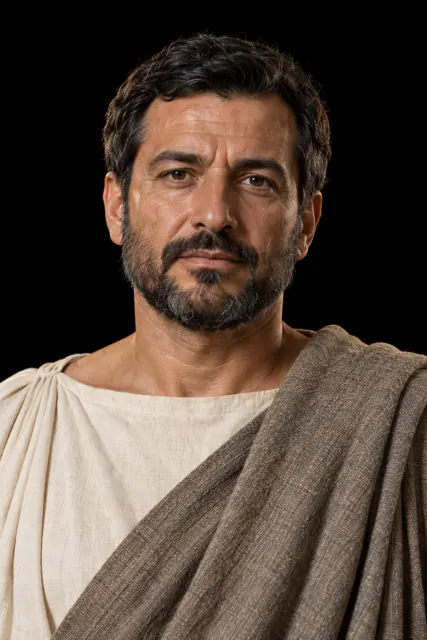
Dionysius I strengthened Syracuse with walls and a fleet, and fought against Carthage and rival cities.
Read the complete record →07 · CYNIC PHILOSOPHY · 4TH CENTURY BCE
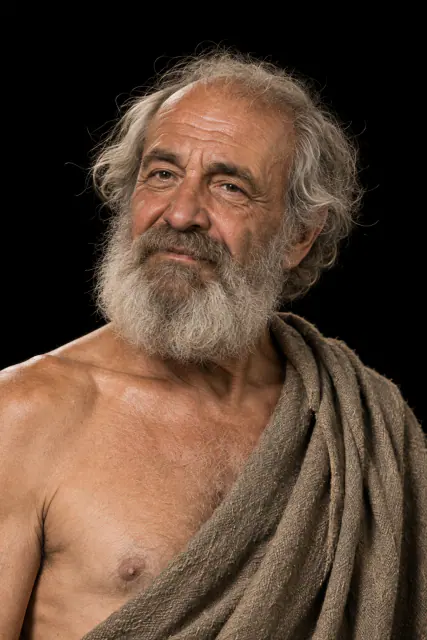
Reducing needs could also be a form of freedom.
Read the complete record →08 · CHRONOLOGICAL WING · SCULPTURE · HISTORICALLY ATTESTED FIGURE
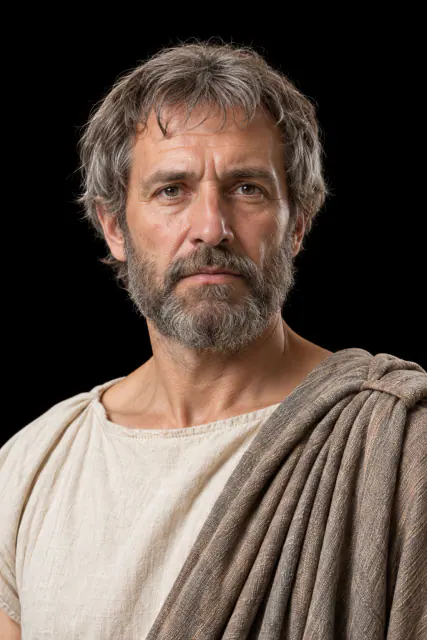
Aristotle founded the Lyceum; his works have come down to us through later copies and editions.
Read the complete record →09 · CHRONOLOGICAL BAR · COIN · HISTORICALLY ATTESTED FIGURE
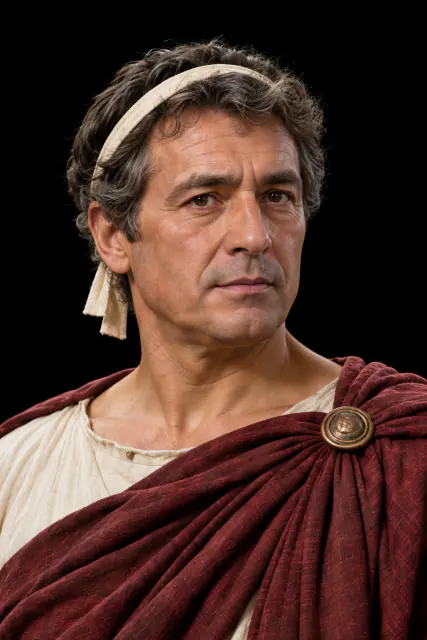
Ptolemy I passed from general of Alexander to king of Egypt and founded a new dynasty.
Read the complete record →10 · HISTORICAL FIGURE · WHO WROTE THESE HISTORIES
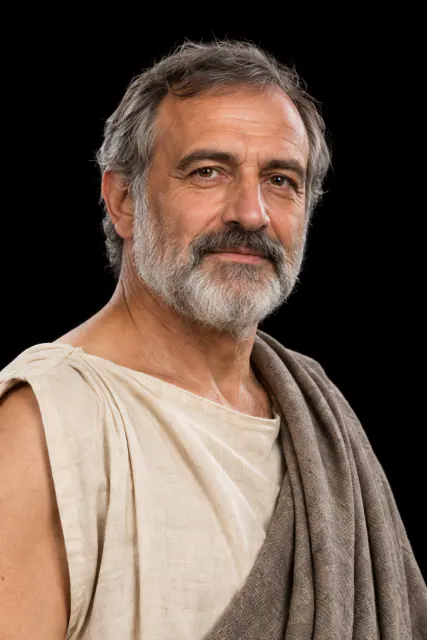
Polybius came to Rome as a hostage and wrote about how Roman power had spread.
Read the complete record →11 · HISTORICAL FIGURE · WHO WROTE THESE HISTORIES
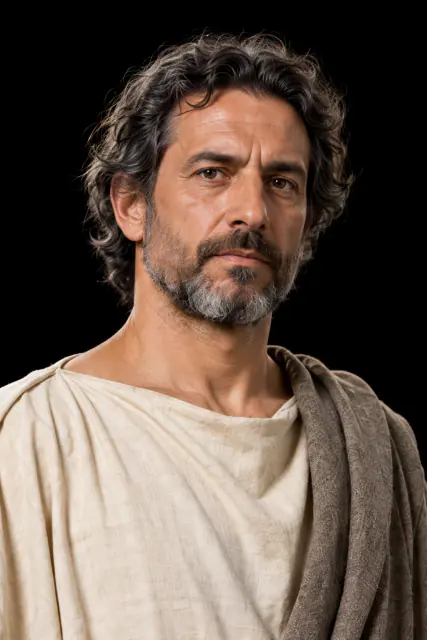
Diodorus compiled histories of many peoples and preserved accounts by authors whose works were lost.
Read the complete record →12 · HISTORICAL FIGURE · WHO WROTE THESE HISTORIES
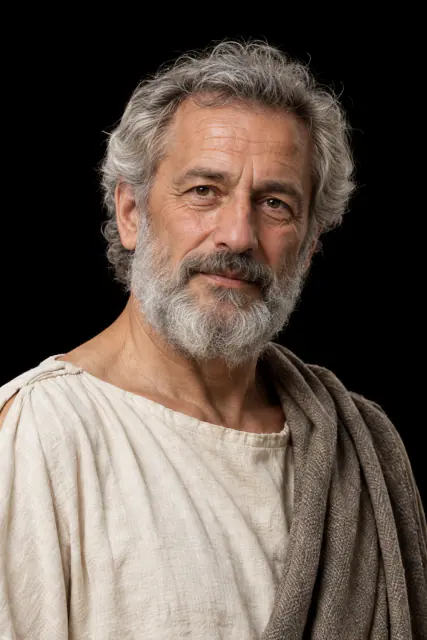
Strabo described places he visited and others he knew through others’ accounts, including Iberia.
Read the complete record →06 · COLLECTION
Concrete pieces to understand materials, decisions and knowledge systems, with separate evidence and interpretation.
01 · 01 · OBJECT · EARLY MINOAN
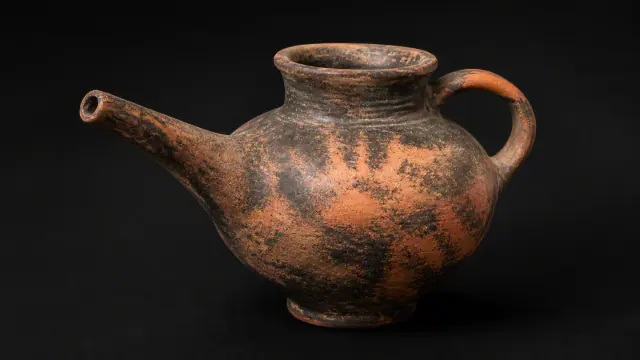
The firing method of these vessels produced their characteristic red and black spots.
Read the complete record →02 · 04 · OBJECT · STORAGE
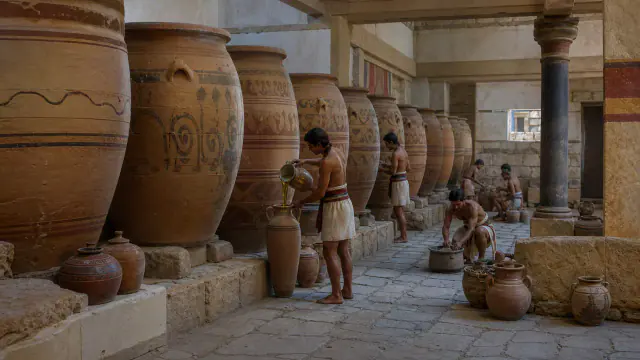
The large vessels called pithoi served to store products in the storerooms of Crete.
Read the complete record →03 · 05 · OBJECT · MINOAN WRITING
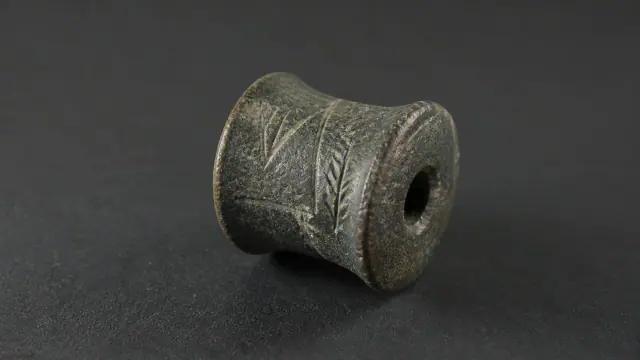
This small piece preserves signs of Linear A, a script that has not yet been deciphered.
Read the complete record →04 · 06 · OBJECT · LATE MINOAN
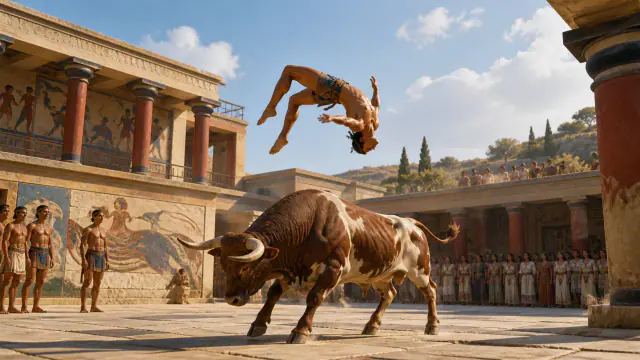
The bronze depicts an acrobatic leap over a bull, but does not explain how the performance was carried out.
Read the complete record →05 · 07 · CONTACT · AEGEAN SEA
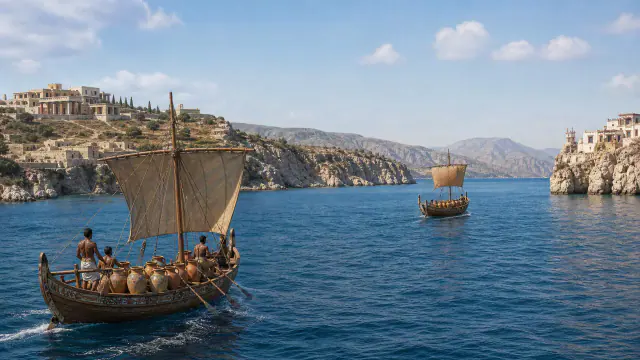
The paintings and ceramics of Thera show contacts between Crete and other Aegean islands.
Read the complete record →06 · 10 · OBJECT · MYCENAEAN KNOSSOS
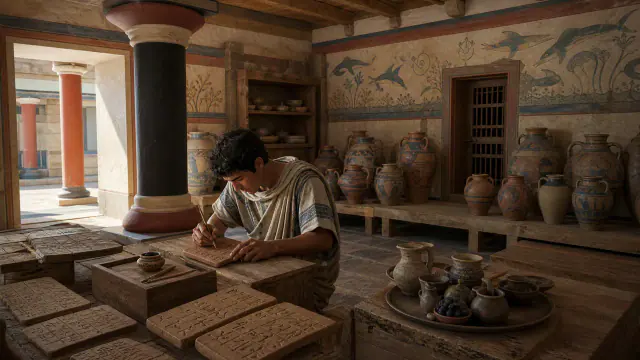
A tablet from Knossos records in Mycenaean Greek oil deliveries to gods and religious personnel.
Read the complete record →07 · TRAVELLING OBJECT · INTERCULTURAL BIOGRAPHY
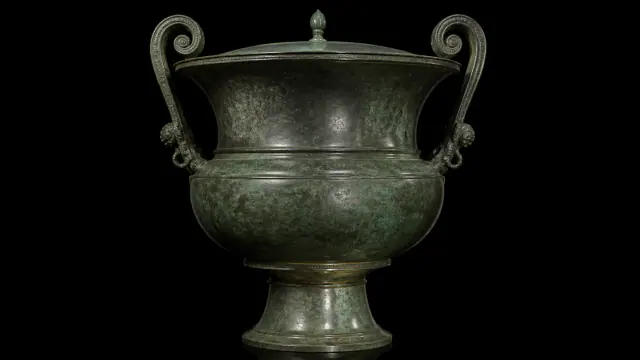
This large Greek-made vessel appeared in a Celtic tomb at Vix.
Read the complete record →08 · TRAVELLING OBJECT · INTERCULTURAL BIOGRAPHY
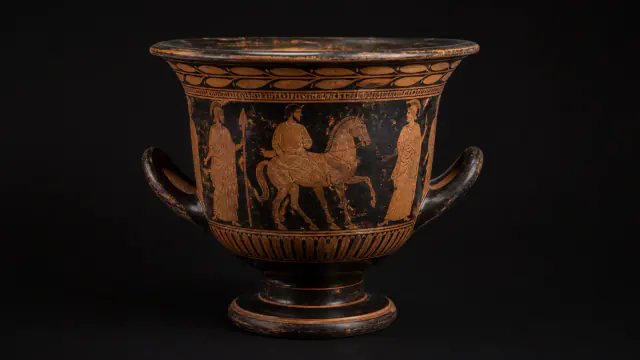
A vessel made in Attica reached Cástulo and was used in an Iberian burial.
Read the complete record →09 · TRAVELLING OBJECT · INTERCULTURAL BIOGRAPHY
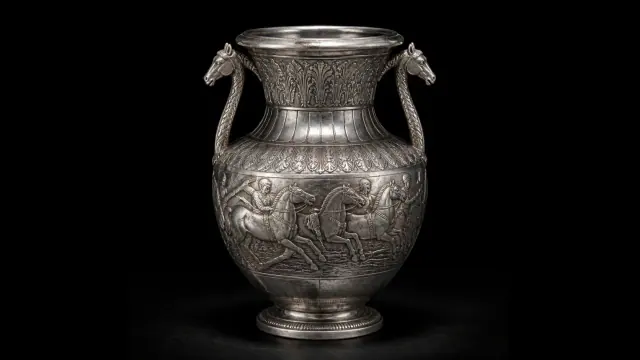
Greek tradition artisans represented scenes related to the care of Scythian horses.
Read the complete record →10 · DOCUMENTED OUTFIT · CLOSED CONTEXT OR CONTROLLED COMPARISON
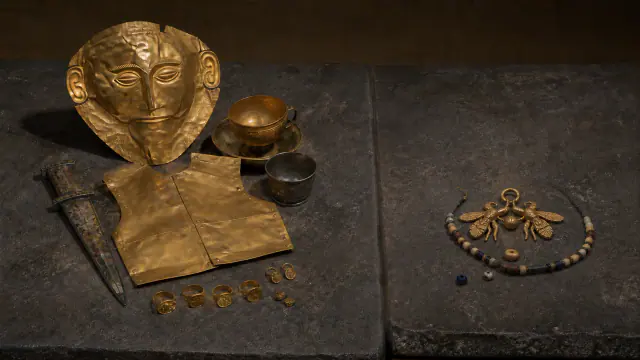
Compare the jewellery and weapons of the Mycenaean shaft graves with the bee pendant found at Malia.
Read the complete record →11 · WEAPONS AND EQUIPMENT
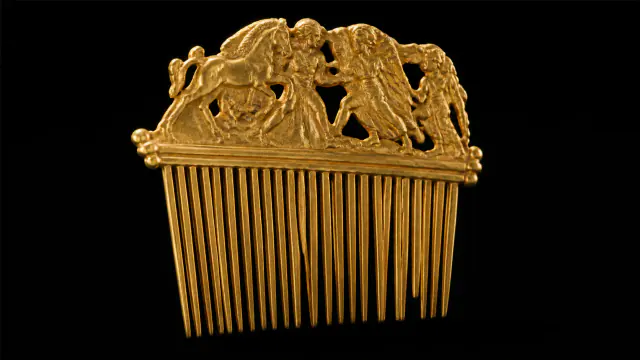
This gold comb, related to Greek craftsmen, was deposited in a Scythian tomb.
Read the complete record →12 · WEAPONS AND EQUIPMENT
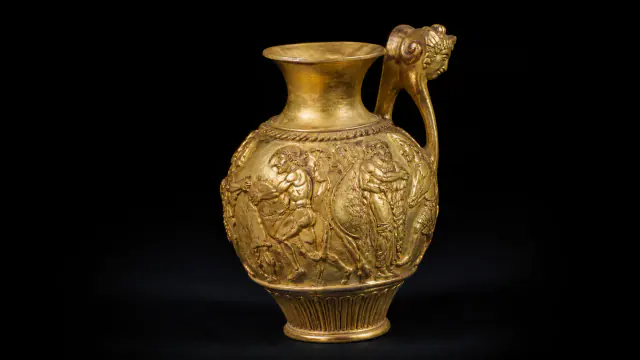
A workshop of Greek tradition represented Scythian figures on a vase destined for a Scythian tomb.
Read the complete record →07 · COLLECTION
These cards separate what is documented from what is interpreted and recover practices, questions and details capable of changing our image of this culture.
01 · BELIEFS AND CURIOSITIES · 01
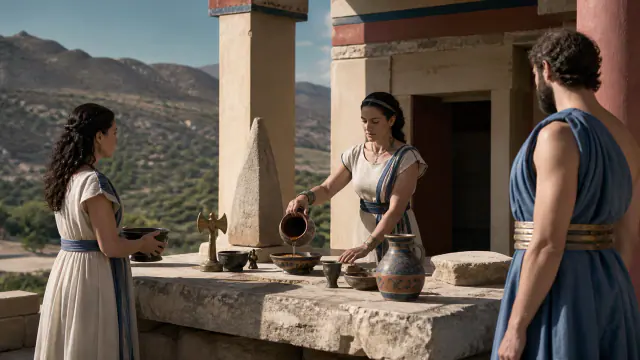
Caves, mountains, springs and palaces received offerings, although we do not know their rituals equally.
Read the complete record →02 · BELIEFS AND CURIOSITIES · 02
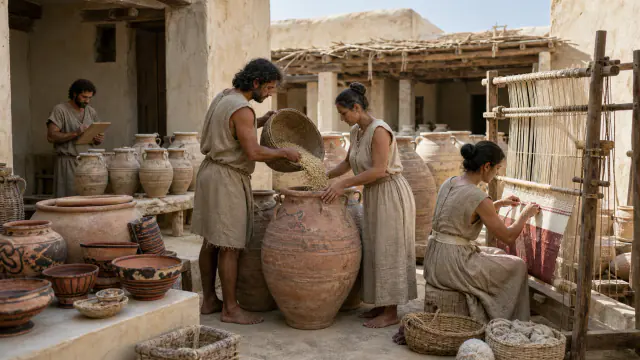
Pottery and workshops help us understand how food was cooked, stored and served.
Read the complete record →03 · BELIEFS AND CURIOSITIES · 03
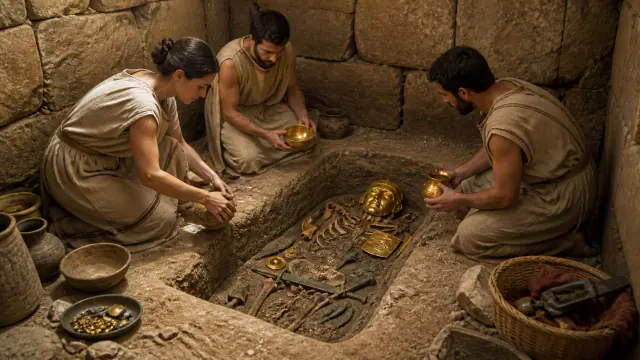
The rich tombs of Mycenae predate Homer’s texts and do not prove who his heroes were.
Read the complete record →08 · COLLECTION
Each door explains why the link exists, when it occurred, and what limits prevent contact from being converted into shared identity.
01 · GATE 01 · AFRICA · EXCHANGE
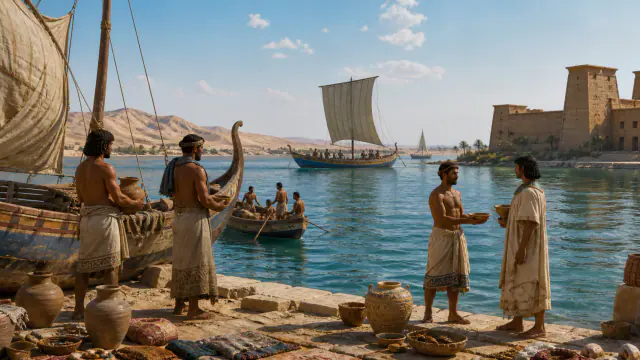
Continues in the Egypt museum
Read the complete record →02 · GATE 02 · ASIA · CONTACT
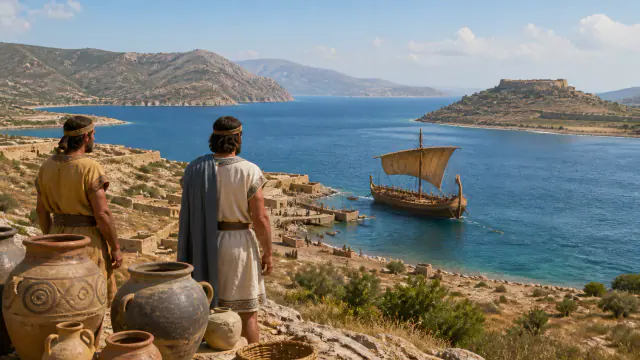
Continued at the Hittite Museum
Read the complete record →03 · DOOR 03 · ASIA · INFLUENCE
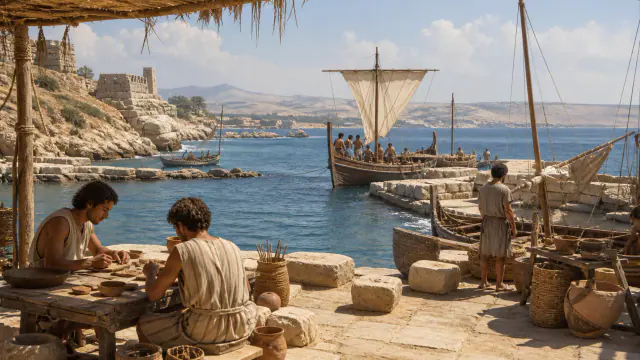
Continues in the Phenicia museum
Read the complete record →04 · DOOR 04 · ASIA · CONFLICT
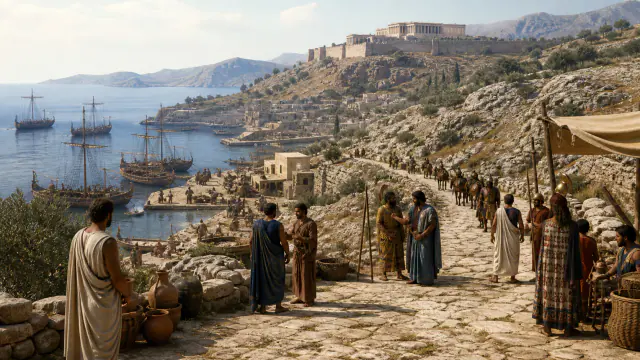
Continued at the Persia Museum
Read the complete record →05 · DOOR 05 · EUROPE · INFLUENCE
Continues in the Etruscans and Rome museum
Read the complete record →El mar después del palacio
Discover the connected fiction project. The available Prehistory reader is in Spanish; other volumes are not presented as finished products for sale.
Explore the books →Try the available Prehistory browser alpha. Campaigns for the other cultures are still in development.
Open the game (Spanish) →Use each record’s institution and heritage links to continue your research. Country-by-country historical travel guides are planned, not yet published.
Historical travel →Discover artistic designs inspired by the collections and check each product’s availability. Museum access remains free.
Explore the collection →