
 English
 Español
 Français
 Italiano
 Deutsch
 Русский
 Português
 Polski
 Română
 Svenska
 Norsk bokmål
 Suomi
 Türkçe
 العربية
 简体中文
 한국어
 हिन्दी
 Ελληνικά
HISTORICAL FIGURE · WHO WROTE THESE HISTORIES
Polybius
Polybius · Achaean historian and politician
Polybius came to Rome as a hostage and wrote about how Roman power had spread.
Museum documentation · free public access, no account required.
Reconstruction · Declared visual hypothesis
AI-recreated portrait of Polybius. The clothing is based on the historical context of the label; the face, the age represented, the colouring and the details not preserved are interpretive. It is not an authentic photograph nor a scientific facial reconstruction.
Tracekeepers
History and context
Polybius came to Rome as a hostage in 167 BCE. There he associated with the Roman elite and formed a friendship with Scipio Aemilianus. He attempted to explain how Rome had extended its power across the Mediterranean.
His proximity to the victors did not prevent him from seeking documents from the other side. When giving figures for Hannibal's army, he identified the inscription he had consulted. Naming a source allows it to be discussed; it does not automatically make it impartial.
Evidence and interpretation
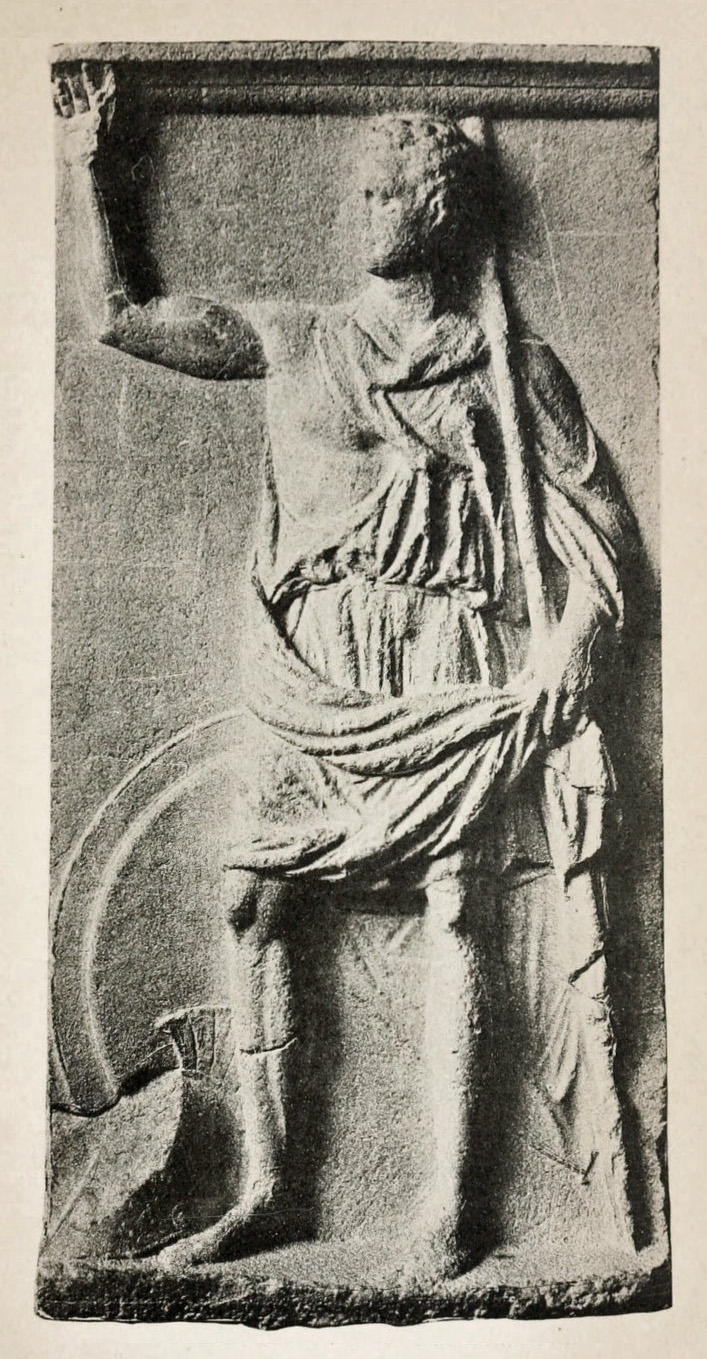
Polybius was a Greek politician close to the Scipios. His friendship was with Scipio Aemilianus, not with the victor of Zama. The identification of the Kleitor relief as Polybius is discussed.
AI-recreated portrait of Polybius. The clothing is based on the historical context of the label; the face, the age represented, the colouring and the details not preserved are interpretive. It is not an authentic photograph nor a scientific facial reconstruction.
Catalogue facts
- Chronology
- c. 200–c. 118 BCE
- Place and trajectory
- Megalopolis, Arcadia
- Work
- Histories
- Context
- Achaean historian and politician
A closer look
About 1 min to read · 3 sections. Further reading and sources · free access. Editorial review recorded: .
Investigating from an uncomfortable position
Polybius' Roman stay began as an imposition. His experience as an Achaean politician and his later relationships gave him access to conversations and decisions of the elite. This position helps to understand his questions about Roman power, without forgetting that privileged access also conditions which voices are more easily heard.
- Research · National Constitution Center · Polybius and his HistoriesAccess recorded: .
A document attributed to Hannibal
In Histories III.33.17–18 he states that he found on the Lacinian promontory a bronze tablet with Hannibal's troop roster. He uses it to justify his figures. We do not conserve that document here: we know of the consultation through what Polybius writes. Its Carthaginian provenance deserves attention, as does the purpose of whoever had it engraved.
- Ancient text · Polybius · Histories III.33.17–18, Paton, LoebAccess recorded: .
The relationship with Scipio
In XXXI.23–24 he explains that the lending of books and conversations brought him closer to the sons of Aemilius Paulus. He later reconstructs a decisive conversation with Scipio Aemilianus. The friendship is documented, but the dialogue arrives redacted by one of its participants: it is not a recording nor a literal transcription.
- Ancient text · Polybius · Histories XXXI.23–24, Paton, LoebAccess recorded: .
Reference images and provenance
This image documents how the author's work was represented or transmitted. It is not presented as an exact portrait, autograph, or reference for a generated face. The caption distinguishes the date of the author from the date of the image.
 View full-size reference ⛶
Documentary comparison · not recorded as an image used to create the portrait
Plate of a mould of the Kleitor relief, published in 1881. Its identification with Polybius is traditional and discussed; it is not a secure portrait.
Plate of a mould of the Kleitor relief, published in 1881. Its identification with Polybius is traditional and discussed; it is not a secure portrait.
Contextual image · Contextual correspondence
German Archaeological Institute · plate V of the article by L. Gurlitt · unidentified photographer

Additional visual documentation
A cited publication does not establish which image was used to create the character.
Sources and references
Did you enjoy this exhibit?
Your opinion helps us improve the museum. You can change it whenever you like.
Loading your rating…