
 English
 Español
 Français
 Italiano
 Deutsch
 Русский
 Português
 Polski
 Română
 Svenska
 Norsk bokmål
 Suomi
 Türkçe
 العربية
 简体中文
 한국어
 हिन्दी
 Ελληνικά
09 · PRACTICE · EARLY WORKSHOPS
Copper and stone
Technology did not replace one tool with another
Stone tools continued to be used alongside copper tools for centuries.
Museum documentation · free public access, no account required.
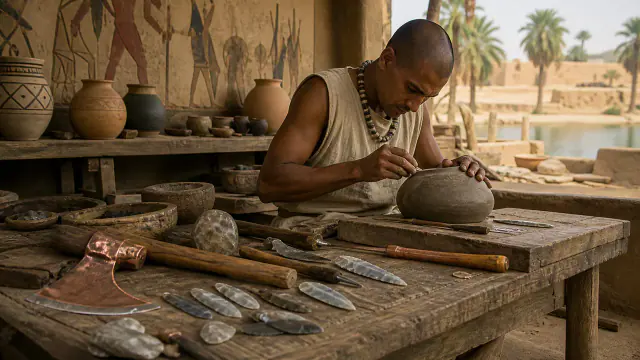
Generated reconstruction · Declared visual hypothesis
Declared visual reconstruction for museographic context; it is not a photograph of the original nor documentary evidence.
History and context
In the first dynasties, copper objects were used along with a wide range of stone tools. Innovation does not automatically eliminate effective techniques: different materials solve different tasks.
This work table allows us to recognize that coexistence. Stone blades, drills, and metal objects remind us that an archaeometallurgical label does not describe an instant substitution of all materials.
Adze, blade, perforator and hammer made up technical chains in which handle, abrasive and edge were inseparable. Copper could be annealed and resharpened; flint offered extremely sharp edges.
Tools inscribed with royal names appear even in Abydos contexts. However, a miniaturized or ceremonial offering is not equivalent to a tool used in the work.
Evidence and interpretation
Documented fact: Early Egyptian documentation records the joint use of copper and stone tools. Interpretation and caution: Inferring the social status of each user solely from the material in a tool would be excessive. Documented extension: UCL preserves copper adzes associated with the reigns of Djer and Djet and the Met documents the repertoire of Egyptian tools. Interpretation and expanded caution: Material, form and context must distinguish functional tool, model and ritual deposit.
Catalogue facts
- Narrative date
- ca. 3100–2700 BCE
- Location
- Nile Valley, Egypt
- Material
- Copper, flint, stone and wood
- Context
- Everyday production
- Curatorial reading
- The documented fact and its interpretation appear separately in the evidence block.
- Coexistence
- Flint and copper were used during the first dynasties
- Mangoes
- Wood rarely preserves as well as leaves
- Documentary coverage
- 4 museum, heritage, primary corpus or research sources for this stop.
A SHARED TOPIC, DIFFERENT MOMENTS
Objects connected through time
Follow a topic across the collections. A shared tag is a way to compare objects, not proof that one culture influenced another.
The order uses the midpoint of each approximate date range; ranges can overlap. Spacing does not represent elapsed time. Swipe, scroll or use the arrows. With the sequence focused, use ← / →, Home or End.
THE CURRENT OBJECT
Its date is not sufficiently established to place it on the timeline. We keep it here, separate from the dated objects.
 You are viewing
ca. 3100–2700 BCE
Copper and stone
Ancient Egypt
Synthesis of tools from several centuries, not a dated individual piece.
Current recordCopper and its alloys8 dated objects
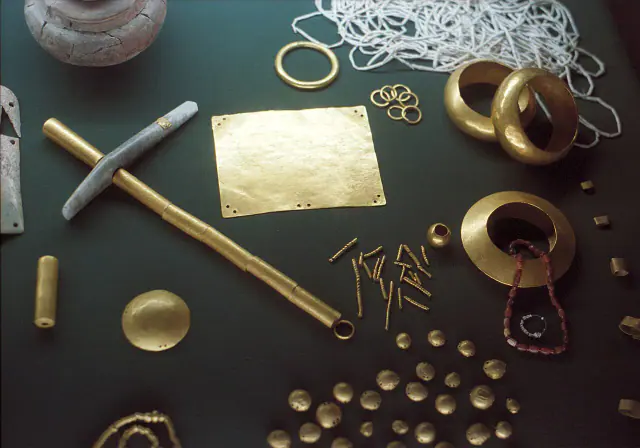
Towards 4600–4200 BCE
The Gold of Varna
Thracians
Date of the Varna funerary assemblage, not of an individual piece.
Read the record
III millennium BCE · usually towards 2650 BCE; approximate
Nippur Cubit
Sumer
Explicit indicative date in the 3rd millennium BCE
Read the record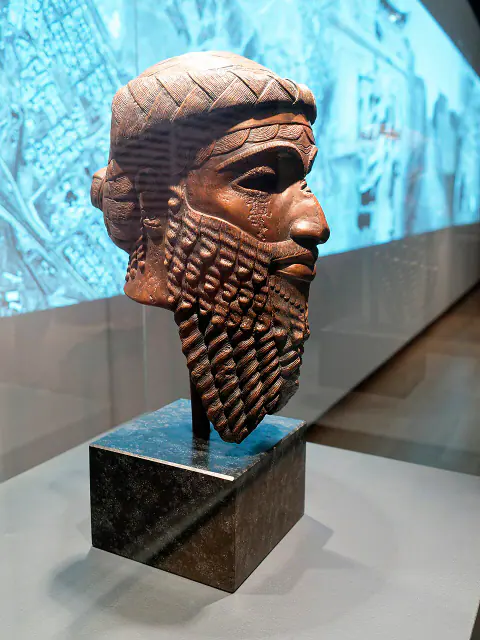
Akkadian period · 23rd century BCE
Akkadian sovereign head
Sumer
Approximate dating according to the record.
Read the record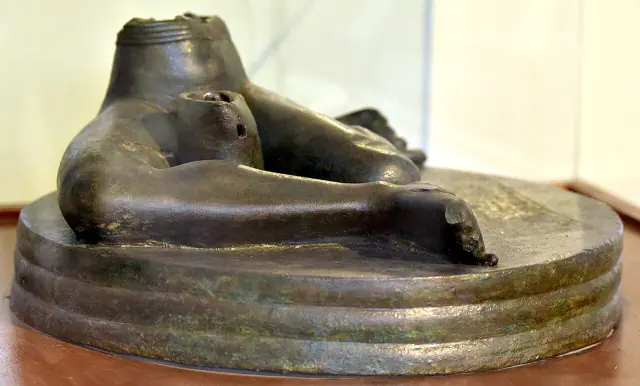
Akkadian period · 23rd century BCE
Bassetki Statue
Sumer
Approximate dating according to the record.
Read the record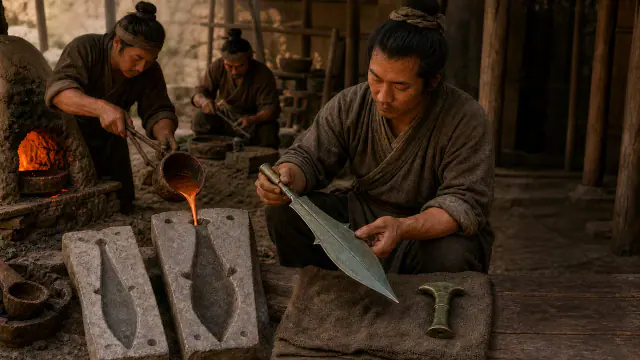
Towards 1000–400 BCE
The lute-shaped dagger
Gojoseon and early Korea
Typological framework of daggers; not a single manufacturing date.
Read the record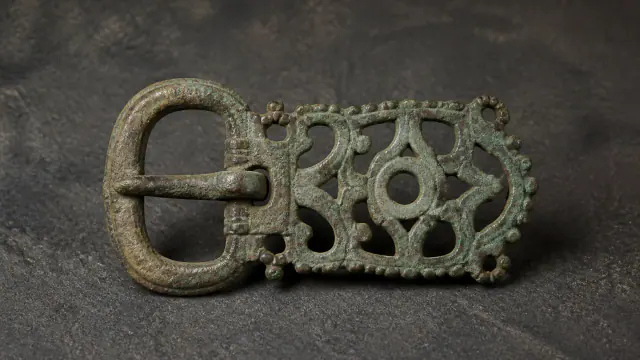
Second half of the IV century–V century CE
Simancas-type belt buckle
Iberians
The full 4th–5th centuries CE provide broad limits for chronological ordering; the record specifies the second half of the 4th century and the 5th.
Read the record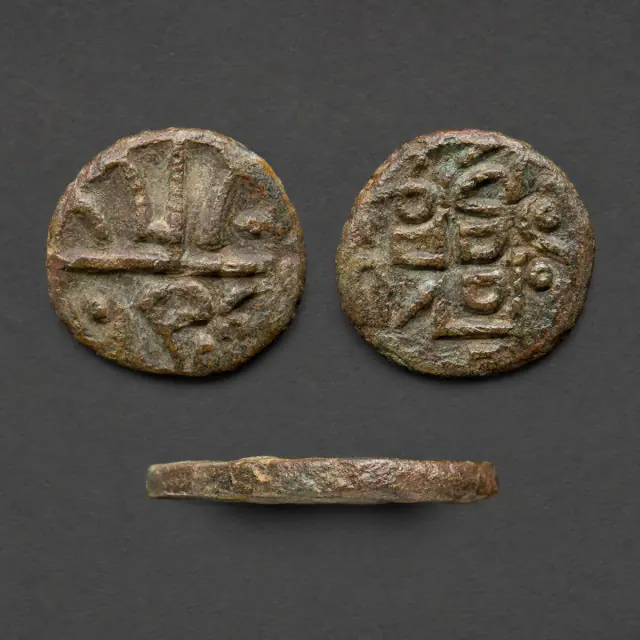
1482–1493
Kilwa coin
Bantu-speaking worlds
Read the record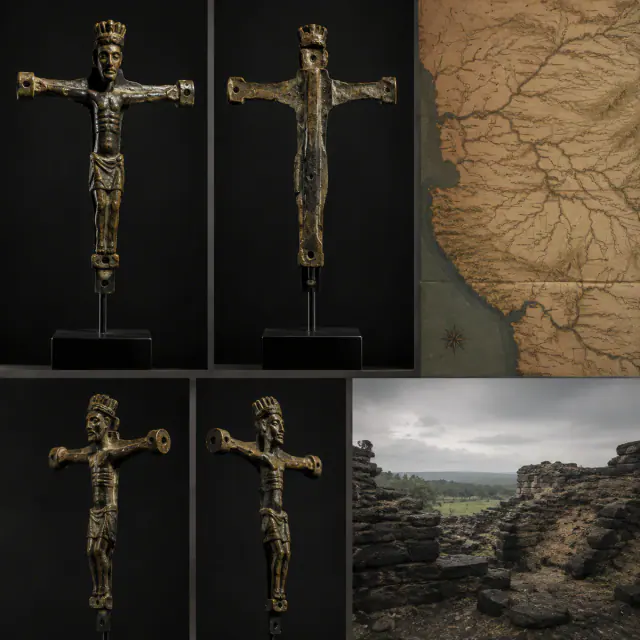
16th–17th centuries
Kongo crucifix
Bantu-speaking worlds
Read the record
Also connected, without a comparable date (2)
These objects are not placed after the others: an unknown date does not mean a more recent object.
- Early metallurgyAncient China · c. 1900–1500 BCE
- Translating faithBantu-speaking worlds · 16th–18th centuries
A closer look
About 1 min to read · 1 section. Further reading and sources · free access. Editorial review recorded: .
A miniature workshop as a later comparison
A model of the Meketra carpentry workshop, in the Middle Kingdom, allows us to observe the continuity of operations that combined stone, wood and metal. Its workers are seen sawing, opening mortises with chisel and mallet, and smoothing surfaces with adzes or sandstone abrasives. A protected hearth served to rework the edges; another figure stoked the fire using a pipe. The set is after the first dynasties and does not prove that their workshops were identical. Instead, it offers a precise material comparison to understand why a metal tool still needed handles, strikers, and abrasives.
Location and territory
REGIONAL AREA
Nile Valley, EgyptNile Valley and Delta; the scope varied by dynasties. The footprint marks the indicative center of the area, not a border or an exact point.Sources and references
Did you enjoy this exhibit?
Your opinion helps us improve the museum. You can change it whenever you like.
Loading your rating…