
 English
 Español
 Français
 Italiano
 Deutsch
 Русский
 Português
 Polski
 Română
 Svenska
 Norsk bokmål
 Suomi
 Türkçe
 العربية
 简体中文
 한국어
 हिन्दी
 Ελληνικά
17 · COIN · KILWA
Kilwa coin
The coin of al-Hasan ibn Sulaiman
This copper coin, probably minted in Kilwa, bears an Arabic inscription with the name of an African coastal authority.
Museum documentation · free public access, no account required.
Editorial visualisation · Contextual correspondence
Declared editorial visualisation, based on the cartography and sources of the fact sheet; it is not an exact historical frontier.
History and context
The coin names al-Hasan ibn Sulaiman and was probably minted in Kilwa between 1482 and 1493.
Its copper and small size indicate local and regional circulation within an Islamic city on the Indian Ocean.
Evidence and interpretation
Catalogued object: 22 mm and 1.59 g. Caution: the mint attribution is probable, not certain; provenance before 1938 remains to be investigated.
Catalogue facts
- Narrative date
- 1482–1493
- Location
- Probably Kilwa Kisiwani, Tanzania; now London
- Material
- Copper alloy with an Arabic inscription
- Context
- Coinage, Islam and Swahili trade
- Curatorial reading
- The documented fact and its interpretation appear separately in the evidence block.
- Dossier axis
- treasures
- Research record
- BANTU · bantu-treasure-kilwa-coin
- Documentary coverage
- 2 museum, heritage, primary corpus or research sources for this stop.
A SHARED TOPIC, DIFFERENT MOMENTS
Objects connected through time
Follow a topic across the collections. A shared tag is a way to compare objects, not proof that one culture influenced another.
The order uses the midpoint of each approximate date range; ranges can overlap. Spacing does not represent elapsed time. Swipe, scroll or use the arrows. With the sequence focused, use ← / →, Home or End.
Copper and its alloys8 dated objects
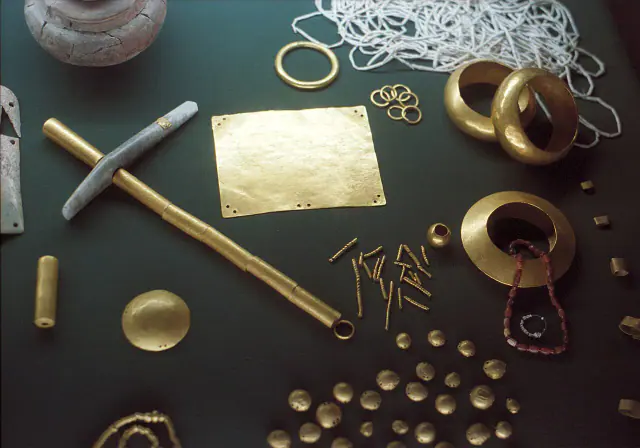
Towards 4600–4200 BCE
The Gold of Varna
Thracians
Date of the Varna funerary assemblage, not of an individual piece.
Read the record
III millennium BCE · usually towards 2650 BCE; approximate
Nippur Cubit
Sumer
Explicit indicative date in the 3rd millennium BCE
Read the record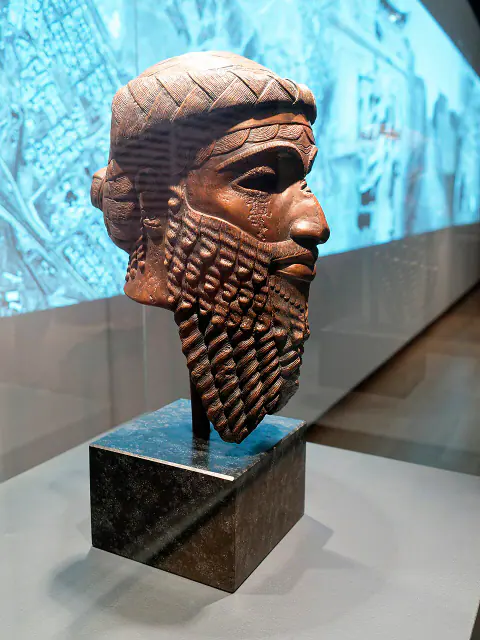
Akkadian period · 23rd century BCE
Akkadian sovereign head
Sumer
Approximate dating according to the record.
Read the record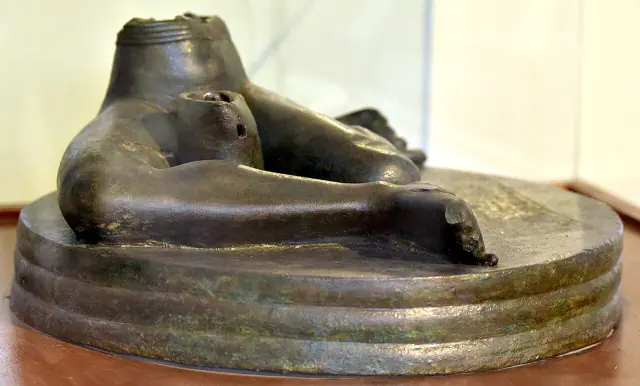
Akkadian period · 23rd century BCE
Bassetki Statue
Sumer
Approximate dating according to the record.
Read the record
Towards 1000–400 BCE
The lute-shaped dagger
Gojoseon and early Korea
Typological framework of daggers; not a single manufacturing date.
Read the record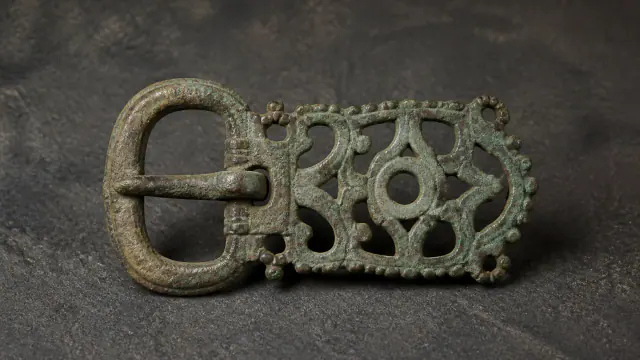
Second half of the IV century–V century CE
Simancas-type belt buckle
Iberians
The full 4th–5th centuries CE provide broad limits for chronological ordering; the record specifies the second half of the 4th century and the 5th.
Read the record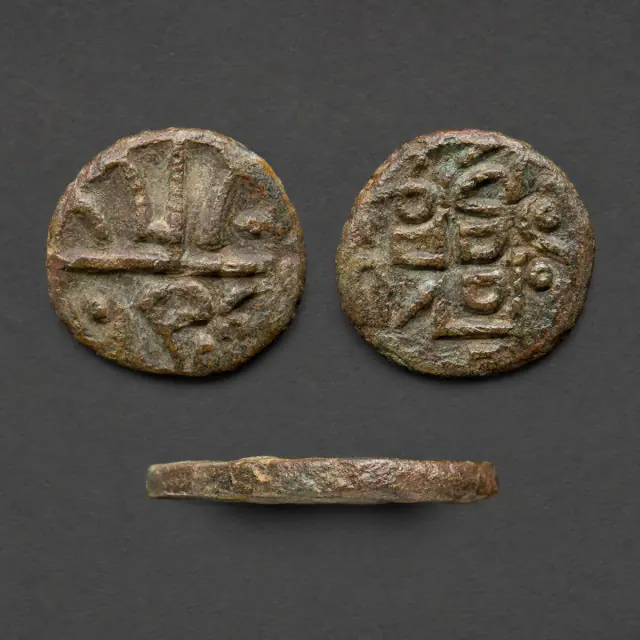 You are viewing
1482–1493
Kilwa coin
Bantu-speaking worlds
Current record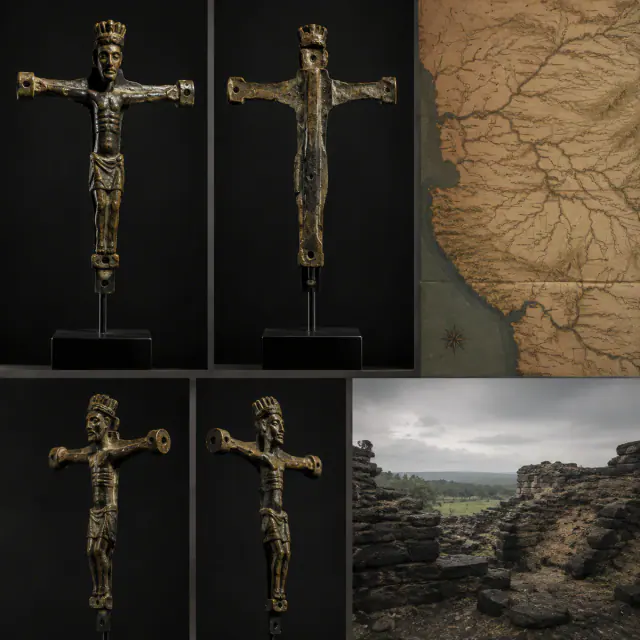
16th–17th centuries
Kongo crucifix
Bantu-speaking worlds
Read the record
Also connected, without a comparable date (3)
These objects are not placed after the others: an unknown date does not mean a more recent object.
- Copper and stoneAncient Egypt · ca. 3100–2700 BCE
- Early metallurgyAncient China · c. 1900–1500 BCE
- Translating faithBantu-speaking worlds · 16th–18th centuries
A closer look
About 1 min to read · 1 section. Further reading and sources · free access. Editorial review recorded: .
Authority is also expressed through rhyme
The British Museum characterises the legends on this coin as rhymed Arabic inscriptions. Its design therefore incorporated a sonic relationship between words, in addition to identifying the ruler. The catalogue also records a die axis at twelve o’clock: the orientations of both faces correspond when the piece is turned vertically. These are two distinct scales of observation, literary and technical. The use of Arabic forms part of the Islamic language of authority of the issue; by itself it does not demonstrate what languages were spoken by all those who received it in a transaction.
- Museum · British Museum · Coin 1938,0210.2Access recorded: .
Location and territory
REGIONAL AREA
Probably Kilwa Kisiwani, Tanzania; now LondonCurrent maximum linguistic envelope and historical corridors; it was not a single political territory nor was it occupied simultaneously. The footprint indicates the indicative centre of the sphere, not a border or an exact point.Where it is held
The British Museum
Item or group in the record · Documented collection
The holding institution is documented; public display may change. Check its official record before visiting.
Sources and references
Did you enjoy this exhibit?
Your opinion helps us improve the museum. You can change it whenever you like.
Loading your rating…