
 English
 Español
 Français
 Italiano
 Deutsch
 Русский
 Português
 Polski
 Română
 Svenska
 Norsk bokmål
 Suomi
 Türkçe
 العربية
 简体中文
 한국어
 हिन्दी
 Ελληνικά
10 · RECORDINGS · 1968–1972
Healing dance
The healing dance in historical recordings
The !Kung/Ju recordings document songs, clapping and movements of specific Kalahari communities.
Museum documentation · free public access, no account required.
Generated reconstruction · Declared visual hypothesis
Declared visual reconstruction; not a photograph of the original nor documentary evidence.
History and context
Field recordings document music for healing dance among !Kung/Ju communities of the Kalahari.
The experience called !kia must be explained from these sources, not projected onto all rock art or all San communities of any period.
The Smithsonian Folkways edition preserves field recordings and notes that allow dating and locating what is heard. Handclaps, singing and movement form a collective practice, not a generic environmental track.
The !Kung/Ju category of these sessions does not encompass all San communities. Nor does it prove that an ancient rock panel represents the same event.
Evidence and interpretation
Sound, dates, notes and community are documented by the edition. Universality and Palaeolithic continuity are not.
Catalogue facts
- Narrative date
- Recordings 1968–1972
- Location
- Kalahari · documented !Kung/Ju communities
- Material
- Sound recording, voice and handclaps
- Context
- Situated living practice
- Curatorial reading
- The documented fact and its interpretation appear separately in the evidence block.
- Recordings
- Fieldwork 1968–1972
- Community
- Kalahari !Kung/Ju in situated records
- Documentary coverage
- 2 museum, heritage, primary corpus or research sources for this stop.
A SHARED TOPIC, DIFFERENT MOMENTS
Objects connected through time
Follow a topic across the collections. A shared tag is a way to compare objects, not proof that one culture influenced another.
The order uses the midpoint of each approximate date range; ranges can overlap. Spacing does not represent elapsed time. Swipe, scroll or use the arrows. With the sequence focused, use ← / →, Home or End.
THE CURRENT OBJECT
Its date is not sufficiently established to place it on the timeline. We keep it here, separate from the dated objects.
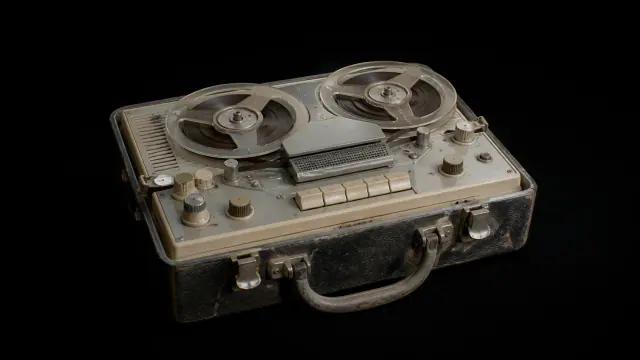 You are viewing
Recordings 1968–1972
Healing dance
San histories
1968–1972 dates the recordings, not the origin or antiquity of the dance.
Current recordSound recordings2 dated objects
Also connected, without a comparable date (2)
These objects are not placed after the others: an unknown date does not mean a more recent object.
- Clicks and contactBantu-speaking worlds · precolonial contacts with varying chronologies and subsequent continuity
- Musical bowsSan histories · Twentieth-century ethnomusicological documentation
A closer look
About 1 min to read · 1 section. Further reading and sources · free access. Editorial review recorded: .
Who made this recording possible
The 1982 edition credits the recordings to Megan Biesele, Nicholas M. England and Marjorie Shostak; the latter also figures as producer and photographer of the cover. The tracks locate several sessions in Dobe and Xai Xai, in Botswana. Distinguishing fieldwork, editorial selection and publication allows listening to the disc as a documentary construction. The community experience had a duration and setting greater than the preserved track, while the names of those who recorded and edited the sound allow tracing how that performance reached a public archive.
- Museum · Smithsonian Folkways · Healing Dance Music of the Kalahari SanAccess recorded: .
Location and territory
REGIONAL AREA
ǂKhomani cultural landscape · South AfricaMarker of the living cultural landscape; it is not a pan-San border.Where it is held
Smithsonian Folkways Recordings
Item or group in the record · Library or archive
Institutional sound edition and archive of the situated recordings; the living practice is not presented as a museum object.
The holding institution is documented; public display may change. Check its official record before visiting.
Sources and references
Did you enjoy this exhibit?
Your opinion helps us improve the museum. You can change it whenever you like.
Loading your rating…