
 English
 Español
 Français
 Italiano
 Deutsch
 Русский
 Português
 Polski
 Română
 Svenska
 Norsk bokmål
 Suomi
 Türkçe
 العربية
 简体中文
 한국어
 हिन्दी
 Ελληνικά
MUSIC · RELIEF OF OSUNA
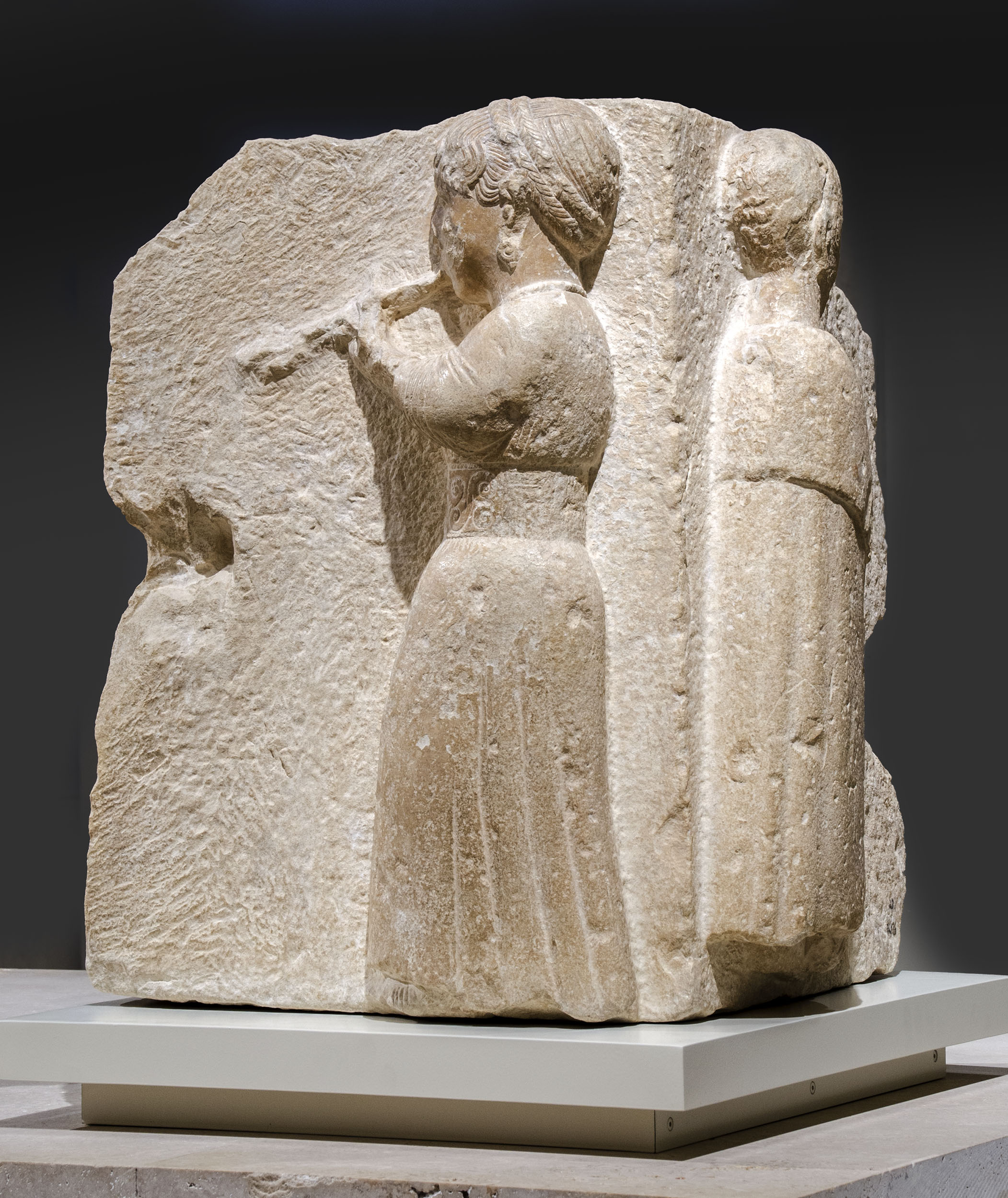
Auletris of Osuna
The Sound Carved in Stone
The figure plays a double-tubed instrument, although we do not know what music it performed.
Museum documentation · free public access, no account required.
Documentary original · Exact correspondence
Documentary photograph of the original or the exact site.
Ángel M. Felicísimo from Mérida, Spain · Flautist of Osuna · Inventory: Flautista de Osuna (38201160704) · CC BY 2.0
History and context
The figure holds a double aulos. The continuous breath and two tubes could produce an intense sound, suitable for public spaces, processions or ceremonies. The instrument entered the Iberian repertoire through Mediterranean contacts and was locally appropriated.
The stone preserves hands, tubes and posture, not the melody. Nor does it allow turning an image into a universal gender norm: this performer demonstrates that a woman could be represented playing, not that the aulos was exclusive to all Iberian women.
Iberian iconography brings together double aulos, trumpets, bells and other instruments in ceremonial, equestrian and funerary scenes. Sound organised collective time: procession, ritualised combat, dance, initiation or farewell.
We do not preserve scores or melodies. An audioguide can reconstruct timbres and gestures with experimental instruments, always indicating that the concrete music belongs to contemporary recreation.
Evidence and interpretation
Documented fact: reliefs and ceramics preserve instruments, performers and visual contexts. Interpretation and caution: repertoire, rhythm and exact function cannot be deduced from an isolated image.
Catalogue facts
- Narrative date
- 3rd–2nd centuries BCE
- Location
- Osuna (Seville)
- Material
- Limestone relief
- Context
- Music in a Monumental Programme
- Classification
- Iberian collection or explicit interpretive resource
- Visual reference
- National Archaeological Museum · Auletrix · visual and provenance reference
A closer look
About 1 min to read · 1 section. Further reading and sources · free access. Editorial review recorded: .
Not every perforated bone belonged to a musician
Research on the aulos of Azaila reminds us that certain perforated bones from Clunia, formerly considered instruments, were in fact hinges. The distinction depends on manufacture, wear and parallels, not merely the presence of holes. Facing the Osuna relief, this problem teaches how image and object intersect: posture helps recognise a practice, but material remains require their own diagnosis. Sonic reconstruction must rely on correctly identified pieces, while also indicating which parts have been experimentally completed.
Reference images and provenance
You can enlarge the documentary photograph of the piece related to this figure. It is not listed as an input of a generated portrait. The identification of the figure, when discussed, is explained in the file.
 View full-size reference ⛶
Documentary photograph of the reference object
This photograph is the registered source of the documentary image currently displayed; it is not presented as an input photograph for another generated portrait.
This photograph is the registered source of the documentary image currently displayed; it is not presented as an input photograph for another generated portrait.
Documentary original · Contextual correspondence
Ángel M. Felicísimo from Mérida, Spain

Additional visual documentation
A cited publication does not establish which image was used to create the character.
Where it is held
Museo Arqueológico Nacional (Madrid)
Item or group in the record · Permanent exhibition
Room 13; replaces the historical link of 'piece of the month' as a location reference.
The holding institution is documented; public display may change. Check its official record before visiting.
Sources and references
Did you enjoy this exhibit?
Your opinion helps us improve the museum. You can change it whenever you like.
Loading your rating…