 English
 Español
 Français
 Italiano
 Deutsch
 Русский
 Português
 Polski
 Română
 Svenska
 Norsk bokmål
 Suomi
 Türkçe
 العربية
 简体中文
 한국어
 हिन्दी
 Ελληνικά
01 · INITIAL ATLAS · ORIGIN AND EXPANSION
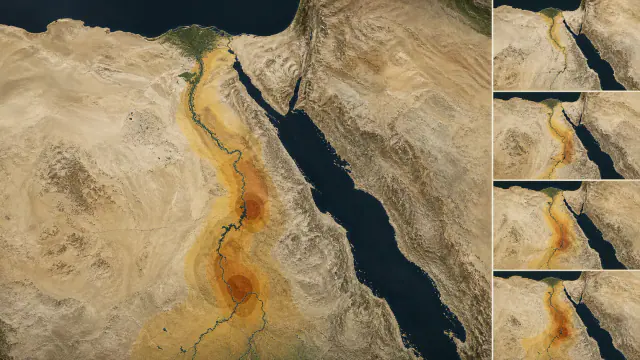
Map of Nubia
Follow the history of Kerma, Napata and Meroe along the Nile.
Read the complete record → TRACEKEEPERS
HISTORY · OPEN COLLECTION
As the region became drier, people, herds and knowledge concentrated along the Nile. Local communities and regional networks formed the social landscape from which Kerma emerged, within a longer and distinct Nubian history.
28 complete records · free to read, no account needed
Read freely here. A free account saves your visits inside the museum.
Before you begin · Nubia
Kerma arose from a local history of fishers, herders and farmers who connected the river with their surroundings.
VIII–VI millennia BCE
Settlements and cemeteries of el-Barga document fishing, hunting, pottery and changes in funerary practices.
Ca. 3500–2500 BCE
Dwellings, reserves and enclosures reveal growing organisation before the kingdom's capital.
From ca. 2500 BCE
A middle Nile urban centre develops political power and monumentality proper to itself.
Long before the kingdom of Kerma, the middle Nile was inhabited. At el-Barga, a hut from around 7500 BCE preserved pottery, stone and bone tools, ornaments and animal remains. The abundance of materials suggests prolonged stays, compatible with displacements for fishing and hunting. Communities knew and traversed a landscape then wetter than today's.
The Neolithic cemeteries of el-Barga and Kadruka show new ways of burying the dead and differences in assemblages. Later, the so-called Pre-Kerma populations built a great concentration of dwellings, stores and enclosures. Gathering livestock and food required organisation. Relations with other Nile communities grew, although excavations still do not allow reconstructing all their exchanges nor their political limits.
Towards the middle of the III millennium BCE began to develop the city of Kerma, which would become the capital of a powerful Nubian kingdom. Its monumental buildings, defences and royal tombs reflect forms of authority proper to itself. Relations with Egypt included trade, rivalry and conquest; they do not by themselves explain the origin of a society with a regional trajectory of millennia.
The pottery, adornments and constructions of the route present Nubia as protagonist of its own history.
Interpreting these traces. The exact relations between Pre-Kerma and the later kingdom remain open: settlements and cemeteries are still to be known.
≈2500 BCE · AFRICA
Access to the museum brings together the atlas and the background of Nubia. Then, seven areas order the historical context, culture, architecture, personalities and society, treasures and assemblages, beliefs and curiosities, and two historical doors toward other museums. Each file preserves narrative layers, cautions and differentiated sources.
The room combines a specific visual catalog with an audited thematic dossier. Separates facts, interpretations and cautions; the 3D volumes continue to be replaceable markers until models with provenance and license are incorporated.
Aridification concentrated people, herds and knowledge beside the river; these communities and regional networks prepared the social landscape from which Kerma arose.
A-Group and Pre-Kerma were not incomplete versions of Egypt nor a single ethnicity; their relations with Kerma include continuity, displacement and change still debated.
Read the background and its sources →EXPLORE THE COLLECTION
Follow the museum’s curated order or go straight to a section. Every record includes its full public documentation and sources.
01 · COLLECTION
Consult the maps and initial context sheets to situate this museum in time and territory; then choose the areas that interest you most.
01 · INITIAL ATLAS · ORIGIN AND EXPANSION
Follow the history of Kerma, Napata and Meroe along the Nile.
Read the complete record →02 · BEFORE KERMA · c. 8500–2500 BCE
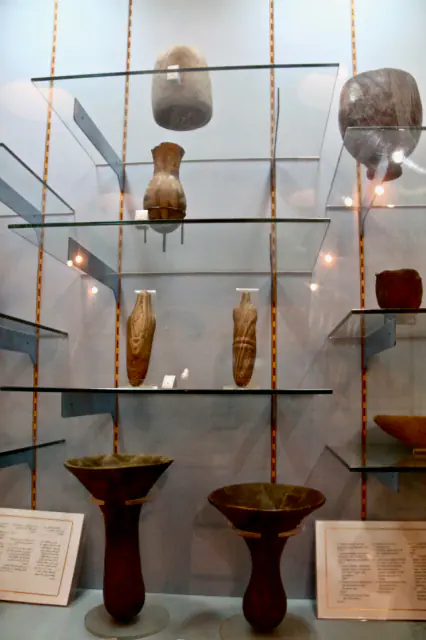
Before Kerma, Middle Nile communities were already making pottery in a wetter landscape than today’s.
Read the complete record →02 · COLLECTION
The first stop reconstructs the area before Nubia; afterwards, places and processes allow entering its history without reducing it to a start date nor to an inevitable destiny.
01 · 01 · SITE · CENTRAL NUBIA
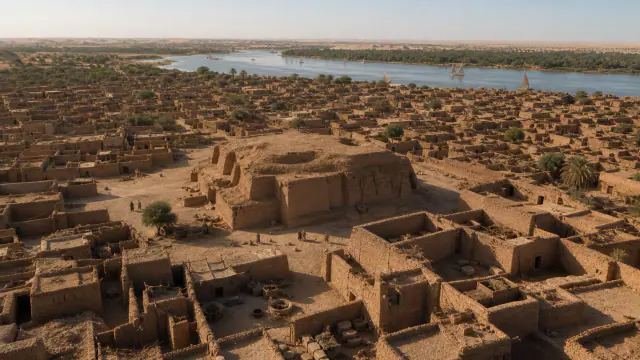
Between 2500 and 1500 BCE, Kerma was an African urban centre of great scale.
Read the complete record →02 · 02 · SITE · KERMA
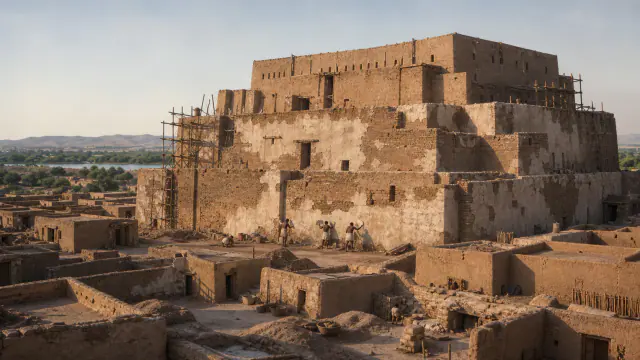
The deffufa of Kerma is a large mudbrick building that was expanded and repaired many times.
Read the complete record →03 · 05 · SITE · KERMA CEMETERY
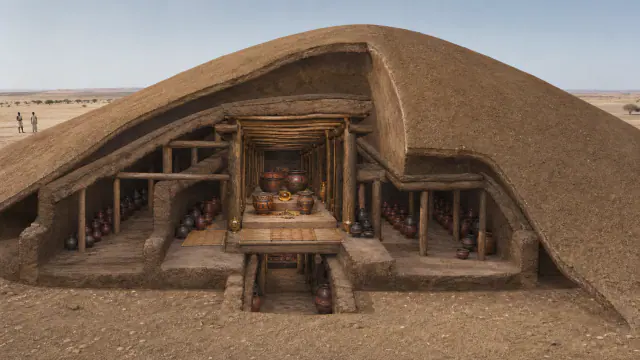
The great tumuli of Kerma gathered objects, animals and several burials.
Read the complete record →04 · 08 · SITE · SECOND KINGDOM OF KUSH
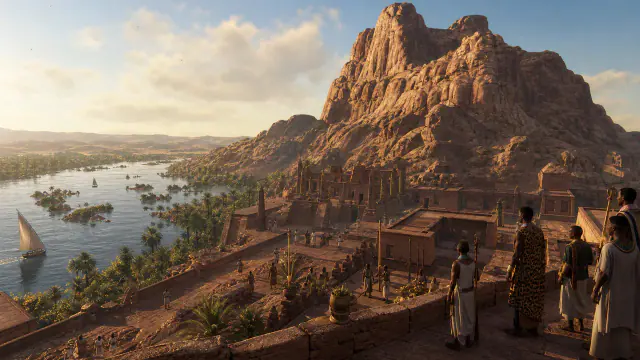
Gebel Barkal was a sacred mountain beside important temples and tombs of the kingdom of Kush.
Read the complete record →05 · 10 · SITE · NAPATA
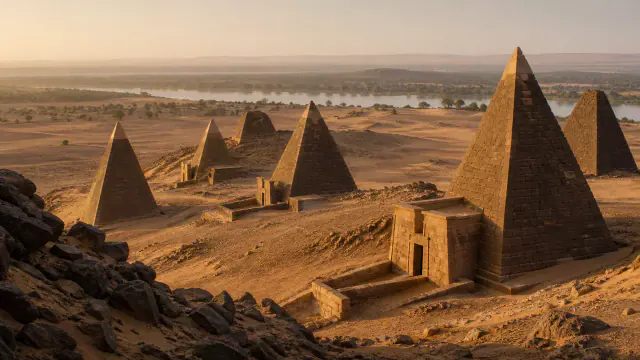
These pyramids are not minor copies: they belong to a distinct Kushite funerary tradition.
Read the complete record →06 · 11 · LEGACY · MEROITIC KINGDOM
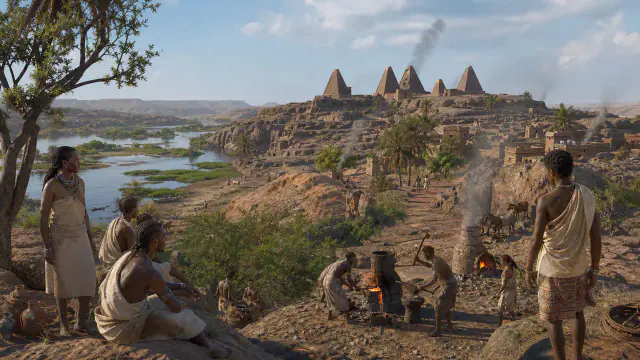
The kingdom of Kush shifted its political centre and developed a script whose language is still only partly understood.
Read the complete record →07 · 12 · THRESHOLD · CHRONOLOGY
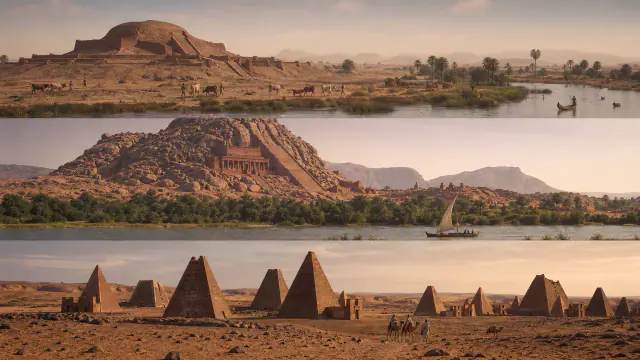
Kerma and the later kingdoms of Kush are related, but belong to distinct stages.
Read the complete record →08 · 07 · CONFLICT · NEW EMPIRE
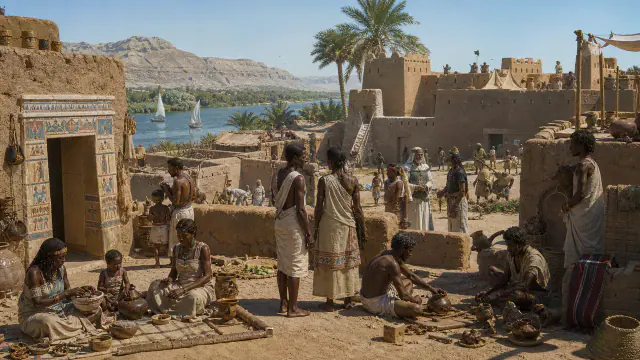
The conquest left forts, administration and also local lives that do not fit on an imperial map.
Read the complete record →03 · COLLECTION
These stops distinguish instruments, ritual actions, orality or writing and visual culture. Where there is no theatre, score or certain meaning, the museum preserves the limit.
01 · LIVING AND DOCUMENTED CULTURE · 01
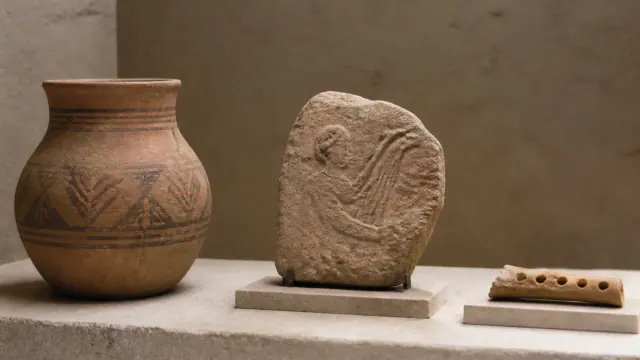
We know better the instruments of the late stages of Kush than those of ancient Kerma.
Read the complete record →02 · LIVING AND DOCUMENTED CULTURE · 02
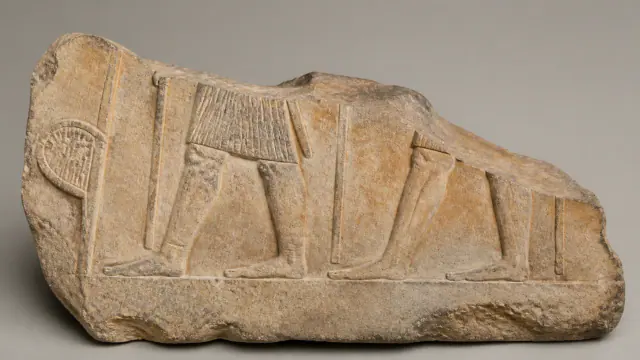
Processions and coronations publicly displayed the king's role and his links with the gods.
Read the complete record →03 · LIVING AND DOCUMENTED CULTURE · 03
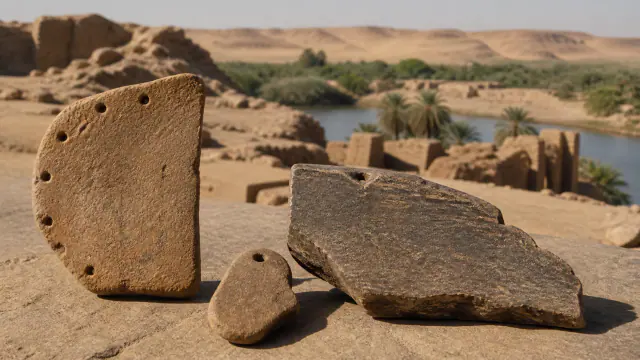
Egyptian script was used in different periods; the kingdom of Meroe later developed its own script.
Read the complete record →04 · LIVING AND DOCUMENTED CULTURE · 04
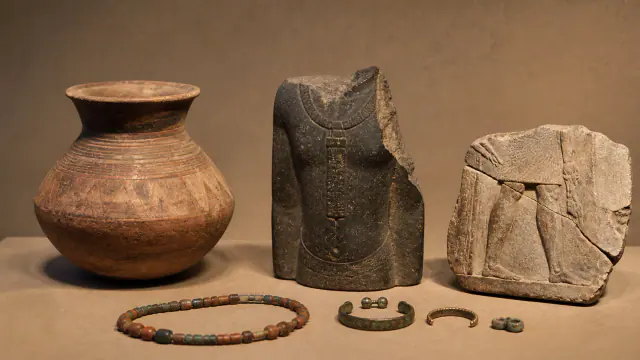
Nubian workshops created ceramics, statues, and jewellery of their own, also incorporating ideas from Egypt.
Read the complete record →04 · COLLECTION
These architectures explain how materials, water, work and memory organized the territory without converting an elevation reconstruction into certainty.
01 · ARCHITECTURE AND LANDSCAPE · 01
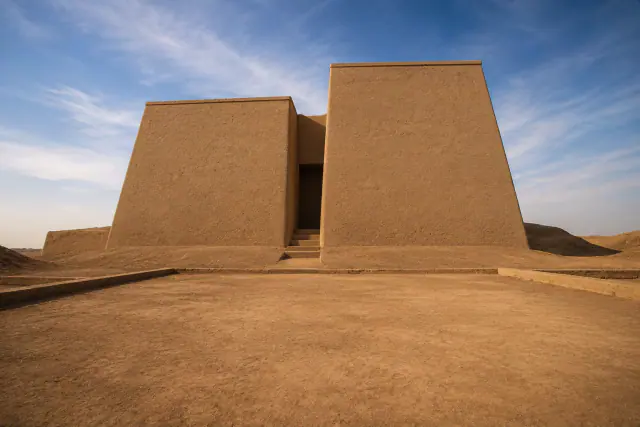
A huge mudbrick building dominated the city.
Read the complete record →02 · ARCHITECTURE AND LANDSCAPE · 02
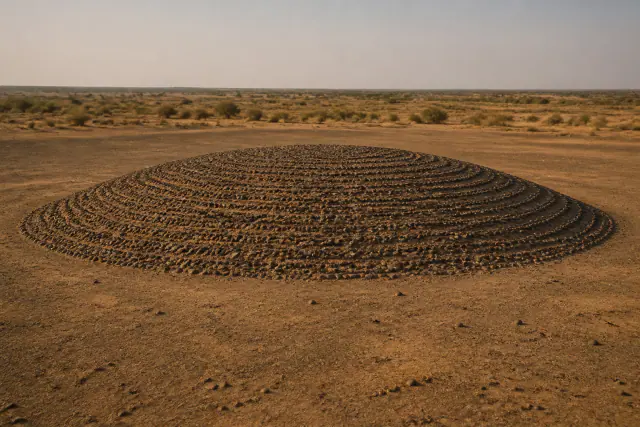
The royal tombs of Kerma combined chambers, sacrifices, and enormous mounds.
Read the complete record →03 · ARCHITECTURE AND LANDSCAPE · 03
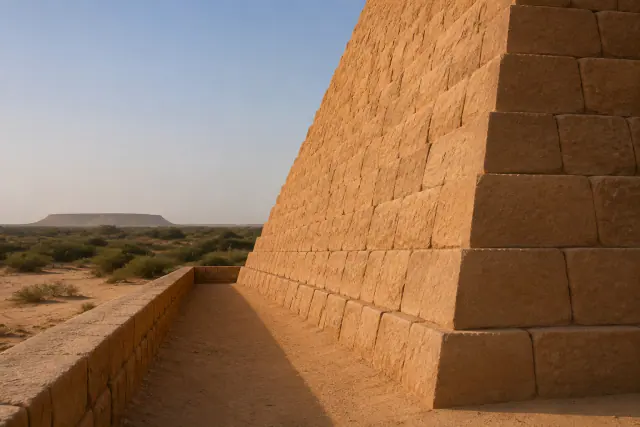
Sacred mountain, pyramids, and cities marked distinct phases of the kingdom of Kush.
Read the complete record →05 · COLLECTION
Known people, reconstructed voices and collective footprints. From oldest to most recent according to life, reign or scene. The periods may overlap; The voices without a determinable date close the journey.
01 · 06 · CONFLICT · SECOND INTERMEDIATE PERIOD
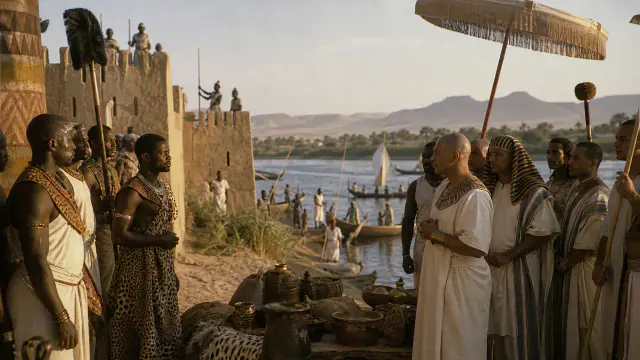
The Nubian frontier was a space of negotiation and war, not a fixed line.
Read the complete record →02 · HISTORICAL PERSON · KUSHITE ROYALTY
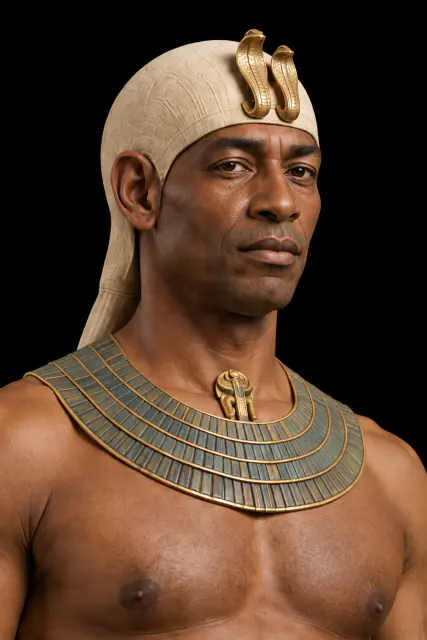
A ruler with an inscribed name between Nubia and Egypt.
Read the complete record →06 · COLLECTION
Concrete pieces to understand materials, decisions and knowledge systems, with separate evidence and interpretation.
01 · 03 · OBJECT · CONTACT
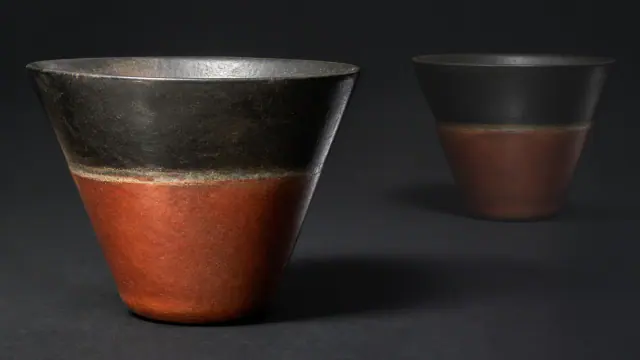
A Nubian vessel found in Abydos shows exchanges across the Nile.
Read the complete record →02 · 04 · PRACTICE · KERMA NECROPOLIS
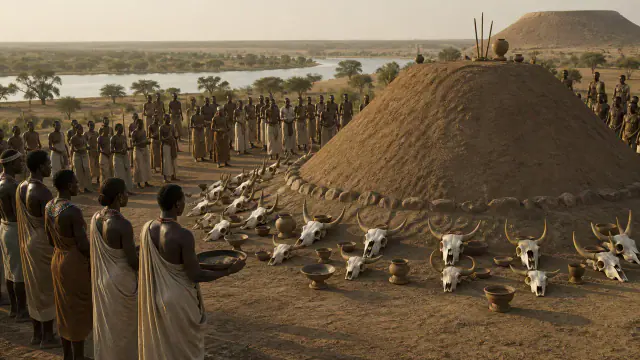
Livestock skulls deposited alongside tombs show their economic and funerary importance.
Read the complete record →03 · 09 · OBJECT · 25TH DYNASTY
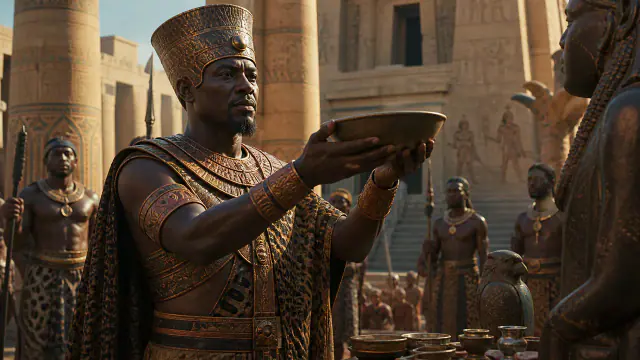
A small bronze figure reminds us that Nubia ruled Egypt, it was not merely ruled by it.
Read the complete record →04 · DOCUMENTED OUTFIT · CLOSED CONTEXT OR CONTROLLED COMPARISON
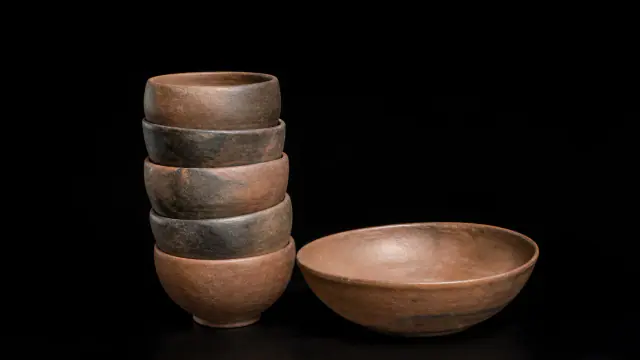
Five vessels and a bowl accompanied a person buried next to a large Kerma mound.
Read the complete record →07 · COLLECTION
These cards separate what is documented from what is interpreted and recover practices, questions and details capable of changing our image of this culture.
01 · BELIEFS AND CURIOSITIES · 01
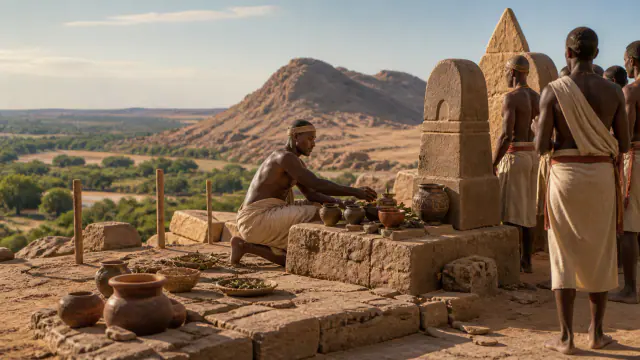
The ceremonial buildings of Kerma and the cult of Amun at Gebel Barkal belong to different religious stages.
Read the complete record →02 · BELIEFS AND CURIOSITIES · 02
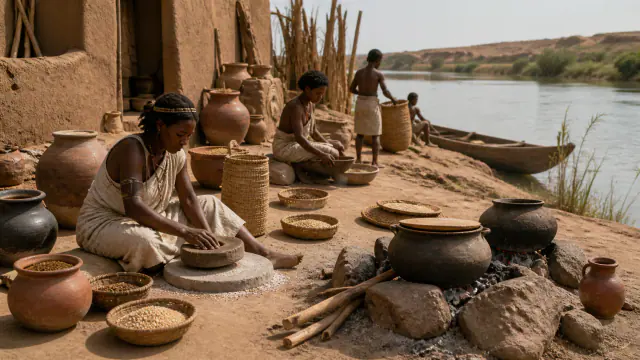
Vessels, hearths, grains and bones show how food was cooked, stored and livestock cared for.
Read the complete record →03 · BELIEFS AND CURIOSITIES · 03
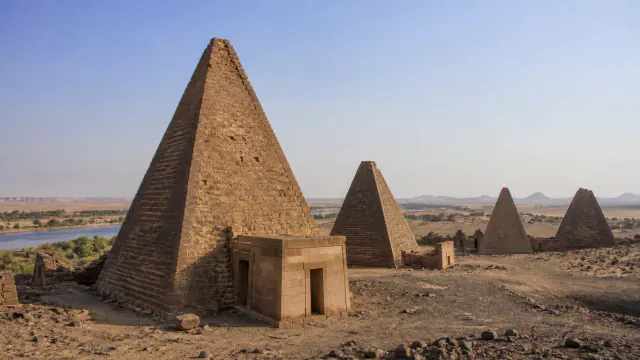
The tumuli of Kerma and the pyramids of Nuri show different ways of burying rulers.
Read the complete record →08 · COLLECTION
Each door explains why the link exists, when it occurred, and what limits prevent contact from being converted into shared identity.
01 · DOOR 01 · AFRICA · CONTACT
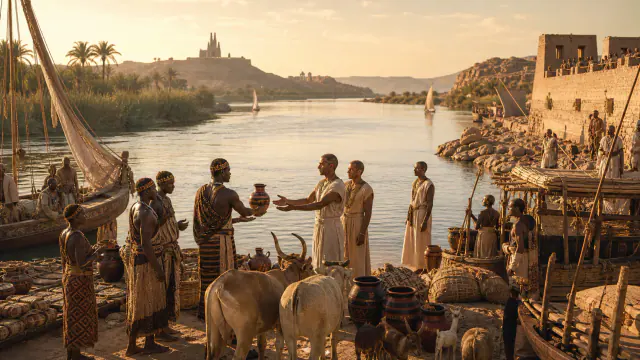
Continues in the Egypt museum
Read the complete record →02 · DOOR 02 · EUROPE · CONFLICT
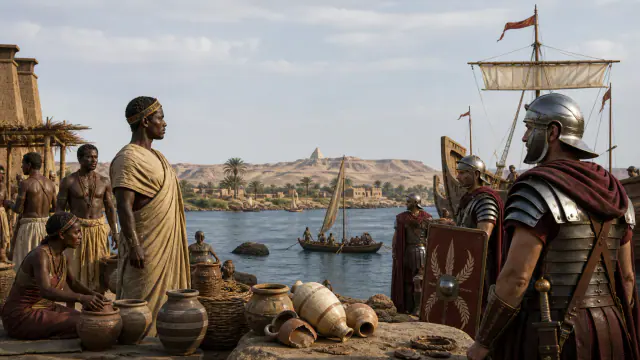
Continues in the Etruscans and Rome museum
Read the complete record →El reino al sur del mapa
Discover the connected fiction project. The available Prehistory reader is in Spanish; other volumes are not presented as finished products for sale.
Explore the books →Try the available Prehistory browser alpha. Campaigns for the other cultures are still in development.
Open the game (Spanish) →Use each record’s institution and heritage links to continue your research. Country-by-country historical travel guides are planned, not yet published.
Historical travel →Discover artistic designs inspired by the collections and check each product’s availability. Museum access remains free.
Explore the collection →