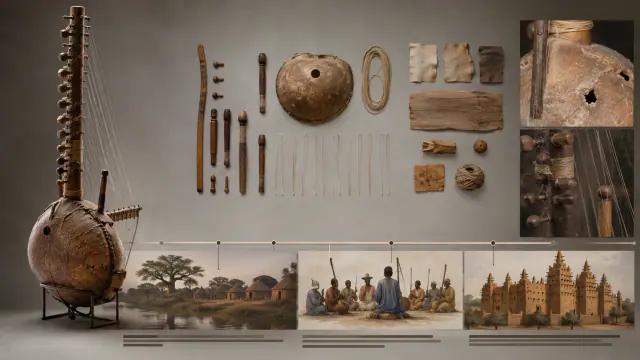
AI RECONSTRUCTION · use according to catalogue, not chemical analysis
History and context
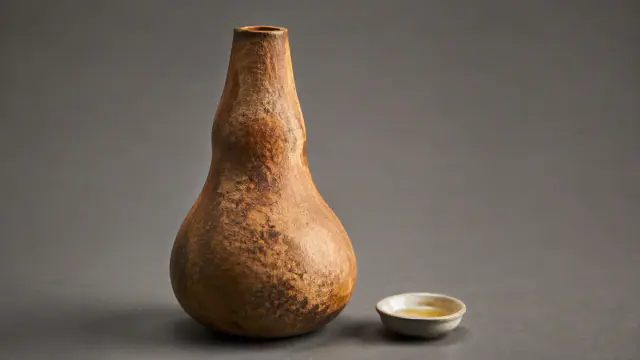
The British Museum record notes a gourd 18.5 centimetres in size from Kaninya.
According to the catalogue, it held oil or fat for the body. This use is recorded information, not the result of chemical analysis.
Evidence and interpretation
British Museum Af1948,08.205.
Catalogue facts
Narrative date
ca. 1947
Location
Kaninya, former Bugoyi district, Rwanda; today London
Material
gourd
Context
Object not on display; review vocabulary and acquisition conditions.
Curatorial reading
The documented fact and its interpretation appear separately in the evidence block.
Dossier axis
treasures
Research record
BATWA · treasure-kaninya-gourd
Documentary coverage
1 museum source, heritage, primary corpus or research for this stop.
A SHARED TOPIC, DIFFERENT MOMENTS
Objects connected through time
Follow a topic across the collections. A shared tag is a way to compare objects, not proof that one culture influenced another.
The order uses the midpoint of each approximate date range; ranges can overlap. Spacing does not represent elapsed time. Swipe, scroll or use the arrows. With the sequence focused, use ← / →, Home or End.
THE CURRENT OBJECT
Its date is not sufficiently established to place it on the timeline. We keep it here, separate from the dated objects.
About 1 min to read · 1 section. Further reading and sources · free access. Editorial review recorded: .
The container within a broader domestic archive
The enquiry for the place Kaninya in the British Museum brings together sixteen records. Alongside the vessel Af1948,08.205 appear another container, a pipe and two fire-lighting instrument records, in addition to weapons and hunting equipment. This association allows widening the view towards storage, smoking and fire production: activities that a presentation centred solely on the hunter would leave out. The relationship derives from the geographical catalogue, not from an excavated dwelling; therefore it does not prove that all the objects belonged to the same person or originally formed a single domestic set.

 English
 Español
 Français
 Italiano
 Deutsch
 Русский
 Português
 Polski
 Română
 Svenska
 Norsk bokmål
 Suomi
 Türkçe
 العربية
 简体中文
 한국어
 हिन्दी
 Ελληνικά
 You are viewing