
 English
 Español
 Français
 Italiano
 Deutsch
 Русский
 Português
 Polski
 Română
 Svenska
 Norsk bokmål
 Suomi
 Türkçe
 العربية
 简体中文
 한국어
 हिन्दी
 Ελληνικά
SEUTES III · LOCAL AUTHORITY
Seuthes III
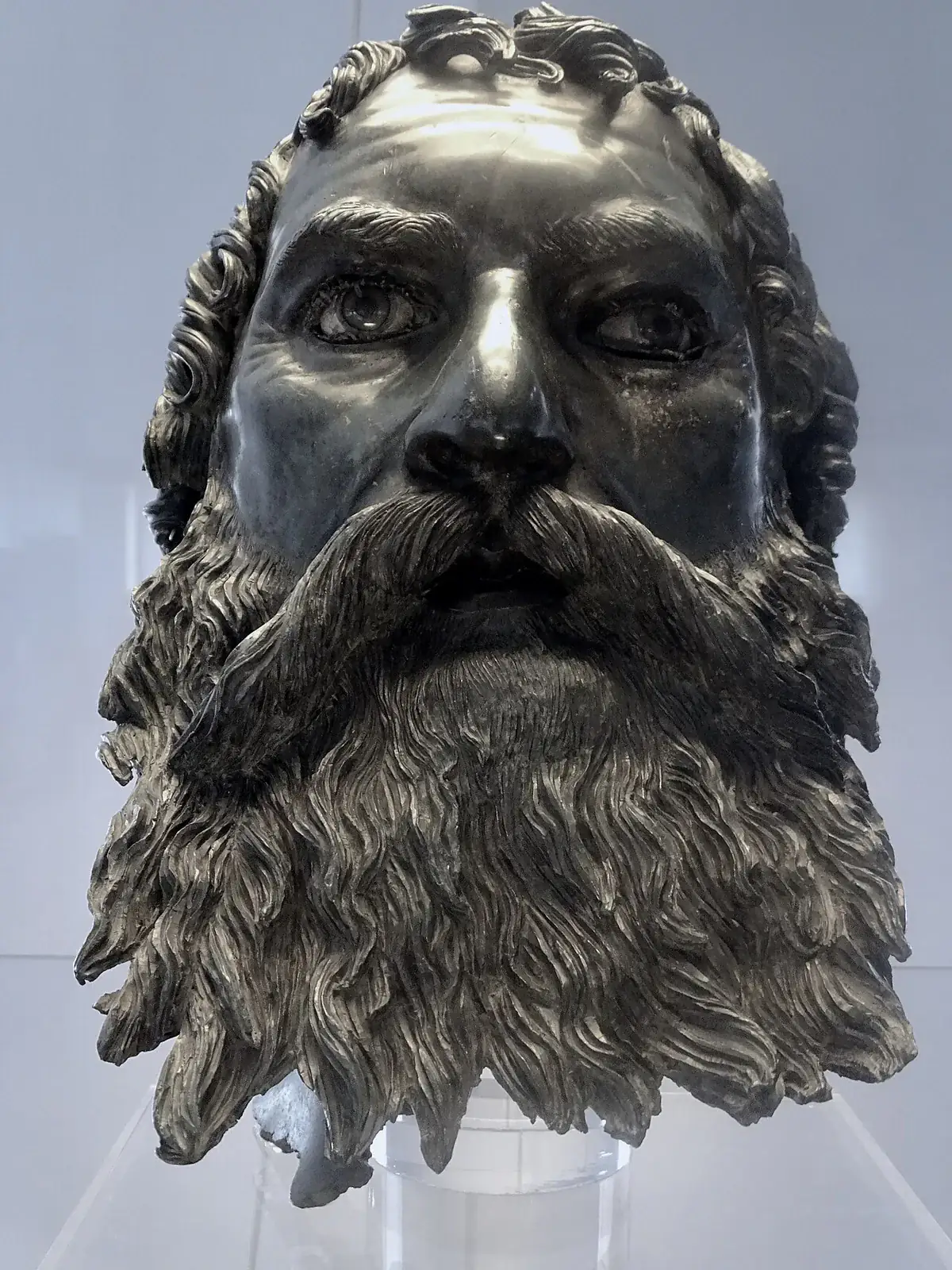
The bronze head attributed to Seuthes III
The head found alongside Golyama Kosmatka preserves beard, hair and eyes of different materials.
Museum documentation · free public access, no account required.
Reconstruction · Declared visual hypothesis
AI-recreated portrait of Seutes III. The clothing is supported by the historical context of the card; the face, age depicted, coloration, and unpreserved details are interpretive. It is neither an authentic photograph nor a scientific facial reconstruction.
Tracekeepers
History and context
The bronze head found next to Golyama Kosmatka retains a beard, hair and eyes made of different materials. It is attributed to Seuthes III, Odrysian ruler of the late 4th century BCE. The portrait offers an exceptional presence, although its identification needs to be explained.
A helmet, a jug and a cup with the name of Seutes appeared in the tomb. The combination of inscriptions and resemblance to monetary images supports the attribution. Its city, Seutópolis, remembers that that power was also expressed through an urban center.
Evidence and interpretation
Reasoned archaeological attribution, not name inscribed on the face. The head was found in front of the entrance. Golyama Kosmatka figures in a Bulgarian proposal to expand World Heritage; Do not confuse it with the already inscribed tomb of Kazanlak.
AI-recreated portrait of Seutes III. The clothing is supported by the historical context of the card; the face, age depicted, coloration, and unpreserved details are interpretive. It is neither an authentic photograph nor a scientific facial reconstruction.
Catalogue facts
- Chronology
- Last third of the 4th century BCE · portrait towards 310–300 BCE
- Location
- Golyama Kosmatka and Seutopolis Kazanlak Valley, Bulgaria
A closer look
About 1 min to read · 3 sections. Further reading and sources · free access. Editorial review recorded: .
The materials of the gaze
The Getty catalog records bronze, copper, calcite, alabaster and glass. The variety of materials contributed to the effect of the eyes. The head could have been part of a full-length statue; Its original location in Seutópolis is proposed as a possibility, not as a certainty.
How to build an attribution
The reading ΣΕΥΘΟΥ means ‘of Seuthes’. Its appearance on various objects and comparison with coins allowed Seuthes III to be proposed as the occupant of the monument. The value of identification comes from gathering independent evidence, not only from the richness of the grave goods.
- Heritage · Ministry of Culture of Bulgaria · UNESCO nomination 6085Access recorded: .
Against Lysimachus
Diodorus narrates a confrontation with Lysimachus at a pass of the Haemus in 313 BCE, when Seutes supported Antigonus. It is a direct historical connection between both characters. The source describes the conflict; It is not necessary to invent conversations or a previous friendship.
- Ancient text · Diodorus XIX.73 · Historical Library, Loeb editionAccess recorded: .
One history, two perspectives
What connects Seuthes III with other people, and how the view changes from the other side. These interpretations are based on sources; they are not quotations or reconstructions of private thoughts.
CONFLICT · DOCUMENTED RELATIONSHIP
Seuthes III ↔ Lysimachus
Resistance against Lysimachus
Diodorus narrates Seutes' confrontation with Lysimachus after the distribution of 323 BCE. Local authorities did not disappear when Alexander's successors assigned territories to themselves.
From Seuthes III’s perspective
From the local power of Seuthes, Lysimachus embodies the intention of a Macedonian successor to make his authority effective. The conflict allows us to look at the imperial distribution from those who retained the capacity to resist in the assigned territory.
Read Lysimachus’s perspective on Seuthes III →Reference images and provenance
You can enlarge the documentary photograph of the piece related to this figure. It is not listed as an input of a generated portrait. The identification of the figure, when discussed, is explained in the file.
 View full-size photograph ⛶
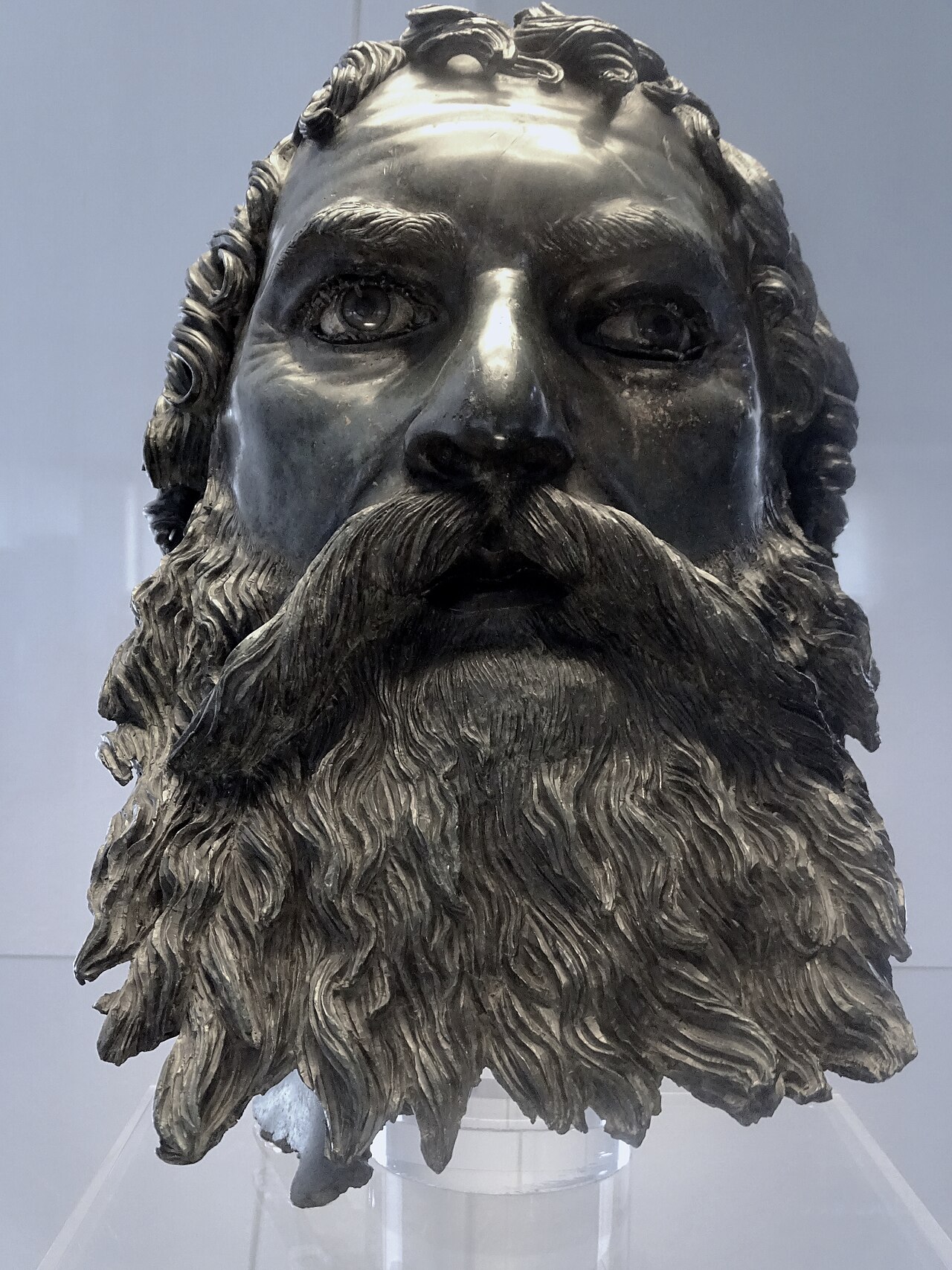
Bronze head of Golyama Kosmatka, associated with Seutes III, in the National Archaeological Museum in Sofia. Historical identification associated with the funerary context; do not use the reproduction of Kazanlak's head as the original.
Documentary original · Exact correspondence
Ad Meskens

 View full-size reference ⛶
Documentary photograph of the reference object
This photograph is the registered source of the documentary image currently displayed; it is not presented as an input photograph for another generated portrait.
This photograph is the registered source of the documentary image currently displayed; it is not presented as an input photograph for another generated portrait.
Documentary original · Contextual correspondence
Ad Meskens
Additional visual documentation
A cited publication does not establish which image was used to create the character.
Location and territory
REGIONAL AREA
Golyama Kosmatka and Seutopolis Kazanlak Valley, BulgariaTomb of Golyama Kosmatka: conversion of the coordinates published in the Bulgarian candidacy 6085.Where it is held
National Institute of Archaeology with Museum · NAIM, Sofia
Item or group in the record · Documented collection
Bronze head attributed to Seutes III, inventory 8594. Not to be confused with the grave goods preserved in Kazanlak; the return notice documents custody, not a current temporary exhibition.
The holding institution is documented; public display may change. Check its official record before visiting.
Sources and references
- Getty · Portrait of Seuthes III, exhibition label
- Getty · Power and Pathos, catalogue of works, no. 8; inventory NAIM 8594
- Ministry of Culture of Bulgaria · UNESCO nomination 6085
- Diodorus XIX.73 · Historical Library, Loeb edition
- The Met · The Thracians
- The Met · Man and the Horse
- Diodorus XVIII.14 · translation by George Booth (1814)
Did you enjoy this exhibit?
Your opinion helps us improve the museum. You can change it whenever you like.
Loading your rating…