
 English
 Español
 Français
 Italiano
 Deutsch
 Русский
 Português
 Polski
 Română
 Svenska
 Norsk bokmål
 Suomi
 Türkçe
 العربية
 简体中文
 한국어
 हिन्दी
 Ελληνικά
GATE 01 · AFRICA · CONFLICT
Egypt
From battlefield to treaty
Continues in the Egypt museum
Museum documentation · free public access, no account required.
Generated reconstruction · Declared visual hypothesis
Declared visual reconstruction; not a photograph of the original nor documentary evidence.
Why this doorway leads to another museum
Hatti and Egypt disputed control of Syria, fought at Qadesh and afterwards formalised peace and dynastic alliance.
Why this gate requires caution: Each side narrated the facts according to its interests; the military outcome of Qadesh was not an unequivocal Egyptian victory.
Period of the connection: 13th century BC c.
BEFORE YOU ENTER
An introduction to Egypt
Find your place in time, explore the changes and choose where to go next.
- When
- Backgrounds ≈5300 BCE · Dynastic State 3100–30 BCE · AFRICA
- Where
- Northeastern Africa · Nile valley and delta
- What this collection brings together
- Successive monarchies and dynasties; a long cultural tradition with major internal changes
The history of ancient Egypt begins long before the pyramids. Communities in the Nile valley and delta cultivated, exchanged products, and developed forms of writing and government. Around 3100 BCE, the first dynasties shaped a monarchy that united previously separate territories.
During the following three millennia, capitals, borders, and rulers changed. There were periods of unity and division, expansion into Nubia and the Levant, and dynasties of different origins. To understand Egypt, one must look both at its pharaohs and at those who cultivated, built, wrote, and maintained its temples. Incorporation into Rome in 30 BCE changed political power, but did not suddenly make these practices disappear.
PLACE MATTERS
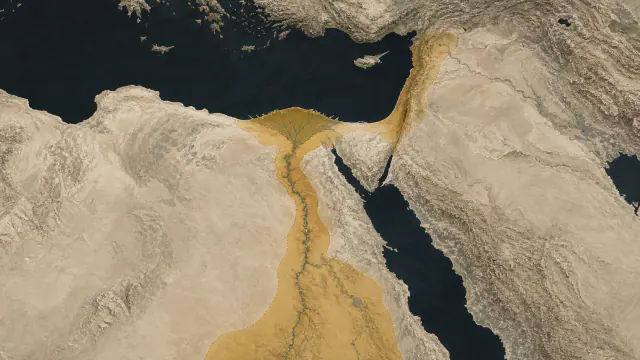
Territory and connections
The valley and the delta were its centre. Control of Nubia, the Sinai, and the Levant varied between periods: the map of maximum expansion does not represent the entire Egyptian history.
A HISTORY OF CHANGE
The main periods
Dates are approximate. Periods help us navigate the past, but their boundaries were not always the same in every region.
c. 5300–3100 BCE
Regional Predynastic
Communities in the delta and Upper Egypt developed distinct trajectories that gradually converged; they were not two stable kingdoms throughout the period.
c. 3100–2686 BCE
Thinite Period · Dynasties I–II
The monarchy integrated the valley and delta from several centres; Narmer is not a literal record of a single campaign, nor is his identification with Menes certain.
2686–2181 BCE
Old Kingdom
The Memphite court consolidated the Nile corridor and mobilised expeditions to the Sinai and Nubia; a quarry or route does not equate to a continuous province.
2181–2055 BCE
First Intermediate Period
Authority was shared among regional powers, especially Heracleopolis and Thebes; it was not a homogeneous political vacuum.
Continue the story: 10 more periods
2055–1650 BCE
Middle Kingdom
Theban reunification re-established control of the valley and extended fortresses into Lower Nubia; the old formula of 'democratisation of the afterlife' requires nuance.
1650–1550 BCE
Second Intermediate Period
Avaris and Hyksos rulers dominated much of the north, Thebes retained power in the south, and Kerma intervened in Nubia; it was not an instant nomadic invasion.
1550–1069 BCE
New Kingdom and Imperial Era
The maximum reach, episodic and uneven, extended from the Fourth Cataract to Syria. Hatshepsut, Akhenaten, Tutankhamun, and Ramesses II belong to different moments; the monotheistic character of Aten remains debated.
1069–747 BCE
Libyan and Theban Powers
Dynasties with elites of Libyan origin rule from various centres in the Delta, while Thebes retains its own religious and political authority. These labels describe ruling houses and coalitions, not two homogeneous populations or fixed borders.
c. 747–664 BCE
Kushite Rise and Rule · 25th Dynasty
The kings of Kush extend their authority from Napata and eventually rule Egypt. The start date marks the dynastic rise: integration of the valley was gradual, and control of the Delta remained contested, especially during the Assyrian campaigns.
664–525 BCE
Saite Renaissance
The 26th Dynasty reunifies Egypt from Sais and strengthens Mediterranean links; 'renaissance' describes political and artistic choices, not an intact return to the past.
525–404 BCE
First Persian Rule · 27th Dynasty
Cambyses II incorporates Egypt into the Achaemenid Empire, and his successors rule through a satrapy and local authorities. The continuity of Egyptian temples and offices does not erase the conquest, the rebellions, or the regional variations in control.
404–343 BCE
Egyptian Restoration · 28th–30th Dynasties
Dynasties centred on Sais, Mendes, and Sebennytos recover sovereignty and resist new Achaemenid expeditions. 'Restoration' denotes political independence, not an unchanged return to an earlier age.
343–332 BCE
Second Persian Rule · 31st Dynasty
Artaxerxes III reconquers Egypt and re-establishes Achaemenid rule until the arrival of Alexander. It was a short and conflict-ridden interval, not the uninterrupted continuation of the first Persian rule.
332–30 BCE
Macedonian Conquest and Ptolemaic Kingdom
Alexander enters and occupies Egypt in 332 BCE; Greek sources present a favourable reception. The Ptolemies rule from Alexandria, also adopting pharaonic forms. Cleopatra VII is the last independent sovereign; Octavian—the future Augustus—incorporates Egypt into Rome in 30 BCE.
BEYOND THE DATES
How people lived and saw the world
Who Ruled and How Power Changed
The pharaoh ruled through officials, scribes, local authorities, and temples. This organisation did not function the same way in all dynasties. The Old, Middle, and New Kingdoms alternated with periods of division; later, Kushite dynasties, Persian kings, and the Ptolemies also ruled. Chronology helps avoid placing Djoser, Ramesses II, and Cleopatra in the same Egypt.
Working, Eating, and Living by the Nile
Cultivating and storing grain, preparing bread and beer, raising animals, fishing, or working wood occupied much of daily life. Houses and used objects help reconstruct it. Tomb scenes also show these tasks, although they were chosen to ensure food and well-being for the deceased, not to neutrally portray the whole society.
Measuring, Writing, and Organising a Project
A construction required much more than stone: shared measurements, material accounts, transport, and work teams. The oldest labels and seals show the importance of recording deliveries. Centuries later, the cubit inscribed in the name of Maya allows us to explain what a length standard offers: different people can compare their measurements against the same reference.
Gods, Temples, and Care of the Dead
Temples, offerings, and burials bring us closer to beliefs that varied by place and time. During the New Kingdom, rulers expanded large centres such as Karnak. In later periods, we find a wide variety of amulets, offerings, and consultations with the gods. Care of the dead was not just a matter of mummies: texts, food, and the memory of the person were also important.
A Country Connected with Its Neighbours
The Nile connected regions, but Egypt was never isolated. It traded and fought with its neighbours. In the Late Period, Naucratis and other Delta settlements brought together Egyptians and Greeks. Under Rome, Alexandria and the Red Sea ports linked valley products with Mediterranean, African, and Indian Ocean routes. Contact could bring goods, new inhabitants, or an army; not all had the same effect.
Images, Instruments, and Celebrations
Reliefs and statues showed kings, gods, and private individuals in specific contexts. Instruments add another part of that life: The Met preserves a portable harp from the New Kingdom, of the type depicted alongside singers and other musicians. Comparing works from different dates allows us to appreciate changes in taste and function, rather than imagining an Egyptian art that was always identical.
PEOPLE AND TESTIMONIES
Meet the people
The records distinguish historical figures, representations and reconstructions. They explain their context, the available sources and their connections with other people.
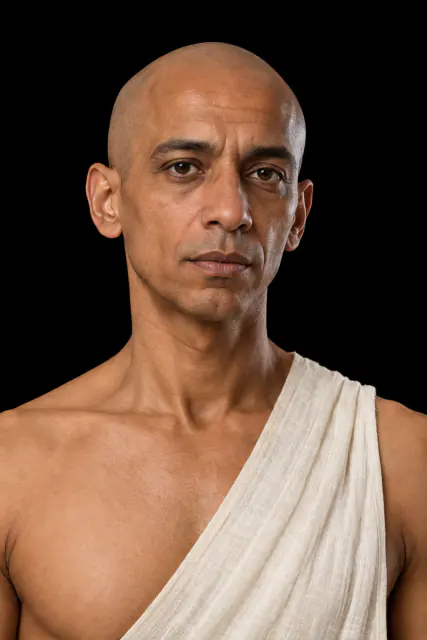
Imhotep
Imhotep was associated with Djoser and, much later, was remembered as a sage and healer.
Read the record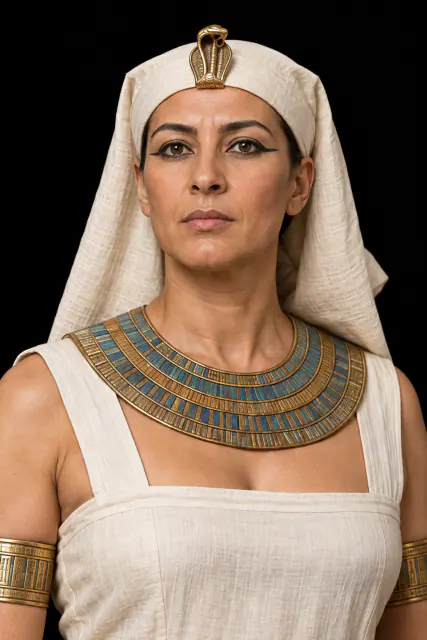
Hatshepsut
Hatshepsut ruled as pharaoh and was depicted with various combinations of body, titles, and royal insignia.
Read the record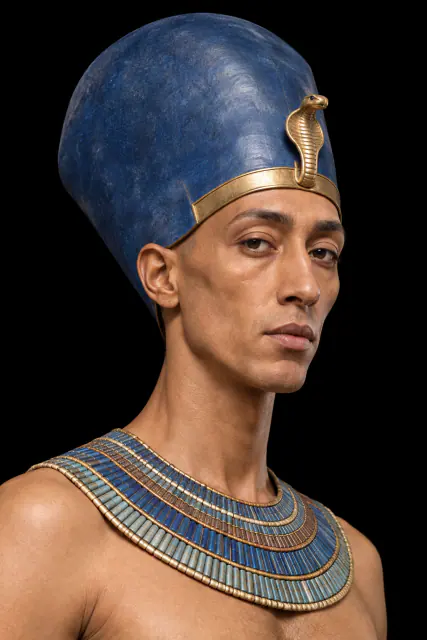
Akhenaten
Akhenaten moved the court and gave the cult of Aten a central role in his government.
Read the record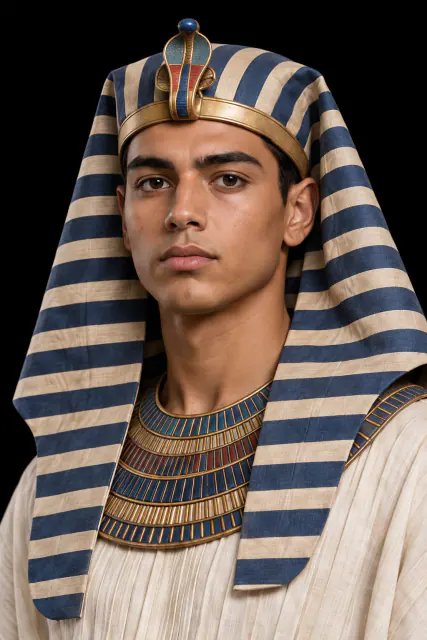
Tutankhamun
Tutankhamun reigned for a few years, during a period of recovery of the cults that preceded Akhenaten.
Read the record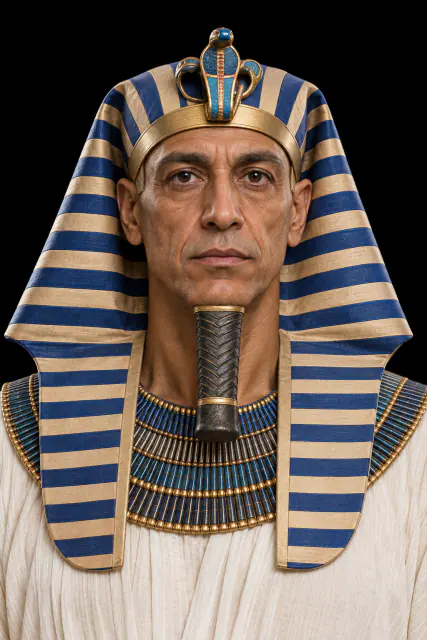
Ramesses II
Ramesses II had temples, statues, and inscriptions built that disseminated his name and his achievements.
Read the record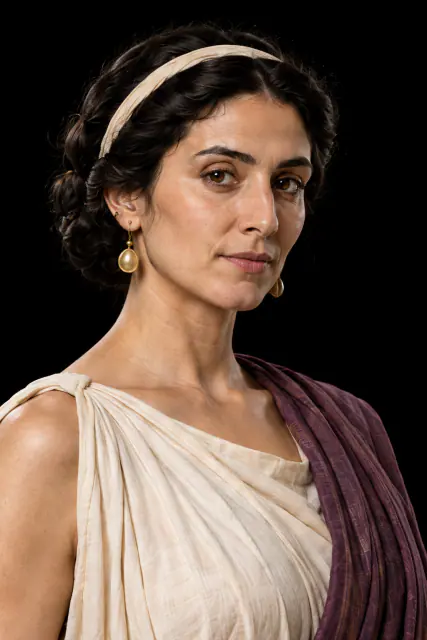
Cleopatra VII
Cleopatra VII ruled Egypt and sought alliances amidst the Roman civil wars.
Read the recordLOOK CLOSER
Objects and places to start with
A selection from the destination museum. Open each record to explore its documentation and images.
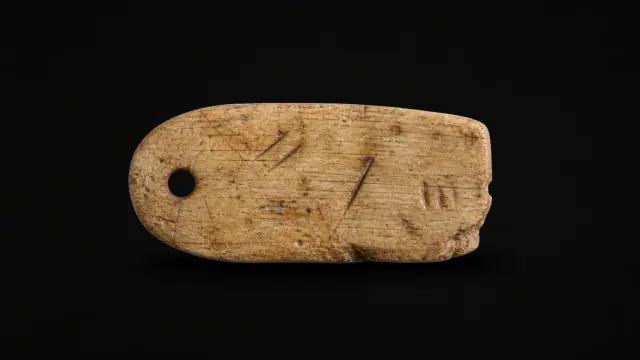
Naqada labels
The earliest Egyptian signs appear on labels and vessels associated with goods, names, and places.
Read the record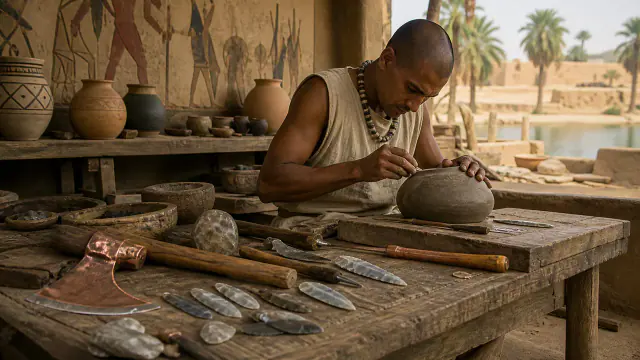
Copper and stone
Stone tools continued to be used alongside copper tools for centuries.
Read the record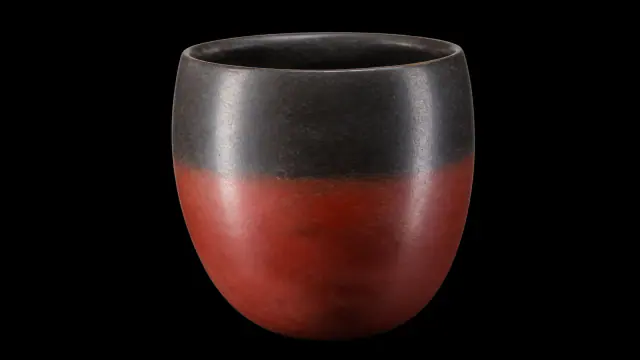
A Kerma vessel deposited at Abydos
This vessel was made in Nubia and was found in a tomb at Abydos, in Egypt.
Read the record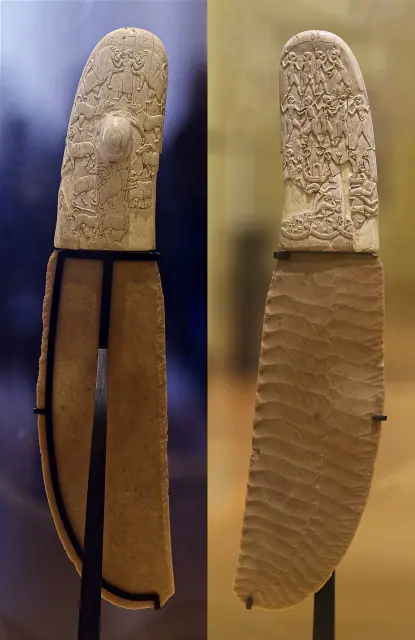
WHAT REMAINS
Its legacy and ongoing research
Egypt left behind monuments, archives, techniques, and religious traditions that continued to transform under other governments. Temples, images of gods, and funerary practices of the Roman period show that continuity with changes, not a culture frozen in time.
CHOOSE YOUR NEXT STOP
Inside this museum
Sources for this introduction
Each theme links to its documentation. The full bibliography also brings together sources for the chronology, the people and the connection between the museums.
View all sources and references →Evidence and interpretation
Level of evidence of connection: high. The door describes conflict; it does not convert two different cultures into one nor does it presuppose automatic ethnic continuity.
Catalogue facts
- Contact period
- 13th century BC c.
- Destination museum
- Egyptian
- Link Type
- conflict
- Level of evidence
- high
- Destination region
- Africa
A closer look
About 1 min to read · 1 section. Further reading and sources · free access. Editorial review recorded: .
The relationship continued outside the voice of the kings
The correspondence found in Hattusa shows that, during the reign of Ramses II, they also exchanged letters between royal wives and high officials. This network allows the narrative linking battle, treaty and marriage to be expanded: maintaining relations required repeated communications between several people of both courts. The testimonies do not form a private conversation preserved from beginning to end, but they document diplomatic channels distinct from the military encounter. Peace had to be sustained by messages and later agreements; it was not achieved once and for all by inscribing a treaty.
Location and territory
REGIONAL AREA
Nile Valley and Delta; the scope varied by dynastiesNile Valley and Delta; the scope varied by dynasties. The footprint marks the indicative center of the area, not a border or an exact point.Cultural connections
Sources and references
- University College London · Asia: foreign relations with Egypt in the New Kingdom
- UCL Digital Egypt · Ramesses II
- The Metropolitan Museum of Art · The Hittites
- British Museum · Early Egypt
- Ministry of Tourism and Antiquities of Egypt · historical periods
- The Met · Egypt, 1000 BCE–1 CE
- UNESCO · Gebel Barkal and the Sites of Napata
- UNESCO · Persepolis
- UCL · Chronology of Egypt
- UCL · Formation of the Egyptian State
- Harvard · Daily Life in Ancient Egypt
- Musée du Louvre · Cubit of Maya, N 1538
- The Met · Egypt during the New Kingdom
- The Met · Egypt during the Late Period
- The Met · Egypt under Rome
- The Met · New Kingdom shoulder harp, 43.2.1
- The Met · inscribed statuette of Imhotep, 10.175.132
- The Met · Daily Life of the Ancient Egyptians
- The Met · sandals, Dynasty 18
- The Met · inscribed seated statue of Hatshepsut, 29.3.2
- The Met · head of Akhenaten with inscription of Aten, 21.9.570
- UCL Digital Egypt · Akhenaten, reign and chronology
- Ministry of Tourism and Antiquities of Egypt · tomb of Tutankhamun
- University of Oxford · Tutankhamun Spatial Archive · mask 256.a
- The Met · The World of Tutankhamun
- British Museum · inscribed colossal statue of Ramesses II, EA19
- British Museum · Tetradrachm with portrait of Cleopatra VII
- UCL Digital Egypt · Ptolemaic Egypt
- The Met · Chiton, Peplos, Himation
- The Met · Marble statue of a woman
YOUR NEXT VISIT
Explore Egypt
The same collection, two ways to explore. Choose the experience that suits you.
Did you enjoy this exhibit?
Your opinion helps us improve the museum. You can change it whenever you like.
Loading your rating…