
 English
 Español
 Français
 Italiano
 Deutsch
 Русский
 Português
 Polski
 Română
 Svenska
 Norsk bokmål
 Suomi
 Türkçe
 العربية
 简体中文
 한국어
 हिन्दी
 Ελληνικά
KING ODRISIO · FORMATION OF THE KINGDOM
Terēs I
Teres I and the formation of Odrysian power
Building a kingdom did not mean governing all Thracians.
Museum documentation · free public access, no account required.
Reconstruction · Declared visual hypothesis
Portrait recreated with AI of Teres I. The clothing is supported by the historical context of the card; the face, the age represented, the coloration and the unpreserved details are interpretive. It is neither an authentic photograph nor a scientific facial reconstruction.
Tracekeepers
History and context
Thucydides presents Teres as the king who turned the Odrysian domain into a great regional power. He adds an essential precision: many Thracians remained independent. The birth of the kingdom was a process of concentration of power, not the documented union of all Thracian peoples.
His son Sitalces later appears in Aegean diplomacy. Herodotus also preserves a family connection to the steppe: the Scythian king Octamasades was the son of a daughter of Teres. These links suggest a policy that crossed the Danube.
Evidence and interpretation
Historical figure documented by ancient texts. The exact date of his accession to power and his death is disputed. No portrait or personal grave goods has been credited here: Svetitsa's mask cannot be presented as his face.
Portrait recreated with AI of Teres I. The clothing is supported by the historical context of the card; the face, the age represented, the coloration and the unpreserved details are interpretive. It is neither an authentic photograph nor a scientific facial reconstruction.
Catalogue facts
- Chronology
- 5th century BC C. · prior to 431 BCE
- Location
- Thrace Odrysia Eastern Balkans
A closer look
About 1 min to read · 3 sections. Further reading and sources · free access. Editorial review recorded: .
A historical name and another mythical
Thucydides stops to separate Teres from Tereus in Procne's story. This distinction made in Antiquity must be preserved: the similarity of names does not make a historical ruler the protagonist of the myth.
- Ancient text · Thucydides II.29 · edition Richard Crawley, ToposTextAccess recorded: .
Kinship across the Danube
Herodotus identifies Octamasades as the maternal grandson of Teres. His story illustrates dynastic networks between Odrysians and Scythians; It does not authorize inventing the name of that daughter or dates or ceremonies of a wedding that it does not describe.
- Ancient text · Herodotus IV.80 · edition A. D. Godley, PerseusAccess recorded: .
A mask with no certain name
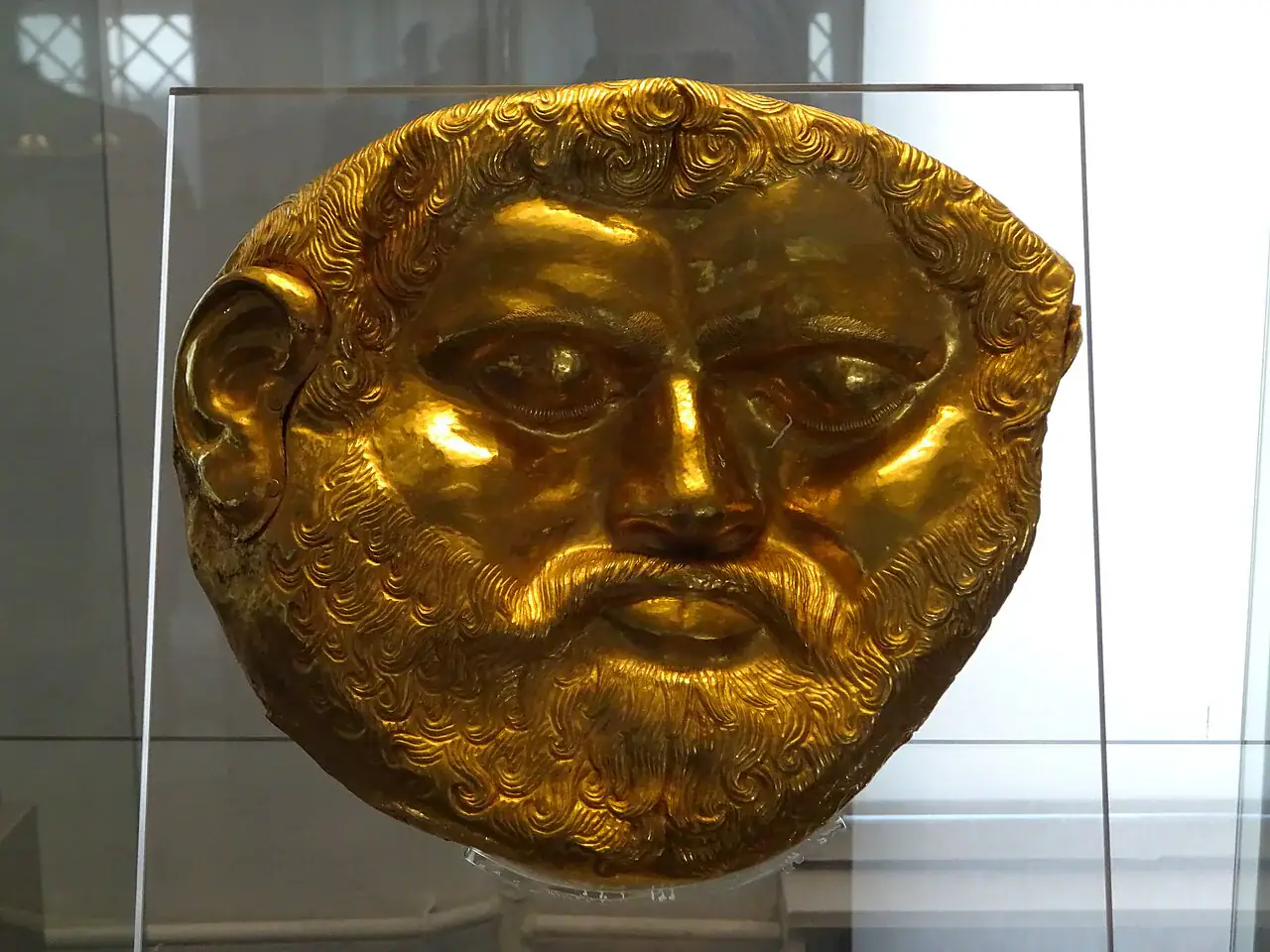
The Sofia Museum dates Svetitsa's grave goods to the end of the 5th century BCE and attributes it to a prominent person of the Thracian elite. The mask is shown here as a later funerary context, without personal attribution to Teres.
- Museum · NAIM-BAS · ring and grave goods from SvetitsaAccess recorded: .
One history, two perspectives
What connects Terēs I with other people, and how the view changes from the other side. These interpretations are based on sources; they are not quotations or reconstructions of private thoughts.
FAMILY · DOCUMENTED RELATIONSHIP
Terēs I ↔ Sitalces
Father of Sitalces
Thucydides identifies Sitalces as the son of Teres, to whom he attributes the expansion of Odrysian power. Kinship links the formation of the kingdom with its later diplomacy.
From Terēs I’s perspective
Since the formation of the power of Teres, Sitalces allows the continuity of a royal house to be followed. It is a reading of documented family succession, not a reconstruction of the advice a father would have given his son.
Read Sitalces’s perspective on Terēs I →Reference images and provenance
You can enlarge the documentary photograph of the piece related to this figure. It is not listed as an input of a generated portrait. The identification of the figure, when discussed, is explained in the file.
 View full-size photograph ⛶
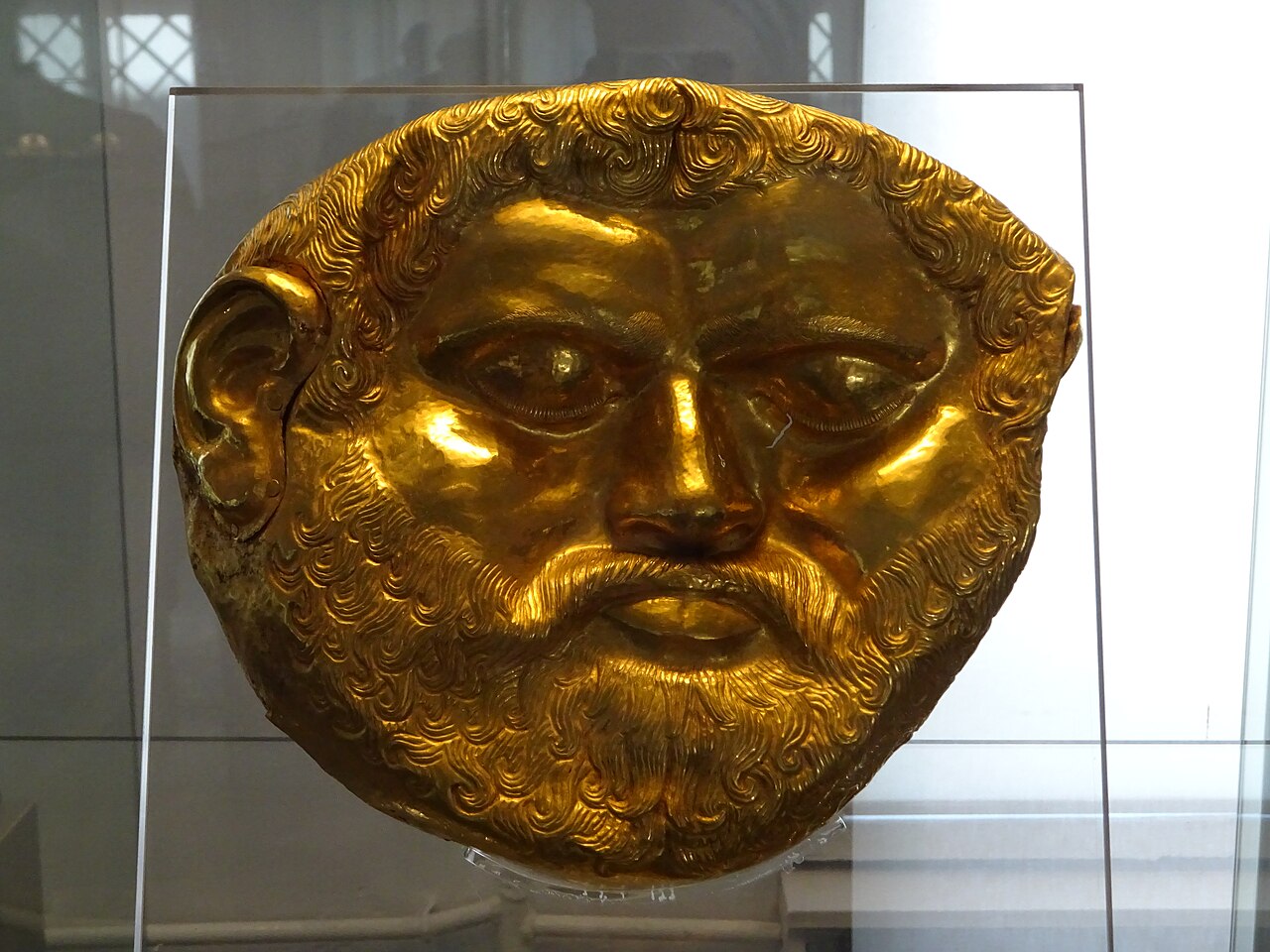
Svetitsa funerary mask, late 5th century BCE. Later elite context; It is not a portrait or an identified grave goods of Teres I. Funerary testimony of an elite; It is not an identified portrait of Teres I or Sitalces. Its late dating prevents it from being converted without reservation into the mask of Teres I.
Contextual image · Contextual correspondence
Mogadir

 View full-size reference ⛶
Documentary photograph of the reference object
This photograph is the registered source of the documentary image currently displayed; it is not presented as an input photograph for another generated portrait.
This photograph is the registered source of the documentary image currently displayed; it is not presented as an input photograph for another generated portrait.
Documentary original · Contextual correspondence
Mogadir
Additional visual documentation
A cited publication does not establish which image was used to create the character.
Location and territory
REGIONAL AREA
Thrace Odrysia Eastern BalkansApproximate region; place of birth, personal capital and burial not established in these sources.Sources and references
Did you enjoy this exhibit?
Your opinion helps us improve the museum. You can change it whenever you like.
Loading your rating…