
 English
 Español
 Français
 Italiano
 Deutsch
 Русский
 Português
 Polski
 Română
 Svenska
 Norsk bokmål
 Suomi
 Türkçe
 العربية
 简体中文
 한국어
 हिन्दी
 Ελληνικά
ORKNEY · c. 3100–2500 BCE
Skara Brae
Houses with stone furniture
These dwellings preserve hearths, beds and storage spaces built of stone.
Museum documentation · free public access, no account required.
Reconstruction · Declared visual hypothesis
AI-generated reconstruction from inspected reference and archaeological sources; does not equal a photograph of the original. See limits and hypothetical parts. Form, height, materials and carpentry of the roof; the render chooses an organic possibility. Full wall elevation, floor finish, small hearth and light. Exact house number not identified via filename or marker; fine detail recomposed is not a facsimile.
OpenAI ImageGen; photographic reference: Archaeology Scotland · CC BY-SA 4.0
History and context
Stone houses linked by passages preserved central hearths, niches and furniture. Inhabitants repaired and transformed spaces over generations.
Exceptional preservation can make it look like a complete model; roofs, textiles, wood, light and smells remain reconstructions.
Evidence and interpretation
Walls, passages and stone furniture are preserved. Roofs, ownership of spaces and causes of abandonment are interpretations.
Catalogue facts
- Date
- c. 3100–2500 BCE
- Location
- Skara Brae · Orkney, Scotland
- Material
- Local stone · lost organic components
A closer look
About 1 min to read · 1 section. Further reading and sources · free access. Editorial review recorded: .
Furniture was not an added detail
Each preserved dwelling organises a room of about forty square metres through hearth and stone furniture. Historic Environment Scotland describes the so-called 'dressers' as possible places for storage and display of special objects, not as cupboards whose exact function we know. Positioning the furniture helps imagine how light, space and activities were distributed. The repetition of solutions across houses is as interesting as an exceptional piece: it allows comparison of ways of living without automatically attributing an owner or social rank to every corner.
Reference images and provenance
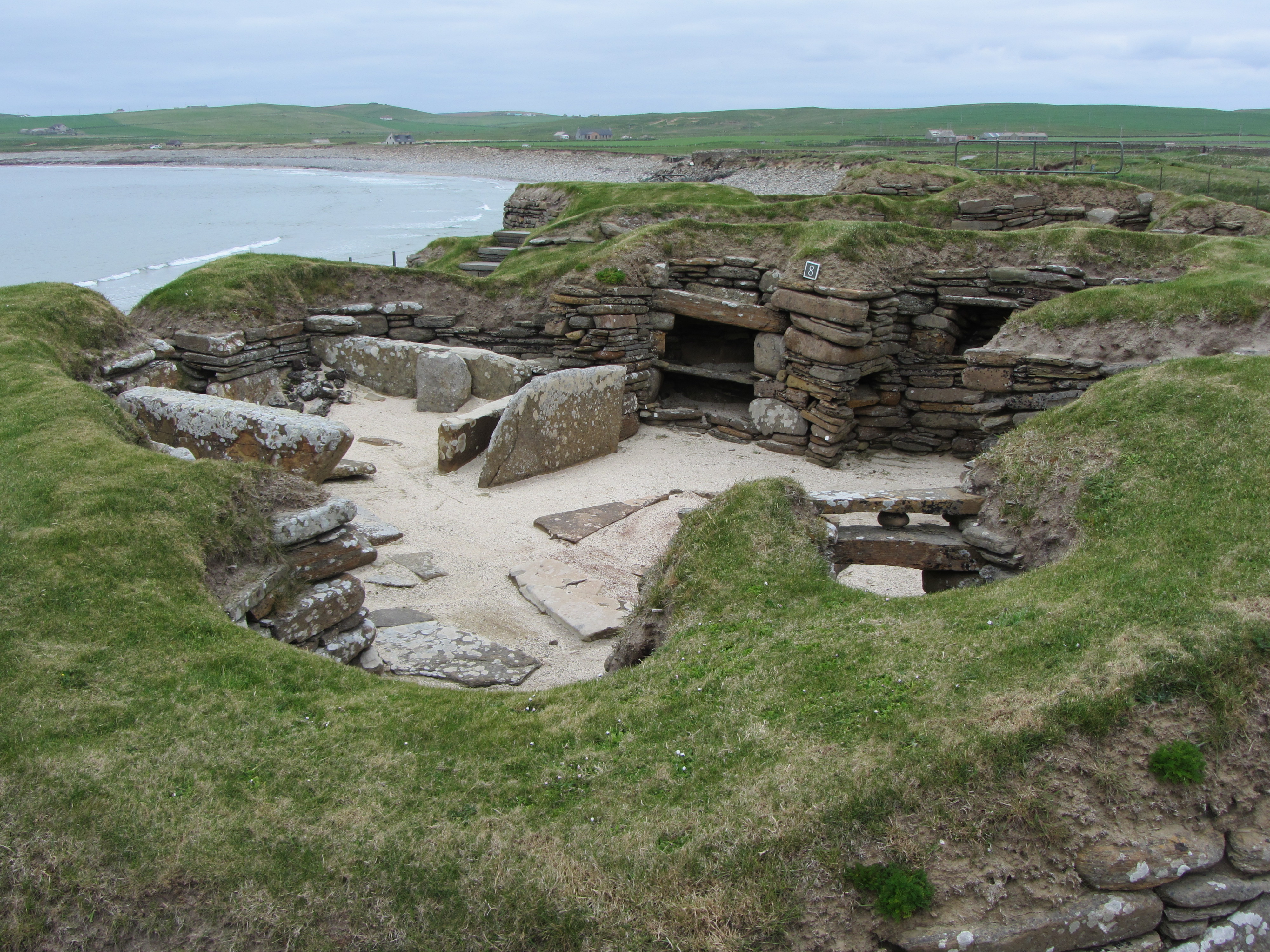 View full-size photograph ⛶
Photograph of the preserved archaeological remains, used as reference for an interpretive reconstruction.
Documentary original · Exact correspondence
Archaeology Scotland

Location and territory
LOCATED SITE
Skara Brae · ScotlandNeolithic village marker.Sources and references
Did you enjoy this exhibit?
Your opinion helps us improve the museum. You can change it whenever you like.
Loading your rating…