
 English
 Español
 Français
 Italiano
 Deutsch
 Русский
 Português
 Polski
 Română
 Svenska
 Norsk bokmål
 Suomi
 Türkçe
 العربية
 简体中文
 한국어
 हिन्दी
 Ελληνικά
PLACE · PRE-POTTERY NEOLITHIC
Göbekli Tepe
Stone before cities
Monumental architecture before cities.
Museum documentation · free public access, no account required.
Reconstruction · Declared visual hypothesis
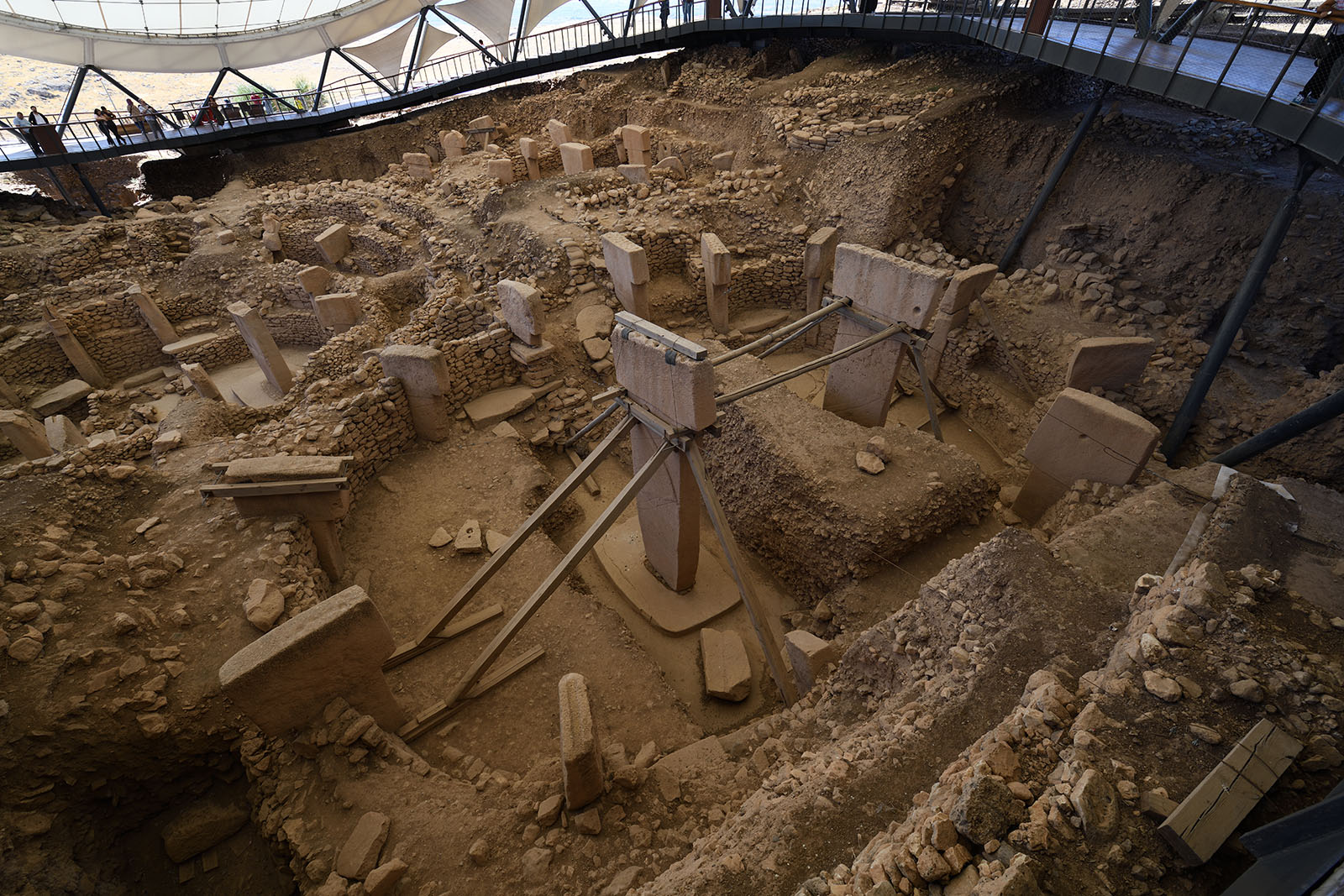
Recreation of Göbekli Tepe generated with AI and contributed to the project. The buildings, pillars and people show an interpretation of the complex, not an exact proven phase. The complementary photograph allows comparison of the recreation with the preserved remains; it is not claimed that it was used to generate it.
History and context
On a hill in south-east Anatolia, hunter-gatherer communities raised limestone pillars up to 5.5 metres. Foxes, boars, snakes and birds traverse their reliefs; some pillars resemble human bodies.
The verifiable scale is the great wonder: groups without cities or metal coordinated monumental architecture and fashioned stone vessels. The site cannot be reduced to the simple image of an isolated temple.
Evidence and interpretation
The chronology, reliefs and monumentality are proven. Its ritual use is plausible, not definitive; domestic structures also exist.
Catalogue facts
- Date
- ≈9600–8200 BCE
- Location
- Şanlıurfa, Turkey
- Material
- Monolithic limestone pillars
- Excavations
- Systematic since 1995
- From Çakmaktepe
- ≈30 km · narrative scale
- Caution
- It was neither a city nor a resolved meaning
A closer look
About 1 min to read · 1 section. Further reading and sources · free access. Editorial review recorded: .
Feeding those who raised the pillars
The study of the grinding toolkit opens a less visible question than the reliefs: how was food prepared for the people who worked and gathered here? The archaeological project compares tool use-wear with experimental replicas to distinguish activities and processed materials. Preliminary analyses indicate cereals and nuts among those uses. Monument and subsistence are not separate stories; organising work requires food, time and maintenance. Grinding allows this to be investigated without assuming every gathering was a religious feast.
- Research · Göbekli Tepe Research Project · Plant food management, 2018Access recorded: .
Reference images and provenance
 View full-size photograph ⛶
Photo of the preserved Building D; reference for plan and monoliths, not for complete elevation.
Documentary original · Exact correspondence
Dosseman

Location and territory
LOCATED SITE
Göbekli Tepe · ŞanlıurfaWorld Heritage site marker.Sources and references
Did you enjoy this exhibit?
Your opinion helps us improve the museum. You can change it whenever you like.
Loading your rating…